











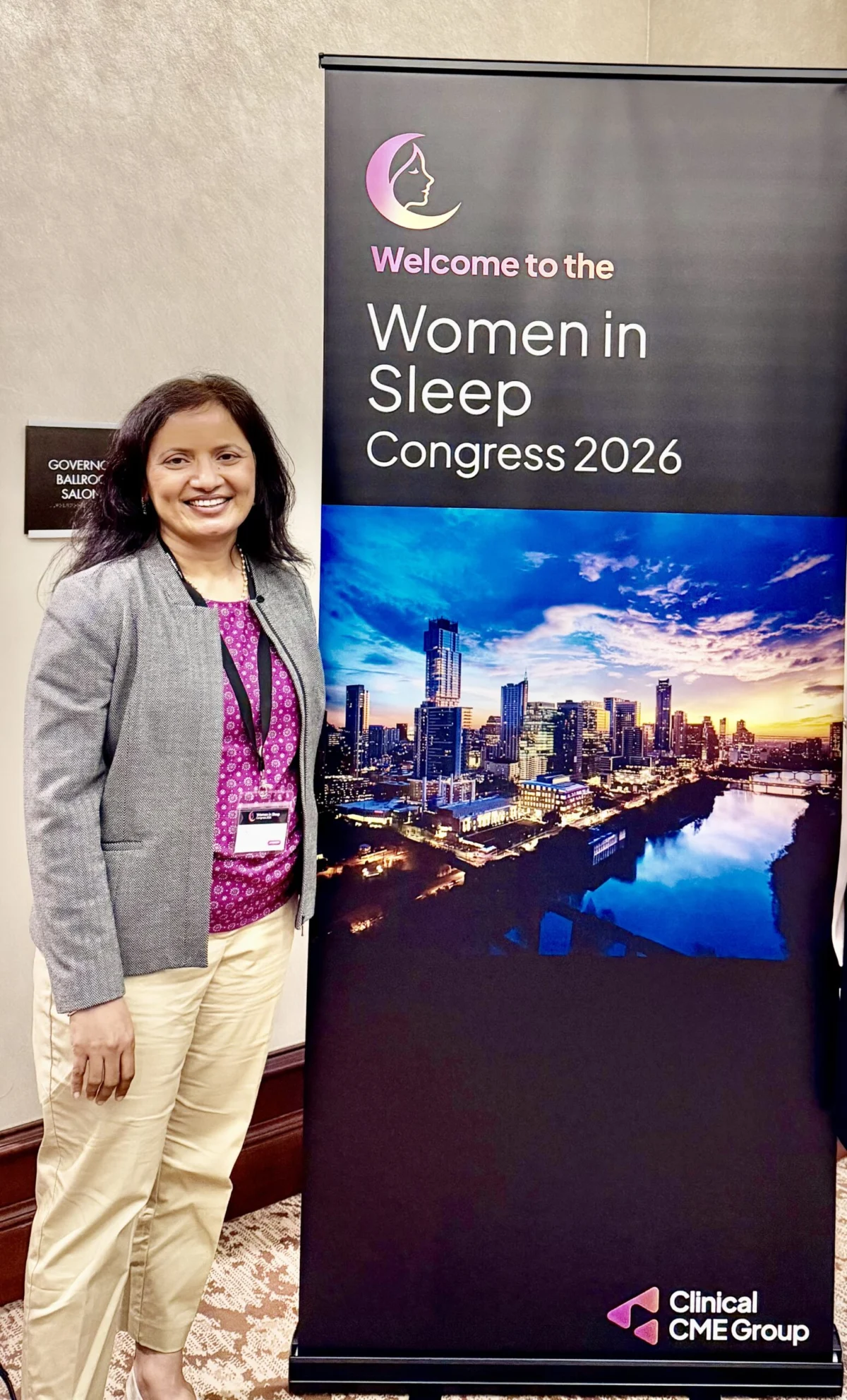
In the high-stakes world of modern medicine, where specialists often operate in silos, Dr. Vani Vallabhaneni, a board-certified sleep and internal medicine physician, encountered a reality that fundamentally shifted the landscape of prenatal care. During a casual exchange at a Texas Medical Association (TMA) event, a conversation with an obstetrician-gynecologist left her stunned. When asked about protocols for managing obstructive sleep apnea (OSA) in expectant mothers, the colleague admitted that while severe hypoxia during labor might trigger an emergency response, the underlying condition of sleep-disordered breathing during pregnancy was rarely—if ever—investigated.
For Dr. Vallabhaneni, the medical director at Austin’s Sleep 360 Sleep Diagnostic Center and a clinical assistant professor at Texas A&M University, this was a wake-up call. "It shocked me that this is happening in this day and age," she says. "We may encounter pregnant women who have been experiencing recurrent hypoxemia throughout pregnancy, yet their condition was never identified. Are we really allowing the woman and the fetus to suffer from chronic oxygen deprivation?"
This realization ignited a multi-year advocacy crusade that culminated in June 2026, when the American Medical Association (AMA) officially adopted a landmark national policy recognizing the critical risks of OSA during pregnancy.
The Chronology of a Policy Shift
Dr. Vallabhaneni’s journey began in 2024 at the TMA’s TexMed Conference in Dallas. Immersing herself in data regarding Texas’s alarming maternal mortality rate, she realized that while the crisis was multifactorial, the "modifiable" risks—specifically those linked to cardiovascular and metabolic health—were being overlooked.
- Early 2024: Dr. Vallabhaneni begins a deep dive into medical literature, identifying a glaring absence of formal policy guidance regarding OSA in pregnancy.
- April 2025: After drafting "Resolution 311," she presents the case to the TMA’s Council for Science and Public Health. She faced the pervasive, outdated belief that pregnancy-related physical changes are merely "temporary" and therefore benign. Her counter-argument—"Pregnancy being temporary does not make its complications unimportant"—resonated with her peers.
- April 2025: The resolution passes the TMA without a single dissent, marking a pivotal win for state-level awareness.
- June 2026: Following the success in Texas, the issue is elevated to the national stage. The AMA House of Delegates adopts Policy H-440.785: Obstructive Sleep Apnea During Pregnancy, effectively codifying the need for screening, research, and insurance coverage on a federal scale.
Supporting Data: Why the Shift Was Necessary
The clinical urgency behind Dr. Vallabhaneni’s advocacy is backed by a growing body of evidence linking sleep-disordered breathing to severe obstetric complications. Research indicates that OSA affects between 5% and 20% of pregnant women, a figure exacerbated by rising obesity rates among women of childbearing age.
The physiological toll of untreated OSA is profound. Repeated upper airway obstruction triggers intermittent hypoxemia, sleep fragmentation, and a constant, heightened state of sympathetic nervous system activation. According to systematic reviews, these mechanisms mirror the pathways involved in preeclampsia and gestational diabetes. Furthermore, a 2025 JAMA study revealed that pregnancy-related mortality in the United States had spiked by 27.7% between 2018 and 2022, with cardiovascular disease serving as the leading cause.

The evidence for intervention is increasingly compelling. A 2024 meta-analysis demonstrated that CPAP therapy during pregnancy was associated with a 35% reduction in gestational hypertension and a 30% reduction in preeclampsia risk. Dr. Bilgay Izci Balserak, an associate professor at the University of Illinois College of Nursing, notes that while the evidence is not yet "definitive" for every pregnancy complication, the data is "promising and increasingly supportive," particularly regarding maternal hypertensive outcomes.
Official Responses and Medical Consensus
The adoption of the AMA policy has been met with broad approval from the medical community, signaling a shift in clinical culture. Dr. Bradford Holland, an otolaryngologist and former TMA president, lauded the move as a testament to the power of physician-led policy. "It is unique that almost any physician can introduce a resolution, have learned minds review it, and ultimately decide if that’s what we want to be our best recommendation," Holland stated.
The professional landscape is now aligning with this policy. In October 2026, the American College of Chest Physicians (CHEST) issued updated clinical practice guidelines. These guidelines explicitly recommend screening for sleep-disordered breathing in pregnant patients and suggest that clinicians use either home sleep testing or laboratory-based diagnostics. Crucially, the guidelines recommend positive airway pressure (PAP) therapy for patients with an apnea-hypopnea index (AHI) greater than 15, or for those with an AHI of 5–15 if they exhibit comorbidities or clinical symptoms.
Breaking Barriers: Clinical Pathways and Innovation
A central challenge remains the logistical implementation of these new standards. Standard screening tools, like the STOP-Bang questionnaire, are often inadequate for pregnant patients because symptoms like fatigue and weight gain are considered "normal" in pregnancy. Dr. Balserak advocates for a targeted approach, urging clinicians to look for red flags such as loud, habitual snoring, witnessed apneas, and daytime sleepiness that exceeds normal pregnancy expectations.
Dr. Vallabhaneni has streamlined this in her own practice by utilizing type 2 home sleep tests, such as the Dormotech DormoVision X. "We are able to ship the device to a patient’s home and provide clear instructions," she explains. "The entire process—consultation, diagnosis, and treatment initiation—is handled via telemedicine."
Innovation is also emerging in the treatment space. Recognizing that CPAP adherence can be difficult during pregnancy due to nasal congestion or nausea, researchers at the Texas A&M University College of Dentistry, including Drs. Preetam Schramm and Emet Schneiderman, are testing oral appliance therapy (OAT). Their pilot study using the myTAP appliance showed significant improvements in sleep quality and snoring frequency, with one subject demonstrating measurable improvement in heart rate variability.

Implications for the Future of Maternal Care
The implications of these policies extend far beyond the nine months of pregnancy. Because many women continue to experience sleep apnea postpartum, the new CHEST guidelines mandate a reassessment period after delivery.
Dr. Vallabhaneni views this as an opportunity for long-term health, not just a temporary fix. She is now advocating for the integration of OSA screening directly into electronic medical record (EMR) workflows, ensuring that the burden does not fall solely on a physician’s memory. She also emphasizes the need to inform obstetric anesthesiologists of a patient’s OSA status well before the delivery date to ensure safer outcomes during labor and anesthesia.
"The challenge is no longer whether obstructive sleep apnea matters in pregnancy; the challenge is building an infrastructure that makes evidence-based obstetric care a routine thing," Dr. Vallabhaneni says. By framing sleep health as a pillar of maternal wellness rather than a peripheral issue, she has provided a blueprint for how a single voice can force a systemic change.
As the medical community moves to implement these guidelines, the goal remains clear: to reduce maternal-fetal morbidity and ensure that the most vulnerable moments of a woman’s life are protected by the best available science. The policy is now in place; the next chapter, as Dr. Vallabhaneni notes, is ensuring that the "moment to act" translates into better, healthier lives for mothers and their newborns across the nation.