









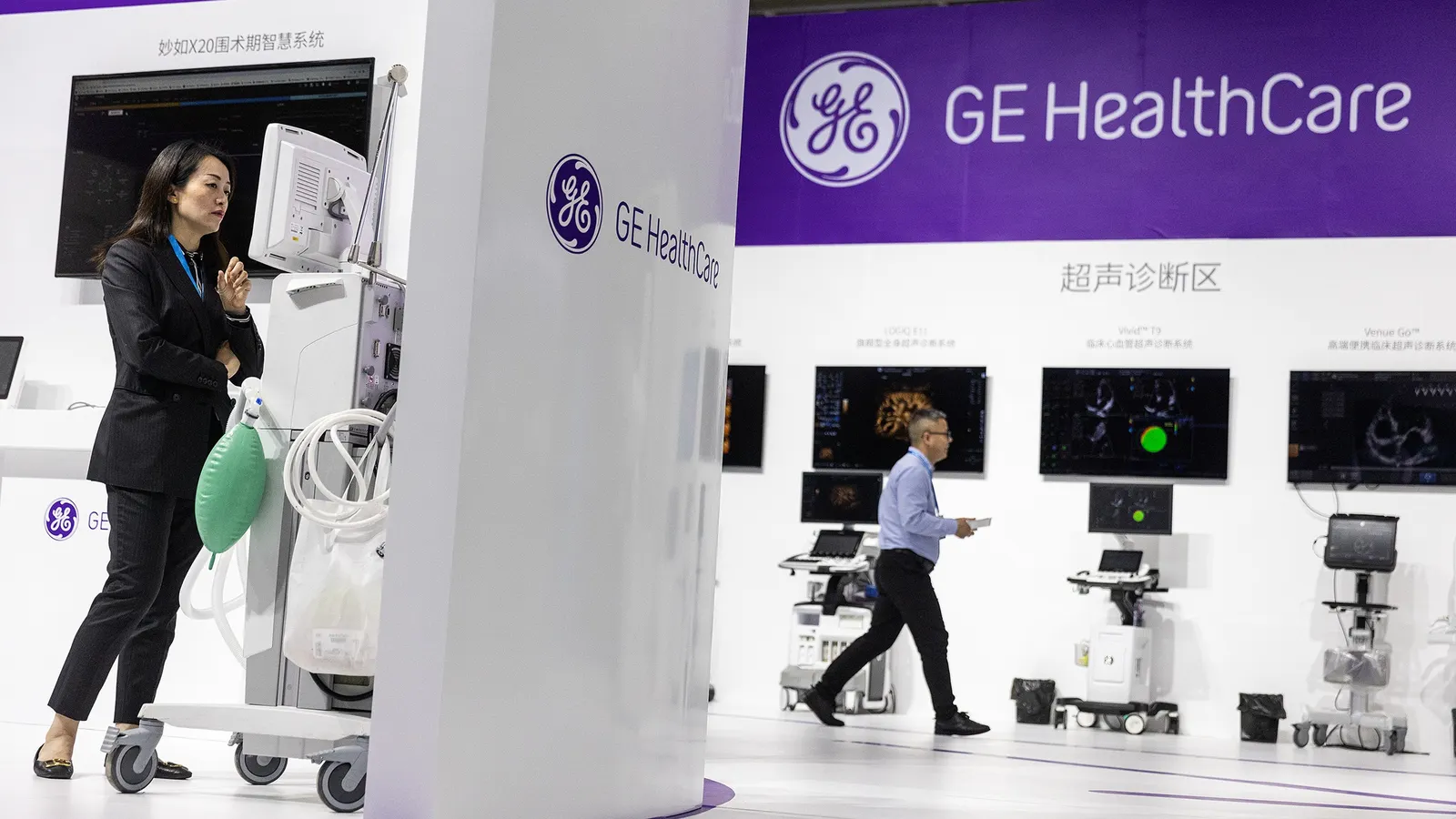
In a landmark move that signals the next frontier of medical technology, GE HealthCare has announced a strategic partnership with the renowned academic health system Mass General Brigham. The collaboration aims to revolutionize the radiation oncology workflow by integrating generative artificial intelligence (AI) directly into clinical decision-support systems. This initiative addresses one of the most persistent bottlenecks in modern medicine: the "data silo" problem that prevents clinicians from accessing a unified, patient-specific view of complex treatment pathways.
Main Facts: Solving the Fragmentation Crisis
Radiation oncology is a field defined by extreme complexity. A single patient’s journey involves oncologists, physicists, dosimetrists, and radiation therapists, all of whom rely on disparate digital systems that rarely communicate effectively. Medical records, high-resolution imaging, clinical notes, and precise treatment plans are often scattered across multiple platforms.
The GE HealthCare project seeks to unify these fragmented sources. By creating a centralized repository that pulls together structured healthcare data—such as laboratory results and vitals—with unstructured data like physician notes and radiological images, the system provides a holistic view of the patient. The core innovation lies in the application of generative AI, which acts as an intelligent layer on top of this data. Instead of clinicians manually hunting through folders and disparate applications, they can now "question" the data, asking the AI to summarize progress, highlight risks, or suggest personalized adjustments to treatment protocols based on the most current clinical evidence.
Chronology of a Technological Breakthrough
The roots of this collaboration trace back to the urgent need for efficiency in oncology departments nationwide.
- Pre-Collaboration Phase: Mass General Brigham identified a critical operational challenge: the time between a patient’s initial intake and the commencement of radiation treatment was hovering around 30 days. This lag time—often referred to as the "time-to-treat"—is a source of significant anxiety for patients and a major clinical concern, as cancer progression does not wait for administrative cycles.
- The Workflow Revolution: Leveraging existing software platforms from GE HealthCare, the hospital’s team worked to unify their internal workflows. This engineering effort proved transformative, successfully reducing the intake-to-treatment interval from 30 days down to just eight days.
- The Generative AI Pivot: With the infrastructure for unified data now in place, the partnership has entered a new phase: the integration of Large Language Models (LLMs) and generative AI. The current project aims to take the existing workflow efficiency and layer it with cognitive capabilities, enabling clinicians to interact with patient data in natural language.
- Present Day: GE HealthCare and Mass General Brigham are currently exploring how these generative tools can support clinicians in real-time decision-making, setting the stage for pilot programs that will test the software in high-acuity clinical environments.
Supporting Data: The Impact of Workflow Optimization
The success of the initial collaboration between GE HealthCare and Mass General Brigham provides a compelling case study for the value of interoperability in medical devices.
The reduction of the "time-to-treatment" metric from 30 days to eight represents a 73% increase in operational efficiency. In clinical terms, this does more than just improve hospital metrics; it represents a fundamental change in patient outcomes. Radiation therapy efficacy is often tied to the speed at which it can be initiated following a diagnosis. By eliminating the friction caused by information fragmentation, the clinical team is able to focus on the patient rather than the bureaucracy of data retrieval.
Furthermore, the scale of the information being synthesized is unprecedented. By combining structured EHR (Electronic Health Record) data with unstructured narratives, the system is designed to catch nuances that might be missed in a standard chart review. The goal is to move from a "reactive" model of patient care to a "proactive" one, where potential treatment adjustments are surfaced by the AI before a clinician even has to ask for them.
Official Responses and Strategic Vision
The leadership involved in the project views this as a fundamental shift in how technology supports, rather than replaces, the human clinician.
Sam Kandala, general manager for therapy guidance at GE HealthCare, emphasized that the project is not just about automation, but about empowerment. "The collaboration builds on the existing software by exploring how AI could help clinicians not only work more efficiently but also make better use of the information available to them as they personalize treatment for each patient," Kandala stated.
From the provider side, the emphasis is on the "human-in-the-loop" model. By synthesizing patient-specific information, the AI functions as a high-level assistant. It allows the physician to synthesize years of clinical notes and thousands of imaging slices in seconds, thereby preserving the physician’s cognitive energy for the most critical aspects of care: the bedside interaction and the complex, nuanced clinical judgment that no machine can currently replicate.
Implications for the MedTech Industry
The partnership between GE HealthCare and Mass General Brigham arrives at a pivotal moment for the medical device industry. As firms rush to integrate generative AI into their product pipelines, the regulatory landscape is rapidly shifting to catch up.
Regulatory Oversight and Safety
The FDA has taken notice of this industry-wide trend. Just last month, the agency issued a formal call for feedback regarding the regulation of generative AI in healthcare. The agency’s primary concern is that while these tools offer immense potential, they also introduce "unique risks." These risks include, but are not limited to, algorithmic bias, the potential for "hallucinations" (where an AI might generate incorrect or nonsensical clinical information), and the need for explainability—the ability for a clinician to understand why the AI made a specific recommendation.

The Future of Personalized Medicine
This project suggests that the future of medtech is moving away from standalone hardware and toward "ecosystems of care." GE HealthCare’s project is a clear indication that the company is transitioning from being a manufacturer of scanners and radiation equipment to a provider of intelligent diagnostic and therapeutic platforms.
If successful, this model could be applied across other therapeutic areas, such as cardiology or neurology, where data fragmentation is equally severe. By creating a template for how generative AI can be integrated safely and effectively into existing clinical workflows, GE and Mass General Brigham are effectively writing the playbook for the next generation of hospitals.
Ethical Considerations
As the system begins to synthesize clinical notes and images to suggest treatments, the industry must grapple with the ethical implications of AI-assisted medicine. Data privacy remains paramount, particularly when utilizing large datasets for model training. Furthermore, the industry must ensure that these tools are equitable. If the generative AI is trained primarily on data from a specific demographic, there is a risk that its recommendations may not be as effective for diverse patient populations. Both GE HealthCare and Mass General Brigham are under pressure to demonstrate that their AI systems are not only efficient but also robust, transparent, and fair.
Conclusion
The collaboration between GE HealthCare and Mass General Brigham is more than a technical upgrade; it is a profound reimagining of the oncology clinic. By addressing the fundamental problem of information overload and system fragmentation, they have already demonstrated a significant reduction in wait times for patients. The integration of generative AI serves as the next logical step in this evolution, potentially unlocking a new standard of personalized medicine.
However, the road ahead is complex. As the technology matures, the partnership will need to navigate evolving FDA regulations, ensure the highest standards of data security, and maintain the trust of clinicians who are ultimately responsible for patient lives. If they can achieve this balance, the GE-Mass General Brigham project may well serve as the blueprint for the intelligent, interconnected, and highly efficient hospitals of the 21st century. The transition from "data-rich but information-poor" to "information-driven and insight-focused" is the core promise of this new era of medical technology.