








Contributing Author: Blood Cancer United
September marks Blood Cancer Awareness Month, a time dedicated not only to celebrating the monumental strides made in oncology but also to addressing the evolving needs of a growing population: long-term cancer survivors. As survival rates for aggressive blood cancers climb, the clinical focus is shifting from "survival at all costs" to "quality of life after treatment." For a significant portion of younger patients, a paramount concern is the potential impact of life-saving therapies on their reproductive future.
Among the most revolutionary treatments in the modern medical arsenal is Chimeric Antigen Receptor (CAR) T-cell therapy. While this immunotherapy has provided hope for patients with refractory leukemia, lymphoma, and multiple myeloma, its long-term physiological footprint—specifically regarding fertility—remains an area of intense scientific inquiry. A collaborative research initiative led by Blood Cancer United, the Moffitt Cancer Center, and the University of Florida Health is now working to bridge this knowledge gap by gathering direct, patient-reported data.
The Evolution of CAR T-Cell Therapy: A Medical Breakthrough
To understand the complexity of these fertility questions, one must first understand the mechanism of the therapy itself. CAR T-cell therapy is a sophisticated form of immunotherapy that leverages the patient’s own immune system to combat malignancy.
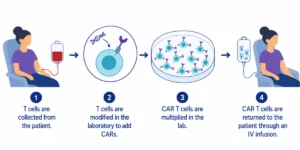
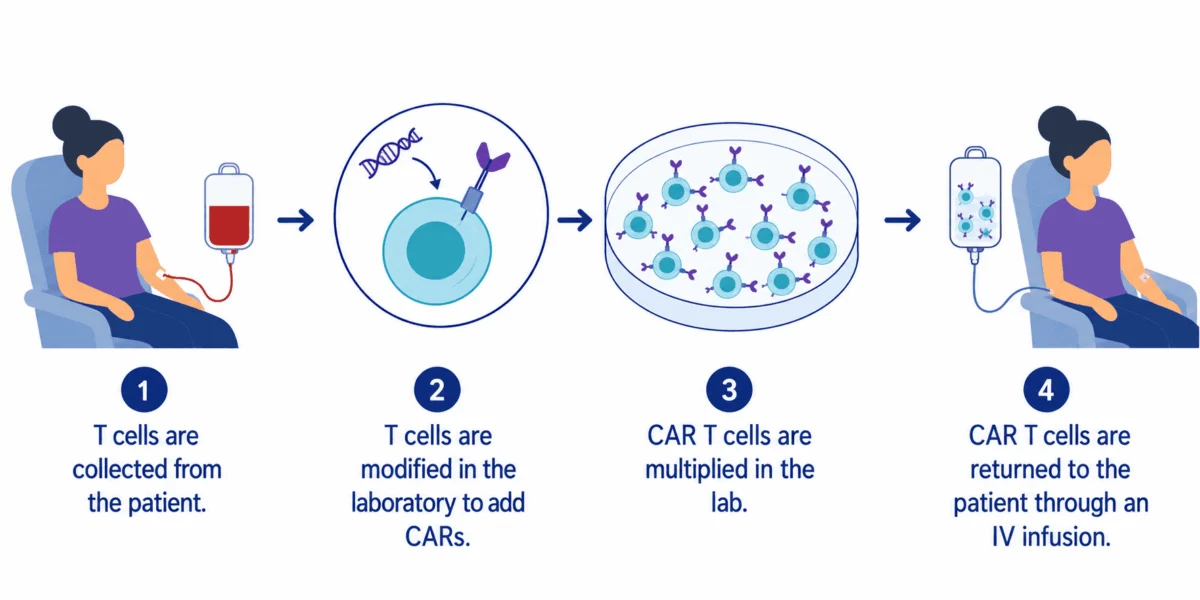
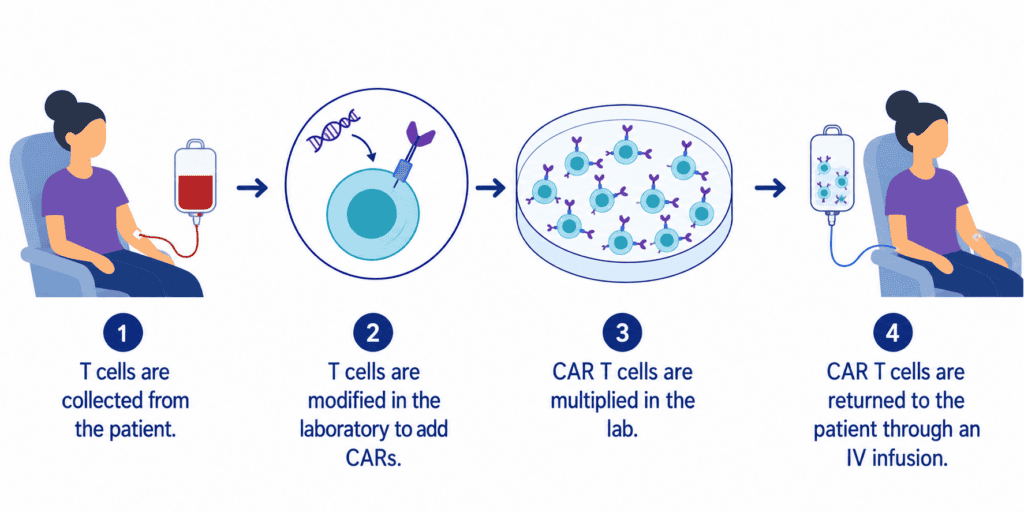
The process is highly personalized: a patient’s T cells—the "soldiers" of the immune system—are collected via apheresis and sent to a laboratory. There, they undergo genetic modification to express a chimeric antigen receptor (CAR). This receptor acts as a biological "GPS," programmed to recognize and bind to specific proteins found on the surface of cancer cells. Once these engineered cells are infused back into the patient, they multiply rapidly, seeking out and destroying the cancer with precision.
The journey to this point has been decades in the making. The field was catalyzed in 2010 by landmark research led by Dr. Carl June, a member of the Cancer Research Institute (CRI) Scientific Advisory Board, whose work with refractory leukemia patients proved that engineered T cells could achieve durable remissions. This success paved the way for the FDA’s inaugural approval of a CAR T-cell therapy in 2017. Today, this modality serves as a cornerstone of treatment for various blood-based malignancies, offering a lifeline where traditional options have failed.
The "Knowledge Gap": Why Fertility Data Has Been Elusive
If CAR T-cell therapy has been available for nearly a decade, why is our understanding of its impact on reproductive health still in its infancy? The answer lies in the history of the therapy’s development.
Historically, CAR T-cell therapy was reserved as a "last-line" treatment for patients with aggressive, relapsed, or refractory cancers. These patients typically arrived at the CAR T stage after having endured years of toxic, intensive treatments, including high-dose chemotherapy, total-body irradiation, and hematopoietic stem cell transplants. All of these prior interventions are well-documented to negatively impact fertility by damaging ovarian reserve or sperm production.
Furthermore, before the CAR T infusion occurs, patients undergo "lymphodepletion"—a short, intensive course of chemotherapy designed to make space in the body for the new, engineered T cells to expand. Because these patients are essentially "multi-treated," isolating the specific impact of the CAR T-cell infusion from the cumulative damage of prior therapies is a significant clinical challenge. Clinicians and researchers have struggled to determine if fertility struggles are a residual effect of the primary disease, the heavy-duty pre-conditioning, or the CAR T therapy itself.
Preliminary Insights: The Patient-Facing Survey
To resolve this ambiguity, researchers have turned to the most reliable source: the patients themselves. The joint study conducted by Blood Cancer United, Moffitt, and the University of Florida has launched a comprehensive survey to capture the reproductive experiences of adults who have undergone this therapy.
The preliminary findings, based on an initial cohort of 106 respondents, offer a glimmer of optimism. Out of the group, 32 individuals expressed a desire to have children post-treatment, and 12 attempted to conceive. Notably, six respondents reported successful pregnancies—four from female participants and two from the partners of male participants.
Crucially, none of these six pregnancies required the use of assisted reproductive technology (ART), such as IVF. While this data set is small and does not yet allow for a definitive scientific conclusion regarding the statistical impact of CAR T-cell therapy on fertility, it provides a vital, evidence-based starting point. It confirms that the path to parenthood remains a possibility for some survivors of advanced blood cancer.
Expanding the Lens: Data from Autoimmune Studies
The conversation surrounding CAR T therapy is no longer limited to oncology. Recent interest has spiked in using these therapies to treat severe, refractory autoimmune diseases, such as systemic lupus erythematosus.
Because the patient profile for these autoimmune trials often differs from the oncology population—specifically regarding their history of prior chemotherapy or radiation—their reproductive outcomes provide an invaluable "control" group of sorts. A 2026 report detailed 14 pregnancies across 13 patients who had received CAR T-cell therapy for autoimmune conditions, resulting in eight healthy live births.
While these findings cannot be directly extrapolated to cancer patients due to the differing underlying biology of their conditions, they do indicate that the therapy itself does not necessarily preclude reproductive health. Researchers are now working to synthesize these disparate data sets to form a more holistic picture of how CAR T cells interact with the reproductive system.
Implications for Clinical Care and Patient Counseling
The ultimate goal of this research is not merely to publish statistics, but to revolutionize the patient-doctor dialogue. Currently, many oncologists are hesitant to offer definitive guidance on fertility because the data simply hasn’t been there.
"These early findings are encouraging, but they also highlight how much we still need to learn," says Dr. Nina Logan, Senior Director of Research & Clinical Programs at Blood Cancer United. "Our goal is to give patients and their care teams better information about fertility after CAR T-cell therapy so they can have informed conversations about treatment, survivorship, and their plans for the future."
If researchers can clarify the exact risks, the implications for clinical practice are profound:
- Pre-treatment Counseling: Patients could be provided with evidence-based assessments of their fertility risk, allowing for timely decisions regarding egg or sperm freezing before lymphodepletion.
- Improved Survivorship Plans: Patients who have already undergone therapy could receive better guidance on when it is safe to attempt conception.
- Informed Consent: A clearer understanding of reproductive outcomes ensures that patients are empowered with the full scope of potential "life-after-cancer" impacts before committing to a treatment regimen.
The Road Ahead: Call for Participation
The current study is merely the first chapter in a much longer narrative. Researchers plan to continue examining long-term patient experiences, monitoring laboratory markers associated with reproductive function, and following birth outcomes in larger, more diverse cohorts.
For the medical community, this research represents a transition into the "next generation" of cancer care—a phase where survival is the baseline, and the pursuit of a full, meaningful life, including the ability to build a family, is an integrated part of the treatment journey.
Have you received CAR T-cell therapy for blood cancer?
The researchers are actively seeking participants for the CAR-T Fertility Survey. Adults aged 18 and older who have undergone this treatment are encouraged to contribute their experiences. By participating, patients provide the essential data needed to ensure that future generations of survivors have the knowledge they need to make informed decisions about their reproductive futures.
Interested individuals can participate in the CAR-T Fertility Survey here.
Summary of Key Scientific Sources
- Transplant Cell Ther (2024): Pediatric cancer immunotherapy and potential for impact on fertility: A need for evidence-based guidance. This paper outlines the urgent need for formal protocols in pediatric oncology.
- Tandem Meetings (2026): Fertility outcomes following CAR T-cell therapy: Results from a patient-facing survey. This presentation provided the preliminary data for the ongoing collaborative study.
- N Engl J Med (2026): Pregnancies in patients with autoimmune disease receiving CAR T-cell therapy. A critical look at how CAR T-cell therapies perform in non-oncology settings, offering new insights into safety.
- FDA (2026): Approved Cellular and Gene Therapy Products. A comprehensive list of current FDA-approved therapies, tracking the growth and reach of CAR T-cell technology.
Disclaimer: This article is intended for informational purposes only. The Cancer Research Institute (CRI) does not endorse or recommend specific study participation. Readers are encouraged to contact their own oncology care teams to discuss personal medical decisions and the relevance of new research to their specific health situation.