








Contributing Author: Blood Cancer United
September marks Blood Cancer Awareness Month, a period dedicated to honoring those affected by leukemia, lymphoma, and multiple myeloma. While the oncology community celebrates monumental breakthroughs in survival rates, the conversation is shifting toward the quality of life for long-term survivors. As medical science pushes the boundaries of how long patients can live, the focus is increasingly turning toward the personal milestones that define a life after cancer—including the prospect of starting a family.
For younger patients facing a diagnosis, the immediate priority is survival. However, once the cancer is in remission, the focus naturally shifts toward the future. A critical, yet often overlooked, question is whether life-saving treatments—specifically Chimeric Antigen Receptor (CAR) T-cell therapy—might affect a patient’s ability to conceive. A groundbreaking collaborative study led by Blood Cancer United, in partnership with the Moffitt Cancer Center and the University of Florida Health, is now working to bridge the knowledge gap surrounding this vital aspect of survivorship.
The Evolution of CAR T-Cell Therapy: A Medical Revolution
To understand the concerns regarding fertility, one must first understand the mechanism of CAR T-cell therapy. This advanced form of immunotherapy represents a paradigm shift in oncology. Unlike chemotherapy, which acts as a broad-spectrum weapon against rapidly dividing cells, CAR T-cell therapy is a highly personalized "living drug."
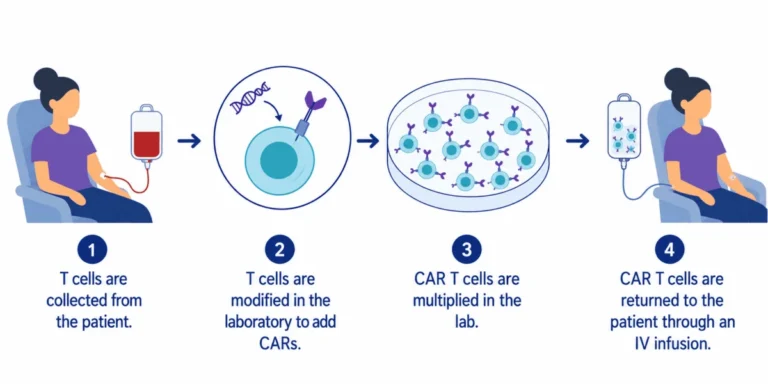
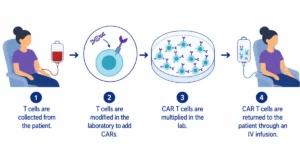
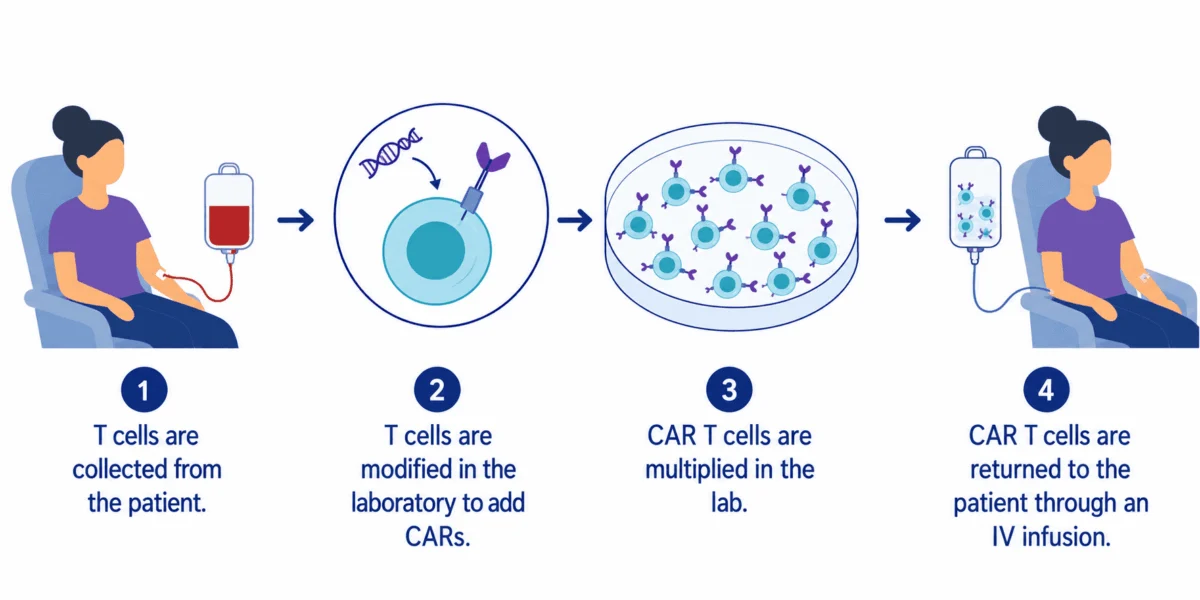
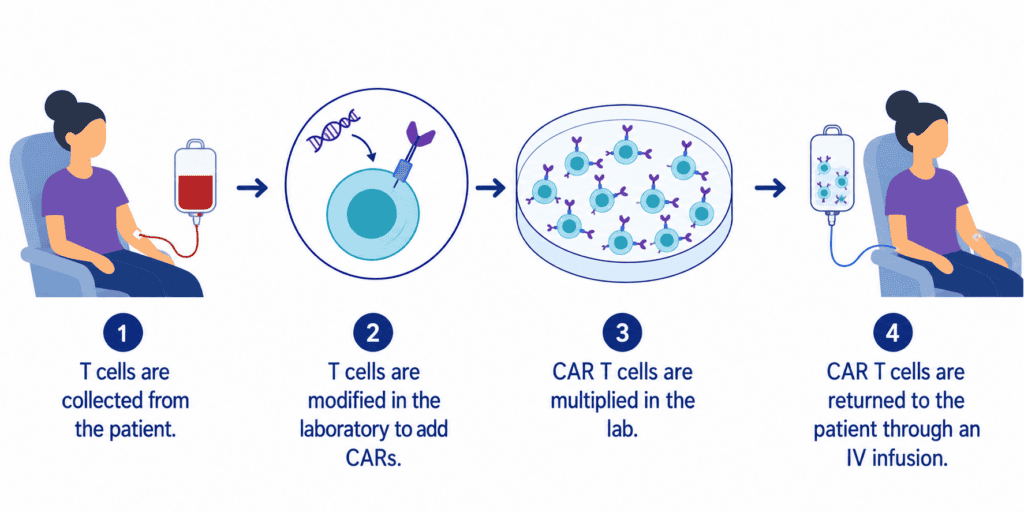
The process begins with the extraction of a patient’s own T cells—white blood cells central to the immune system’s defense. These cells are sent to a laboratory, where they undergo genetic modification. Scientists introduce a "chimeric antigen receptor" (CAR), which functions as a molecular homing beacon, enabling the T cells to identify and bind to specific proteins on the surface of malignant cancer cells. Once these engineered cells are multiplied in the lab and infused back into the patient, they patrol the body, identifying and neutralizing cancer cells with high precision.
The roots of this technology span decades of intense research. A watershed moment occurred in 2010 when Dr. Carl June and his team achieved long-term remissions in patients with refractory leukemia, a feat previously thought impossible. By 2017, the FDA granted its first approval for a CAR T-cell therapy, ushering in a new era. Today, these therapies are standard-of-care options for several aggressive blood cancers, offering hope where traditional treatments have failed.
The "Fertility Conundrum": Why Data Has Been Elusive
Historically, it has been remarkably difficult to isolate the effects of CAR T-cell therapy on the reproductive system. This is largely due to the profile of the "typical" patient. Most individuals who have historically qualified for CAR T-cell therapy were those with relapsed or refractory disease—patients who had already endured years of intensive chemotherapy, radiation, and perhaps hematopoietic stem cell transplantation.
Because these previous interventions are well-documented to potentially impact fertility, researchers have struggled to determine if post-treatment infertility is a result of the CAR T-cell therapy itself, the "lymphodepletion" chemotherapy administered immediately prior to the infusion, or the legacy of earlier toxic therapies. Furthermore, early clinical trials were laser-focused on safety and efficacy in patients with few remaining options, leaving little bandwidth for large-scale longitudinal studies on reproductive health.
Current Findings: An Encouraging Preliminary Snapshot
The new study spearheaded by Blood Cancer United, Moffitt Cancer Center, and the University of Florida Health represents the first systematic attempt to gather self-reported data from patients who have navigated this journey.
In a preliminary analysis of 106 survey respondents, researchers identified a significant cohort of survivors who expressed a desire for biological children. Of those respondents, 32 indicated a desire to have children post-treatment, and 12 had actively attempted to conceive. Perhaps most encouragingly, six of those individuals reported successful pregnancies—four female respondents and two partners of male respondents.
The data revealed that three of these pregnancies resulted in healthy live births, with three others ongoing at the time of the report. Notably, none of the participants required assisted reproductive technology (ART), such as in vitro fertilization (IVF). While these numbers are small and do not provide a definitive statistical profile of risk, they serve as a powerful proof-of-concept: successful conception and healthy births are indeed possible following CAR T-cell therapy.
Parallel Insights: Lessons from Autoimmune Research
While the oncology field seeks more robust data, researchers are finding unexpected clues in the study of autoimmune diseases. CAR T-cell therapy is currently being investigated for conditions like lupus, where the immune system attacks the body’s own tissues. Because these patients often have different medical histories than cancer patients, their reproductive data offers a unique vantage point.
A 2026 report provided significant evidence, documenting 14 pregnancies among 13 patients who had received CAR T-cell therapy for autoimmune disease. At the time of publication, eight healthy infants had been born. While these results cannot be directly mapped onto the cancer survivor population—due to differences in the underlying disease and the prior intensity of immunosuppressive therapies—they contribute to a growing body of evidence that suggests the body’s reproductive systems may be more resilient than previously feared following this specific type of immunotherapy.
Implications for Clinical Practice and Survivorship
The implications of this research are profound. Currently, oncologists often struggle to provide clear guidance regarding fertility to patients considering CAR T-cell therapy. If future research can definitively clarify the risks, it will transform the "informed consent" process.
Bridging the Knowledge Gap
Clinicians need evidence-based frameworks to advise patients on:
- Fertility Preservation: Determining when and if procedures like egg or sperm freezing should be prioritized before treatment.
- Post-Treatment Planning: Understanding the appropriate "washout" period required before attempting conception to ensure the safety of both the parent and the potential child.
- Risk Stratification: Identifying which patient subsets are at higher risk for fertility decline, allowing for more personalized care.
As Dr. Nina Logan, Senior Director of Research & Clinical Programs at Blood Cancer United, notes: "These early findings are encouraging, but they also highlight how much we still need to learn. Our goal is to give patients and their care teams better information about fertility after CAR T-cell therapy so they can have informed conversations about treatment, survivorship, and their plans for the future."
Call to Action: How Patients Can Contribute
The research effort is far from over. To build a comprehensive understanding, investigators are continuing to collect data on patient experiences, laboratory markers, and long-term reproductive outcomes.
The success of this study depends on the participation of survivors. If you are an adult age 18 or older who has received CAR T-cell therapy for a blood cancer, your experience is an invaluable data point that can help shape the future of oncology. By participating in the CAR-T Fertility Survey, patients contribute to a collective understanding that will empower the next generation of survivors to make decisions about their families with confidence and clarity.
Conclusion: A Future Focused on Quality of Life
The progress made in CAR T-cell therapy is a triumph of modern medicine. However, the true measure of a cancer cure is not just the elimination of disease, but the restoration of a full, vibrant life. As we continue to refine these therapies, integrating reproductive health into the standard of care is not a luxury—it is a necessity.
By prioritizing studies that examine life after treatment, the medical community is acknowledging that a patient’s life, dreams, and family plans are as critical as their blood counts and scan results. Through the dedication of researchers and the bravery of the patients sharing their stories, we are moving toward a future where "survivor" means not just living, but thriving in every aspect of life.
Sources and Further Reading
- "Pediatric cancer immunotherapy and potential for impact on fertility: A need for evidence-based guidance" – Transplant Cell Ther, 2024.
- "Fertility outcomes following CAR T-cell therapy: Results from a patient-facing survey" – Tandem Meetings | Transplantation & Cellular Therapy Meetings of ASTCT and CIBMTR, 2026.
- "Pregnancies in patients with autoimmune disease receiving CAR T-cell therapy" – N Engl J Med, 2026.
- "Approved Cellular and Gene Therapy Products" – U.S. Food and Drug Administration, 2026.
Disclaimer: This article is intended for informational purposes only. The Cancer Research Institute (CRI) and Blood Cancer United do not endorse or recommend specific study participation. Readers are encouraged to contact the research team directly regarding eligibility and clinical trial protocols.