



In the complex landscape of modern healthcare, few gaps are as persistent—or as detrimental to patient outcomes—as the divide between medical sleep physicians and dental sleep medicine practitioners. For patients suffering from obstructive sleep apnea (OSA) and other sleep-disordered breathing issues, this siloed approach often results in fragmented care, delayed diagnosis, and suboptimal treatment adherence. However, a transformative model, pioneered over the last two decades by sleep physician Mark Rasmus, MD, and dental sleep medicine practitioner Jamison Spencer, DMD, MS, is providing a blueprint for a more integrated future.
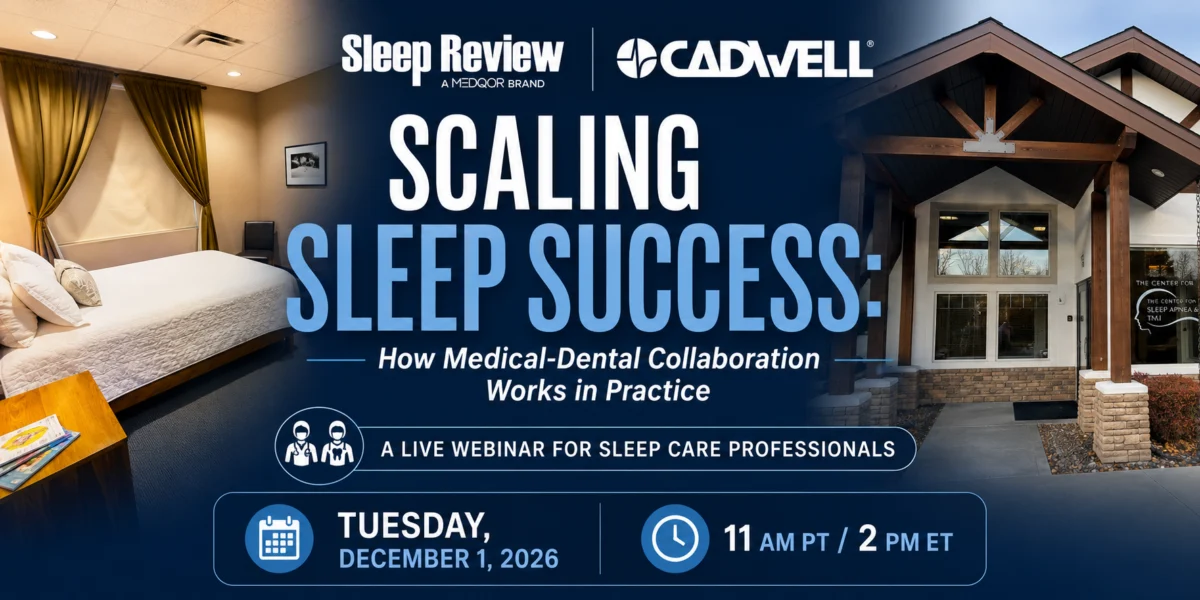
On Tuesday, December 1, at 11 am PT/2 pm ET, these two industry leaders will host a pivotal webinar detailing how their collaborative practice model has successfully bridged the medical-dental divide. By maintaining distinct business structures while synchronizing clinical operations, they have proven that cross-disciplinary cooperation is not just an ideal—it is a practical, scalable, and patient-centric reality.
The Main Facts: A Blueprint for Integrated Care
The core philosophy of the Rasmus-Spencer model is the recognition that sleep medicine is a multi-disciplinary endeavor. While the medical community typically focuses on the diagnostic phase and Positive Airway Pressure (PAP) therapy, dental practitioners bring specialized expertise in Oral Appliance Therapy (OAT). When these two worlds operate in isolation, the patient is often left to navigate a confusing referral system, which can lead to "treatment fatigue" and early abandonment of therapy.
The collaborative framework proposed by Dr. Rasmus and Dr. Spencer emphasizes three pillars:
- Mutual Clinical Trust: Establishing a shared standard of care where both the physician and the dentist speak the same clinical language.
- Streamlined Referral Pathways: Reducing the friction involved in moving a patient from a medical sleep diagnosis to a dental-led treatment intervention.
- Coordinated Long-Term Management: Ensuring that the transition between medical and dental settings is seamless, with consistent follow-up and objective data verification.
This webinar aims to move beyond theoretical discussions, offering attendees actionable strategies to replicate this model within their own communities. Whether a practitioner is looking to establish their first formal referral network or seeking to optimize an existing partnership, the insights provided will focus on practical, real-world application.
A Two-Decade Chronology: The Evolution of a Partnership
The journey of Dr. Rasmus and Dr. Spencer spans nearly twenty years, a duration that allows them to offer a longitudinal perspective on the evolution of sleep medicine.
The Formative Years (Early 2000s)
At the turn of the millennium, the integration of dentistry into sleep medicine was in its infancy. Many medical physicians were skeptical of the efficacy of OAT, while many dentists lacked the clinical training to participate in a medically managed environment. Rasmus and Spencer began their partnership by focusing on communication. They recognized that the primary barrier was not clinical competence, but rather the lack of a standardized protocol for how and when to cross-refer.
The Development of Shared Protocols (2010–2015)
As the body of evidence supporting OAT grew, the duo refined their workflows. They moved away from informal handoffs toward a structured clinical pathway. This involved the creation of joint documentation, shared electronic health record (EHR) communication protocols, and a commitment to objective testing. During this period, they realized that the "hand-off" was the most dangerous point in the patient journey; they developed a "closed-loop" communication system to ensure no patient fell through the cracks.
Modern Scalability and Advocacy (2015–Present)
Today, their collaborative model is recognized as a gold standard. Having interacted with thousands of patients, they have refined the criteria for patient selection—identifying exactly who benefits most from PAP, who is an ideal candidate for OAT, and which patients require combination therapy. Their current work focuses on the necessity of objective follow-up data to ensure that "treatment" does not simply mean "wearing an appliance," but rather "successfully treating the apnea."
Supporting Data: Why Integration Matters
The clinical urgency of this collaboration is supported by overwhelming data. According to the American Academy of Sleep Medicine (AASM), non-adherence to PAP therapy remains a major hurdle in the treatment of OSA, with estimates suggesting that nearly 50% of patients are not fully compliant with their machines after the first year.
The Efficacy Gap
While PAP remains the clinical "gold standard" for severe OSA, it is not a panacea for every patient. OAT provides a highly effective alternative for patients with mild to moderate OSA, or for those who are "PAP intolerant." However, the efficacy of OAT is highly dependent on the precision of the fit and the ongoing titration of the appliance. Without a medical physician to monitor objective sleep metrics (via home sleep apnea tests or follow-up polysomnography) and a dentist to adjust the device, the risk of "false efficacy"—where the patient feels better but the apnea remains untreated—is high.
Outcomes-Based Success
Dr. Rasmus and Dr. Spencer’s model emphasizes that collaboration leads to:
- Increased Treatment Uptake: Patients are more likely to pursue therapy when they feel a unified team is managing their care.
- Faster Titration: By sharing data, the dentist can make adjustments based on objective outcomes rather than just subjective patient reports.
- Better Long-Term Retention: A coordinated team is better equipped to troubleshoot problems, keeping the patient engaged in their treatment for years rather than months.
Official Responses: The Clinical Perspective
As part of the upcoming webinar, the presenters will address the common challenges that prevent such models from becoming the industry standard.
"Trust is the bedrock," Dr. Spencer notes in pre-webinar materials. "It is not just about sending a referral slip; it is about building a relationship where the physician is confident in the dentist’s ability to manage the device, and the dentist is confident that the physician will remain involved in the long-term management of the patient’s health."
Dr. Rasmus adds, "We have seen firsthand that when the silos come down, the patient outcomes go up. We aren’t just treating a symptom; we are managing a chronic condition. That requires a team approach, and it requires objective, data-driven communication."
The upcoming event will feature a dedicated Q&A session where these experts will address concerns regarding business structures, legal and compliance considerations, and the logistical challenges of maintaining two separate but integrated practices.
Implications: The Future of Sleep Care
The model promoted by Rasmus and Spencer has significant implications for the future of the healthcare industry. As the prevalence of sleep-disordered breathing continues to rise globally, the medical system is increasingly overwhelmed. By shifting the burden of minor appliance titration and long-term maintenance to qualified dental sleep medicine practitioners, medical physicians can focus their bandwidth on complex cases, comorbidities, and high-risk patients.
Enhancing Community Networks
For the average practitioner, the implication is clear: isolation is no longer a viable strategy. The future of sleep medicine lies in the creation of "micro-networks"—local groups of physicians, dentists, and sleep technologists who work in concert. The webinar serves as a practical guide for those looking to build these networks. By providing a template for communication and care coordination, the presenters are effectively lowering the barrier to entry for dentists and physicians who wish to improve the quality of care in their communities.
A Call to Professional Development
For attendees, the webinar is more than an educational opportunity; it is an invitation to elevate their practice. With a CSTE program application currently pending approval by the Board of Registered Polysomnographic Technologists (BRPT), the event underscores the professional rigor required to succeed in this space.
Join the Conversation
The live event on December 1 is designed to be highly interactive, ensuring that attendees walk away with specific, actionable strategies. The webinar will delve deep into:
- Patient Selection Criteria: How to identify the "right" candidate for OAT vs. PAP.
- The Complementary Nature of Treatment: How to combine therapies for maximum impact.
- Objective Testing Protocols: Why follow-up testing is non-negotiable in a modern, responsible practice.
- Navigating Referrals: How to overcome the "referral gap" and build lasting professional trust.
In an era where patient-centered care is the ultimate goal, the collaboration between Dr. Mark Rasmus and Dr. Jamison Spencer stands as a testament to what is possible when professionals prioritize patient outcomes over professional boundaries. This webinar is a must-attend for sleep medicine physicians, dentists, dental hygienists, sleep technologists, and anyone involved in the management of sleep-disordered breathing.
Event Details:
- Date: Tuesday, December 1
- Time: 11 am PT / 2 pm ET
- Format: Live Presentation followed by Audience Q&A
- Accreditation: CSTE program application submitted for approval by the BRPT.
As the industry continues to evolve, the lessons offered by these two pioneers will likely serve as the foundation for the next generation of integrated sleep care. Those who attend will not only gain insights into the technical aspects of sleep medicine but will also be equipped with the soft skills and structural knowledge necessary to build a thriving, collaborative practice in their own backyards.