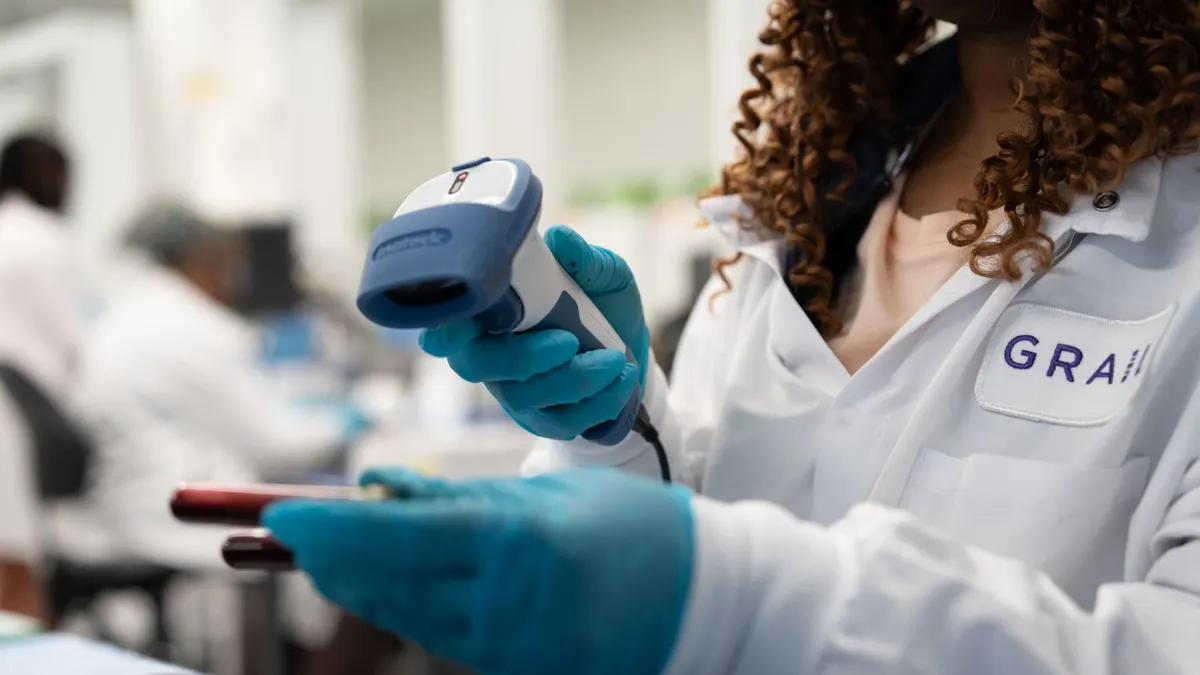
In the rapidly evolving landscape of liquid biopsy and cancer diagnostics, few technologies have generated as much anticipation—or as much scrutiny—as Grail’s Galleri test. A multi-cancer early detection (MCED) blood test designed to identify a shared cancer signal across more than 50 types of malignancy, Galleri stands at the precipice of a regulatory milestone. As the U.S. Food and Drug Administration (FDA) prepares to convene an advisory committee in September to review Grail’s premarket approval (PMA) application, the medical and investment communities are watching closely. The outcome of this meeting could not only determine the future of Grail as a company but also set the regulatory standard for an entire class of diagnostic devices.
The Main Facts: A Regulatory Watershed
The upcoming FDA advisory committee meeting represents the culmination of years of clinical development and rigorous data collection. Grail, which was spun out of Illumina before becoming an independent public company again, is seeking formal approval for a test that functions by detecting DNA shed by cancer cells into the bloodstream.
The FDA’s decision to convene an external panel of experts underscores the complexity of evaluating MCED technologies. Because these tests represent a paradigm shift in how cancer is screened—moving from organ-specific screenings (like mammograms or colonoscopies) to a pan-cancer blood test—the regulatory burden is significant. Analysts, including those at TD Cowen, have highlighted that the composition of this panel is critical. With the FDA historically aligning with its advisory committees approximately 80% of the time, the selection of these experts will likely serve as the strongest indicator of whether Galleri will reach the broader U.S. market as an FDA-approved device. Currently, market watchers estimate a 75% probability of a positive outcome for Grail.
Chronology of Development
The path to this September meeting has been marked by both technological breakthroughs and sobering clinical realities.
- 2018: The FDA grants the Galleri test "Breakthrough Device" designation, acknowledging its potential to address an unmet clinical need in cancer detection.
- 2023: Recognizing the industry-wide need for standardized evaluation, the FDA convenes a Molecular and Clinical Genetics Panel of the Medical Devices Advisory Committee to discuss the foundational study designs required for MCED tests.
- Early 2026: Grail officially submits its Premarket Approval (PMA) application to the FDA, triggering the formal review process.
- Mid-2026: Following the submission, results from a landmark three-year trial conducted with the U.K.’s National Health Service (NHS) are released. While the trial did not reach its primary endpoint of demonstrating a statistically significant reduction in late-stage cancer diagnoses, it provided a wealth of secondary data that Grail is now leveraging to make its case.
- June 2026: Bob Ragusa steps down, and the company installs new leadership to steer the firm through the critical regulatory and commercial transition.
- September 2026: The highly anticipated advisory committee meeting is scheduled to take place.
Supporting Data: Parsing the NHS Trial Results
The "elephant in the room" for many observers is the performance of the Galleri test in the U.K. NHS trial. The failure to meet the primary endpoint—a reduction in late-stage (Stage III and IV) cancers—initially caused concern among investors and clinical skeptics. However, Grail’s leadership has been quick to frame these results within a more nuanced context.
According to data presented by the company, while the primary endpoint remained elusive, there was a clear, favorable trend toward a reduction in late-stage diagnoses within a specific subset of 12 cancer types. Grail argues that these results, when combined with the company’s broader repository of clinical evidence, support the test’s efficacy in population-scale screening.
Furthermore, commercial traction remains strong. In the second quarter of 2026, Grail reported the sale of over 61,000 Galleri tests, marking a 35% year-over-year volume increase. This growth suggests that even without full FDA approval, there is a robust appetite among physicians and patients for advanced cancer screening tools. The company has also completed a significant expansion of its sales and medical science liaison teams, positioning itself to capitalize on a positive FDA decision.
Official Responses and Corporate Strategy
The transition in leadership at the top of the organization has not slowed the company’s momentum. Current management has emphasized that the Galleri test is not a replacement for traditional screening, but a complementary tool that can identify cancers that are otherwise invisible to current standards of care.
In recent earnings calls, leadership addressed the concerns regarding the NHS trial, reiterating that the trial provided invaluable insights into the real-world application of the test. The company’s strategy is built on the premise that identifying cancer earlier, even if the primary trial endpoint was missed, is an objective that remains the "holy grail" of oncology. By focusing on the potential to reduce the burden of Stage III and IV cancers, Grail is attempting to shift the narrative from a "failed trial" to a "data-rich developmental phase."
Implications for the Industry
The implications of the upcoming FDA meeting extend far beyond Grail. The regulatory path cleared here will likely establish the precedent for competitors such as Abbott and other diagnostics firms currently developing their own MCED screening tools.
The Regulatory Precedent
If the FDA approves the Galleri test, it will effectively define the "rules of the road" for multi-cancer screening. This includes determining the required sensitivity and specificity profiles, the acceptable methodologies for validating "signal of origin" (identifying where in the body the cancer is located), and the long-term clinical outcomes required for future manufacturers.
Clinical and Economic Impact
From a public health perspective, the successful deployment of an MCED test could fundamentally change mortality rates for cancers that are typically diagnosed too late for curative treatment, such as pancreatic or ovarian cancers. However, the medical community remains cautious. Critics have long warned about the risks of "over-diagnosis" and "over-treatment"—the potential for a blood test to identify indolent tumors that would never have caused the patient harm, leading to unnecessary biopsies, anxiety, and medical costs.

Investor Sentiment
For investors, the binary nature of the FDA advisory committee meeting represents a high-stakes moment. A positive recommendation would likely signal a new growth phase for Grail, justifying the company’s recent investments in sales infrastructure. Conversely, a negative recommendation would necessitate a significant pivot in strategy, potentially requiring additional clinical trials that could take years to complete and drain existing cash reserves.
Conclusion: The Road Ahead
As September approaches, the atmosphere surrounding Grail is one of cautious optimism tempered by the realities of regulatory science. The FDA’s advisory panel will be tasked with weighing the clinical benefit of early detection against the potential for psychological and physical harm caused by false positives or unnecessary follow-up procedures.
If the panel finds that the data, including the encouraging trends from the U.K. study, justifies the clinical benefit, Grail will be positioned to become the first company to bring an FDA-approved MCED test to the American public. This would not only be a triumph for Grail’s technological platform but a milestone in the history of preventative medicine.
For now, the industry watches, waits, and prepares for the evidence that will either validate the promise of liquid biopsy as a pillar of modern oncology or send the sector back to the drawing board to refine the science of early detection. Regardless of the outcome, the September meeting is set to be the most significant event in diagnostic oncology of the decade.