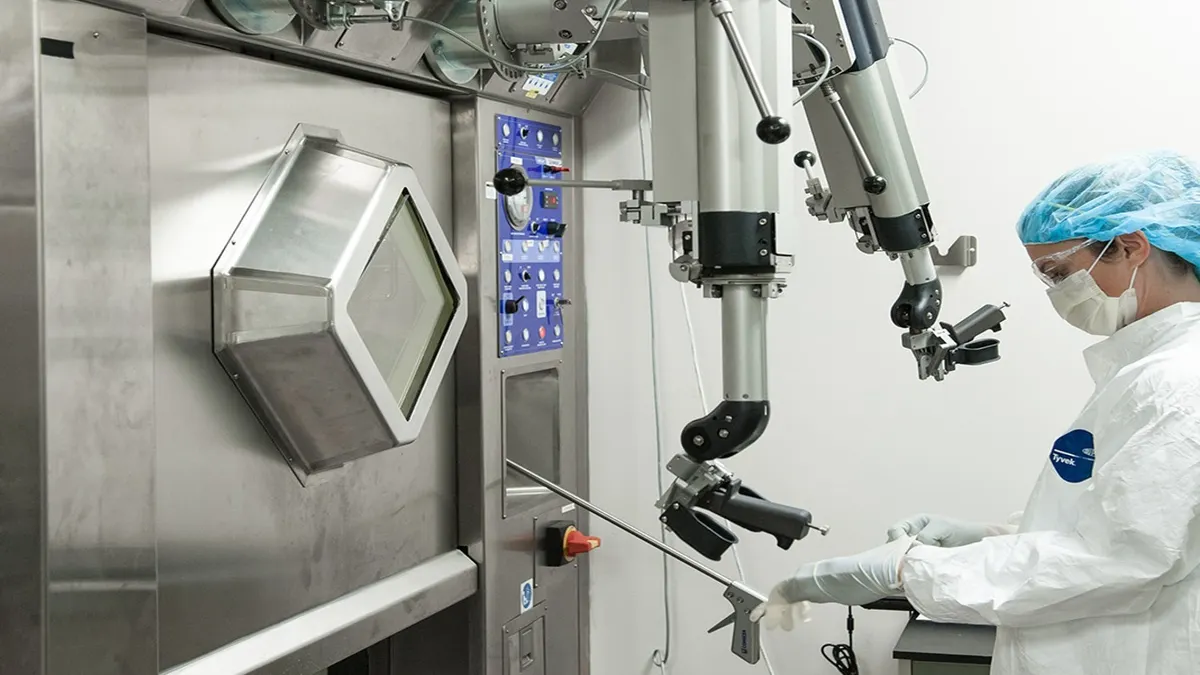
In a move that signals a significant shift in the competitive landscape of molecular imaging, GE HealthCare has announced its intent to acquire Sofie Biosciences, a move designed to fortify its manufacturing and distribution infrastructure for time-sensitive radiopharmaceuticals. The acquisition, which is expected to close in the first half of 2027, marks a major step in GE HealthCare’s effort to secure a vertically integrated position across the radiopharmaceutical value stream.
By absorbing Sofie Biosciences’ extensive U.S. network of 15 Contract Manufacturing Organization (CMO) sites, GE HealthCare aims to solve one of the industry’s most persistent challenges: the logistics of producing and delivering short-lived PET (positron emission tomography) imaging agents. As the demand for precision diagnostics grows, this deal positions GE HealthCare to become a central pillar in the future of personalized oncology and neurology.
The Strategic Imperative: Main Facts of the Acquisition
The acquisition brings Sofie Biosciences into the fold of GE HealthCare’s Pharmaceutical Diagnostics (PDx) business. PDx is a global leader in contrast media and molecular imaging agents, and the addition of Sofie’s infrastructure provides a critical "last-mile" capability.
Radiopharmaceuticals, particularly those used in PET scans, are characterized by their extremely short half-lives. This makes geography and manufacturing proximity to clinical sites paramount. Currently, GE HealthCare relies on a combination of internal production and external partners to distribute its proprietary F18 radiopharmaceutical products. By owning a dedicated network of 15 facilities, GE HealthCare gains direct control over the supply chain, ensuring that clinicians can access life-saving diagnostic tools with greater reliability.
Beyond manufacturing capacity, the deal grants GE HealthCare the U.S. rights to FAPI-74, a promising pipeline pan-cancer PET radiotracer. With the company already holding rights to the compound outside the U.S., this acquisition provides a unified global strategy for the development and commercialization of the asset.
Chronology: A Path Toward Integration
The journey toward this acquisition is rooted in a long-standing operational relationship between the two entities.
- The Partnership Phase: Sofie Biosciences had already established itself as a trusted partner for GE HealthCare, most notably serving as a key manufacturer for the company’s "Flyrcado" (flurpiridaz F 18) injection product. This product, designed for PET myocardial perfusion imaging, requires specialized manufacturing capabilities that Sofie has proven to deliver consistently.
- The Strategic Evaluation: Over the past 24 months, GE HealthCare leadership, under the guidance of PDx CEO Kevin O’Neill, identified that the primary bottleneck to radiopharmaceutical adoption was not a lack of scientific innovation, but a lack of infrastructure.
- The Announcement (2024/2025): Following successful negotiations, the companies reached a definitive agreement. The companies have projected a closing date in the first half of 2027, allowing for the necessary regulatory approvals and the complex integration of manufacturing compliance protocols.
- Post-Closing Vision: Upon completion of the transaction, Sofie Biosciences will transition into the GE HealthCare PDx umbrella while maintaining its status as an independent manufacturing partner for its existing client base.
Supporting Data and Market Dynamics
The acquisition of Sofie Biosciences is not merely a geographic expansion; it is a hedge against the rising demand for molecular imaging. Industry analysts at BTIG, led by expert observers such as Ryan Zimmerman, have long pointed to the "manufacturing bottleneck" as the primary constraint on the growth of the radiopharmaceutical market.
The Logistics Challenge
The half-life of many PET isotopes is measured in minutes or hours, not days. This "time-sensitive" nature necessitates a manufacturing footprint that is dispersed throughout the United States. Sofie’s 15 CMO sites provide a decentralized network that enables rapid transit times to hospitals and imaging centers.
Financial Impact
GE HealthCare has provided initial guidance suggesting that the acquisition will be accretive to its revenue growth and adjusted earnings per share (EPS) in the first full year of ownership. Furthermore, the company expects Sofie Biosciences to grow in the "low double digits," outpacing standard growth rates in the broader medical imaging sector. This growth trajectory is supported by:
- Increased Utilization: As more PET-based therapies and diagnostics enter the market, demand for the infrastructure that Sofie operates is projected to surge.
- Pipeline Synergy: The addition of FAPI-74 to the U.S. portfolio is expected to capture a significant share of the burgeoning pan-cancer imaging market.
Official Responses and Corporate Strategy
The leadership teams at both organizations have characterized the merger as a "natural evolution" of their existing professional ties.
Kevin O’Neill, CEO of GE HealthCare’s PDx business, stated:
"As part of GE HealthCare, Sofie Biosciences is expected to grow in the low double digits, and enables us to participate across the radiopharmaceutical value stream, meeting customer demand through a mix of GE HealthCare-owned and partner facilities."
The sentiment from the GE HealthCare executive suite emphasizes a "value stream" approach. Rather than acting simply as a product developer, GE HealthCare is positioning itself as the critical infrastructure provider for the entire industry. By maintaining Sofie’s existing contracts with other radiopharmaceutical providers, GE HealthCare is signaling a commitment to market stability, ensuring that competitors and collaborators alike still have access to the vital manufacturing capacity that Sofie offers.
Implications: The Future of Radiopharmaceuticals
The integration of Sofie Biosciences into GE HealthCare will likely send ripples through the medtech and biopharma industries, carrying several long-term implications.

1. Easing Adoption Bottlenecks
The radiopharmaceutical industry has historically struggled with a "chicken and egg" problem: clinicians are hesitant to adopt advanced imaging agents if supply is unreliable, but manufacturers are hesitant to build supply chains until adoption is guaranteed. By acquiring a massive footprint, GE HealthCare is effectively breaking this cycle, providing the "industrial muscle" needed to move high-tech diagnostics from clinical trials to standard-of-care.
2. The Rise of "Theranostics"
The acquisition places GE HealthCare at the forefront of the "theranostics" movement—a medical approach that combines diagnostic imaging (PET) with targeted therapy. Because PET imaging is essential for identifying patients who will respond to specific molecular therapies, GE HealthCare’s control over the diagnostic imaging supply chain makes it an indispensable partner for pharmaceutical companies developing the next generation of cancer therapies.
3. A Model for Vertical Integration
This deal may serve as a template for other major players in the medical device and diagnostics space. As healthcare moves toward increasingly customized, patient-specific treatments, companies that own the entire manufacturing and distribution ecosystem will likely outperform those that rely on fragmented, third-party logistics.
4. Regulatory and Competitive Landscape
While the acquisition is framed as a benefit to the market, it will likely draw close scrutiny from regulatory bodies regarding market competition. By controlling 15 key manufacturing sites, GE HealthCare becomes a dominant gatekeeper. However, the company’s commitment to continue serving Sofie’s existing customers is a strategic move to preempt antitrust concerns, framing the acquisition as an expansion of capacity rather than a restriction of choice.
Conclusion
The acquisition of Sofie Biosciences represents a transformative moment for GE HealthCare. By securing the physical infrastructure required to manufacture and distribute time-sensitive radiopharmaceuticals, the company is insulating itself against supply chain volatility while simultaneously positioning itself as the backbone of modern molecular imaging. As the industry moves toward 2027 and the expected closing of the deal, the focus will shift to how effectively GE HealthCare can integrate these assets without disrupting the critical, time-sensitive supply chains that clinicians rely on every day.
For the broader medical community, this represents a promise of greater accessibility, more reliable diagnostics, and a more robust foundation for the future of precision medicine. The success of this integration will ultimately be measured by the ability of GE HealthCare to maintain the agility of Sofie’s network while scaling it to meet the explosive global demand for PET imaging.