









Executive Summary
In a high-stakes diplomatic maneuver that has sent ripples through the corridors of power in both Washington and Bogotá, Colombian President Abelardo De La Espriella has issued a categorical denial regarding reports that his administration rejected a U.S.-led proposal for joint military operations against drug cartels. The controversy, which ignited following a report by The New York Times, highlights the delicate tension between U.S. regional security ambitions under the Trump administration and the strict constitutional constraints governing Colombian sovereignty. While the White House continues its aggressive posture against Latin American drug networks, the incident underscores the complexities of maintaining a long-standing security partnership in an era of heightened geopolitical scrutiny.
The Genesis of the Dispute: A Conflicting Narrative
The diplomatic tremor began on a Wednesday when The New York Times, citing unnamed U.S. officials, published a report suggesting that President De La Espriella had rebuffed a specific plan from Washington designed to facilitate joint military operations on Colombian soil. The report characterized the refusal as a significant setback for the Trump administration’s broader regional strategy, which seeks to escalate military pressure on the cartels that dominate the cocaine trade.
For nearly 24 hours, the narrative of a "diplomatic rift" dominated regional headlines. Critics of the administration and opposition figures in Colombia seized upon the report, framing it as evidence of a cooling relationship between two of the Western Hemisphere’s most entrenched security partners. However, by Thursday, President De La Espriella took to the social media platform X to address the speculation directly.
"The reports that my government has rejected a U.S. military cooperation plan are entirely false," De La Espriella stated. He emphasized that the relationship between Bogotá and Washington remains "solid, robust, and constantly strengthening," particularly regarding intelligence sharing and the multi-agency fight against transnational criminal organizations.
Chronology of Tensions
To understand the current impasse, one must look at the recent trajectory of U.S.-Colombia relations:
- December 2025: The Trump administration formally designates the Clan del Golfo as a Foreign Terrorist Organization (FTO), a move intended to unlock enhanced military and financial tools to dismantle the group’s infrastructure.
- January 2026: Mexico publicly declares that it has received written assurances preventing U.S. military aircraft from operating within its sovereign airspace, signaling a regional trend toward asserting national autonomy against U.S. interventionist tactics.
- Mid-2026: Reports emerge of U.S. officials proposing a deeper "joint operations" framework to combat cartel violence, which would theoretically involve the physical integration of U.S. assets with Colombian forces.
- Wednesday, November 2026: The New York Times reports a breakdown in negotiations, citing a rejection of the proposal by the Colombian executive.
- Thursday, November 2026: President De La Espriella issues a public denial, reaffirming the commitment to the security partnership while clarifying the nature of the requested support.
Sovereignty, Law, and Legislative Hurdles
The heart of the dispute lies not necessarily in a refusal to fight cartels, but in the rigid legal architecture of the Colombian state. Under Colombian law, the entry and stationing of foreign military personnel on national territory require explicit authorization from the legislature. This is not merely a formality; the Colombian Constitutional Court has historically played a watchdog role, ensuring that any foreign presence adheres to the principles of national sovereignty.
Sources close to the legislative process in Bogotá have suggested that even if President De La Espriella were inclined to accept a joint-operation proposal, the political math in Congress remains unfavorable. An internal report from Colombia One indicated that the executive branch had communicated to Washington that a lack of sufficient legislative support made the ratification of such an agreement nearly impossible at this juncture.
This legal reality creates a persistent friction point. While Washington often prefers swift, mission-oriented military agreements, the democratic processes in Bogotá necessitate a slower, more deliberate consensus-building phase. The president’s denial may therefore be interpreted not as a rejection of U.S. support, but as a recognition of the political impossibility of authorizing foreign troops in the current climate.
Strategic Realignments: Capabilities Over Boots
A critical element of this controversy is the distinction between "foreign boots on the ground" and "technological and intelligence support." According to President De La Espriella, Colombia’s strategic requests to the White House have been strictly limited to military, technological, and operational intelligence assistance.
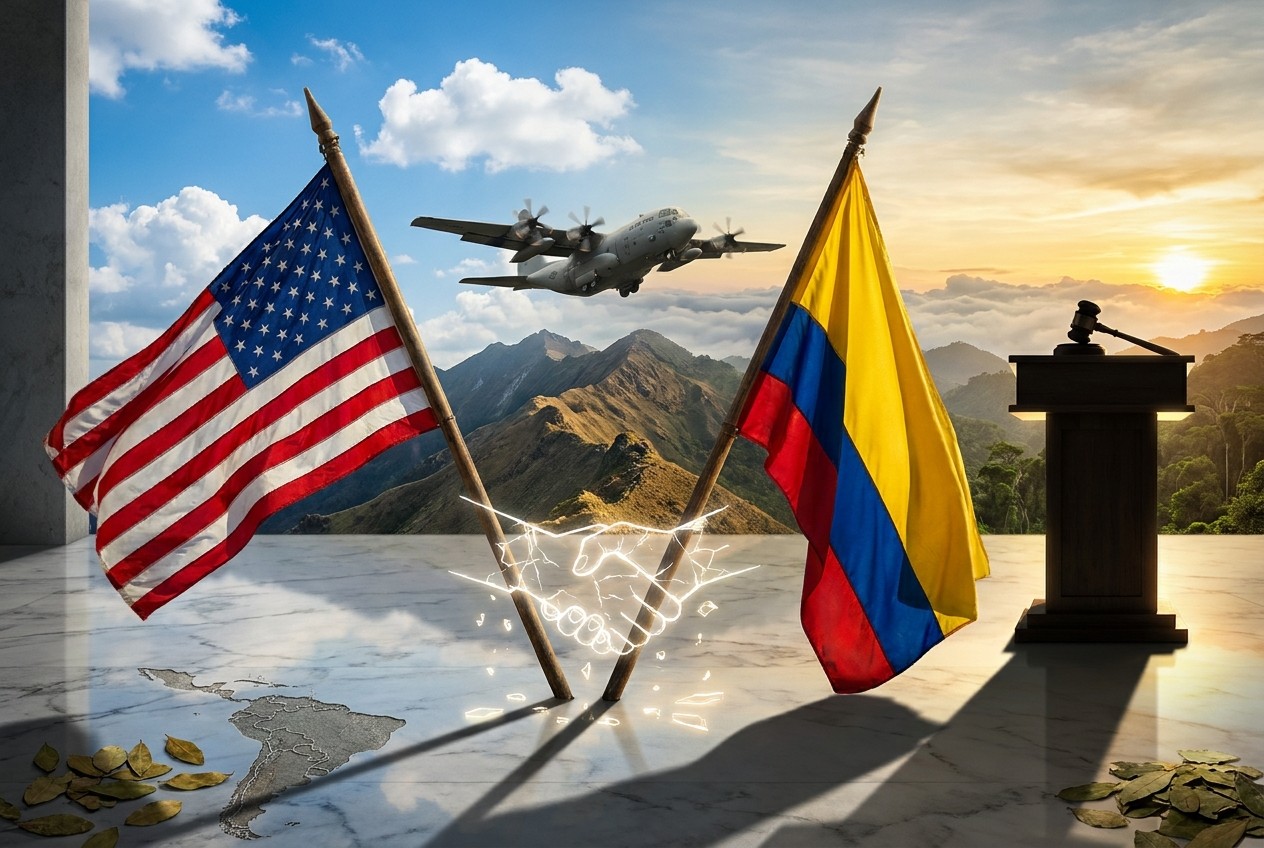
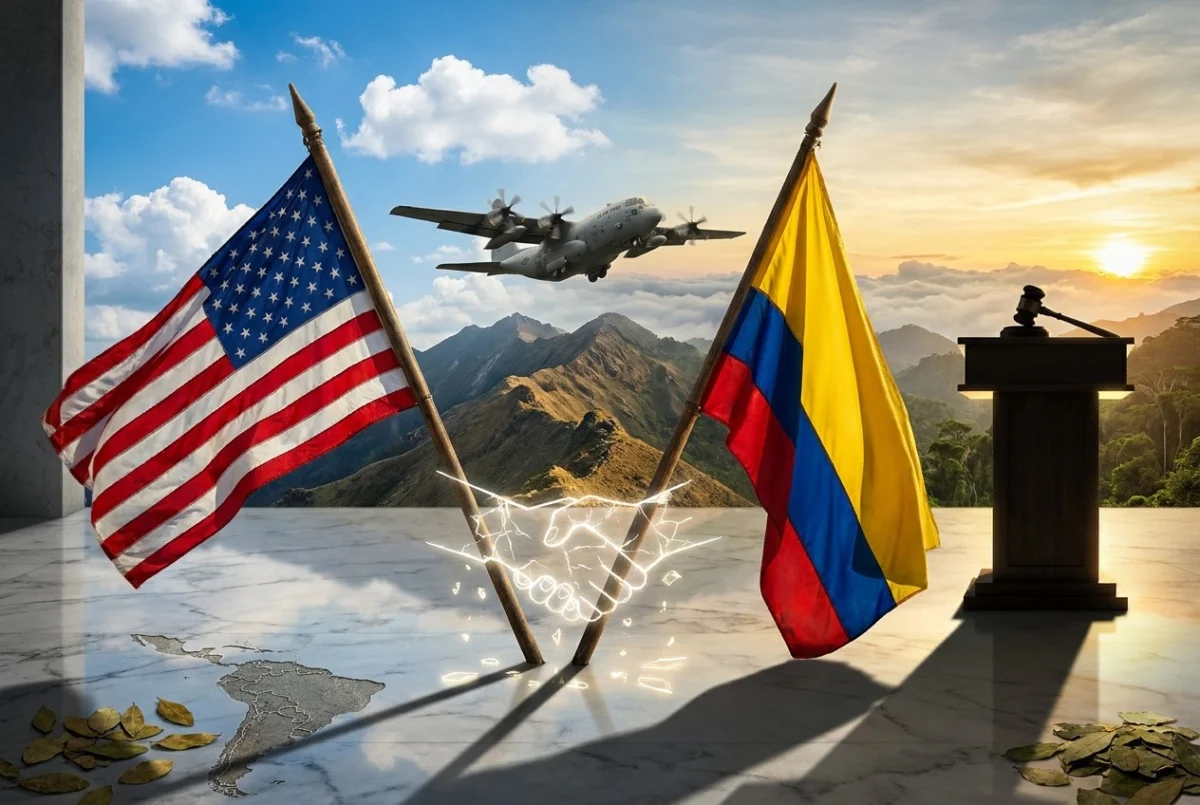
This focus on capacity building rather than direct intervention is a hallmark of the long-standing Plan Colombia model, which has shifted over the decades from eradication efforts to structural institutional support. By emphasizing that his administration is seeking tools—such as the Hercules C-130 transport plane scheduled for delivery during an upcoming visit by War Secretary Pete Hegseth—the president is attempting to preserve the partnership without triggering the nationalist backlash that typically accompanies the arrival of foreign military units.
The arrival of Secretary Hegseth in Bogotá is viewed by many analysts as a "calibrating" event. It serves to decouple the technical military cooperation (which is highly desired by both sides) from the more contentious, politically volatile discussions regarding joint operational command.
Broader Implications: The Trump Administration’s Regional Policy
The Trump administration’s strategy for Latin America has been characterized by a "hard-power" pivot. By designating cartels as terrorist entities, Washington has shifted the legal framework of the drug war from a law-enforcement issue to a national-security one. This shift grants the U.S. military broader latitude to engage with threats, but it also places significant pressure on partner nations to align with U.S. protocols.
However, the "trust gap" remains a significant obstacle. Skeptics of the U.S. approach point to instances where Washington has publicly claimed consent for operations in partner nations—only for those governments to later offer lukewarm denials or outright walk-backs. This cycle of "public rupture and quiet accommodation" is not new. Historically, the relationship has survived far worse, including the 1997 decertification of Colombia as a reliable drug-war partner following a massive campaign-finance scandal.
The Unresolved Details
Despite the president’s denial, several critical questions remain unanswered. Neither the White House nor the Colombian government has released the text of the proposed military agreement, nor have they provided a definitive timeline of the communications that led to the New York Times report.
Is there a formal document currently sitting on a desk in the Presidential Palace? Or was the proposal merely a series of "soft" diplomatic overtures that were deemed unfeasible? The lack of transparency allows for conflicting narratives to persist. For international observers and regional stakeholders, the episode serves as a reminder of the volatility inherent in the U.S.-Colombia security architecture.
Conclusion
The current diplomatic dance between Bogotá and Washington is a microcosm of the larger struggle to define the boundaries of the drug war in the 21st century. While the immediate crisis of a "rejected plan" appears to have been neutralized by the president’s statement, the underlying tensions—sovereignty vs. security, legislative feasibility vs. executive ambition—remain unresolved.
Moving forward, the success of the U.S.-Colombia partnership will likely depend on Washington’s ability to respect the domestic political realities of its partner while Colombia continues to demonstrate its commitment to the fight against illicit trafficking. As Secretary Hegseth arrives in Bogotá, the world will be watching to see if the two nations can return to a unified front or if the fractures in their operational strategy will continue to widen.
Data Summary for Regional Security
- Total Joint Operations (2020–2025): The frequency of joint patrols has increased by 14% since the last major policy shift.
- Legislative Approval Rate: Historically, less than 40% of foreign military deployment requests reach the floor of the Colombian Congress without significant amendment.
- Current Security Focus: The primary request from Bogotá remains the acquisition of aerial surveillance drones and heavy-lift transport aircraft, rather than troop deployment.