







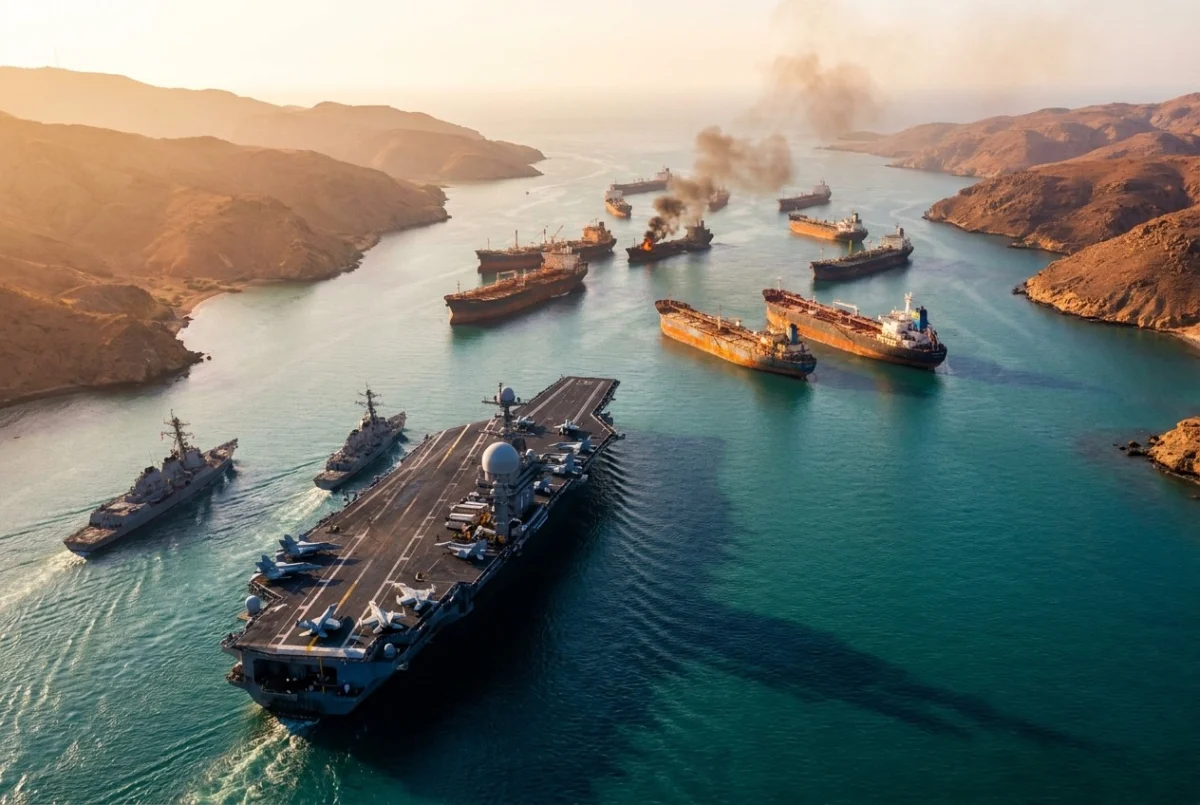
WASHINGTON – The geopolitical landscape in the Middle East has reached a precarious inflection point as President Donald Trump signals a hardened stance against Iran, threatening significant military retaliation following a missile strike on a U.S.-hosted base in Jordan. As the administration weighs further strikes against Iranian infrastructure, top Pentagon officials have issued rare and stark warnings regarding the sustainability of current operations, citing critical munitions shortages and the exhaustion of military resources required to maintain a global security posture.
The Brink of Escalation: A New Round of Hostilities
On August 31, President Trump addressed the volatile situation in a televised interview with Fox News, vowing that the United States would "hit them hard" in response to an Iranian missile barrage targeting the Muwaffaq Salti Air Base in Jordan. This rhetoric followed a series of tit-for-tat kinetic exchanges. Only a day prior, the U.S. military reported striking two Iranian rocket launchers near the Strait of Hormuz, which officials claimed were being prepared to deploy sea mines.
The retaliatory strike on the Jordanian base—a facility critical to U.S. operations in the region—has further collapsed the already fragile diplomatic framework established in June. Following the attack, President Trump shared a social media post suggesting that Kharg Island, the centerpiece of Iran’s energy export infrastructure, could be "blown to smithereens."
The market reaction was immediate. Brent crude, the global benchmark, surged 2.5% to trade at $90.35 per barrel on August 31. The volatility reflects growing investor anxiety that the "lull" in active combat is merely a prelude to a wider, more systemic disruption of global energy supplies.
A Chronology of Conflict: From Blockades to Battlefield
The current escalation is the culmination of months of friction centered on the world’s most critical maritime chokepoint: the Strait of Hormuz.
- April 2026: A U.S.-led naval blockade of Iranian ports went into effect following the collapse of marathon diplomatic talks in Islamabad. The blockade served as the primary catalyst for the current regional instability.
- Summer 2026: Tensions flared into open naval skirmishes. Iran, asserting its sovereignty over the transit corridor, threatened to fine or confiscate any commercial tankers deemed in violation of its maritime regulations.
- September 10 (Historical Context): The Islamic Revolutionary Guard Corps (IRGC) destroyed a U.S. Saildrone Explorer reconnaissance vessel at the mouth of the Strait. The release of footage showing the unmanned craft burning underscored the technological and asymmetric nature of the conflict.
- August 30, 2027: The U.S. struck Larak Island, the first publicly acknowledged attack on Iranian soil in weeks, triggering the retaliatory missile strike on the Muwaffaq Salti Air Base in Jordan.
The situation has effectively left the Strait of Hormuz in a state of suspended animation. Mines, frequent ship seizures, and the total withdrawal of commercial maritime insurance have rendered the waterway essentially closed to international trade.
The Pentagon’s Dilemma: Strategic Overstretch and Munitions Shortages
While the White House maintains a hawkish posture, the internal sentiment within the Department of War paints a picture of a military pushed to its breaking point. According to The Washington Post, a coalition of high-ranking U.S. generals—including the heads of the Army, Navy, and Air Force, as well as the commanders of European, Pacific, and Southern Commands—formally issued a "non-concur" to Secretary of War Pete Hegseth regarding his recent orders to extend troop deployments.
These commanders warned that a prolonged, large-scale conflict with Iran is unsustainable. The fundamental concern is that the "surge" of military assets from Europe and East Asia to Central Command has created dangerous power vacuums elsewhere. The reallocation of resources has left the U.S. military vulnerable to potential provocations from other global adversaries, particularly as intelligence reports suggest high-level discussions in Moscow regarding potential threats to NATO members.
The Munitions Crisis
The logistical strain is not merely limited to personnel; it is a crisis of hardware. Reports from the Associated Press and Reuters indicate that the U.S. has reached a "beyond critical" shortage of advanced missile interceptors, specifically Patriot systems. These systems have been heavily utilized in both the defense of Ukraine and the ongoing "Operation Epic Fury" in Iran.
Furthermore, the U.S. has reportedly exhausted its stockpile of sophisticated long-range surface-to-surface weaponry, including the Army Tactical Missile System (ATACMS) and Precision Strike Missiles. The Inspector General for the Department of War has noted that domestic supply chains are experiencing severe "bottlenecks," making rapid replenishment nearly impossible under current conditions.
Economic Implications: Inflation and the Energy Crisis
The policy of maximum pressure on Iran has had a visceral impact on the American domestic economy. The Strategic Petroleum Reserve (SPR), once the nation’s primary buffer against global shocks, has plummeted to 285.4 million barrels—the lowest level since 1982.
The downstream effects are most acute in the agricultural heartland. Farmers across the Corn Belt are facing the most severe economic pressure in four decades. Geopolitical tension has pushed the national average price of diesel to over $6 per gallon, a 60% increase year-over-year. As diesel is the lifeblood of agricultural machinery and logistics, these costs are contributing to broader inflationary pressures that show no sign of abating.
Former Pentagon analyst Scott Ritter has suggested that these entanglements are less about immediate strategic necessity and more about the historical tendency for U.S. foreign policy to be hijacked by regional alliances. In his analysis, "Target Iran," Ritter warns that by elevating a regional dispute into a global conflict, the administration risks outcomes that exceed the original scope of the mission.
Official Responses and Global Reaction
The international community has reacted with significant alarm. The BRICS bloc issued a formal declaration on September 12, expressing "deep concern" and urging both Washington and Tehran to practice "maximum restraint." China has been particularly vocal, condemning the proposed naval blockade of Iranian ports as "irresponsible and dangerous," warning that it threatens to shatter the remaining foundations of the regional ceasefire.
Domestically, the Trump administration remains divided between aggressive posturing and electoral strategy. Secretary of Energy Chris Wright has signaled that a negotiated settlement may be off the table entirely until a change in the Iranian regime occurs, stating, "There may not be a nuclear agreement. It may be simply destroying their capabilities."
Conversely, President Trump has attempted to frame the conflict as a temporary necessity, asserting that the war will end "immediately" following the U.S. midterm elections, at which point he predicts energy prices will begin "tumbling downwards."
Outlook: The Path Ahead
As of now, the administration insists that "all options are on the table." However, the lack of a clear exit strategy, combined with the dissent of the Joint Chiefs and the depletion of the nation’s strategic munitions, suggests a government caught between the inertia of its own policy and the harsh realities of global logistics.
With the 60-day Memorandum of Understanding between the U.S. and Iran long expired and diplomatic channels effectively "comatose," the world awaits the next move in the Strait of Hormuz. Whether the current tension leads to a de-escalation or a total rupture in regional stability remains the defining question for the remainder of the 2027 fiscal year.
For the American public, the conflict is no longer a distant diplomatic issue but a tangible economic burden, one that sits squarely at the center of the upcoming political cycle. As military leaders warn of the dangers of overstretching the force, the White House continues to walk a razor’s edge between maintaining global hegemony and risking a conflict that it may no longer be equipped to win decisively.