











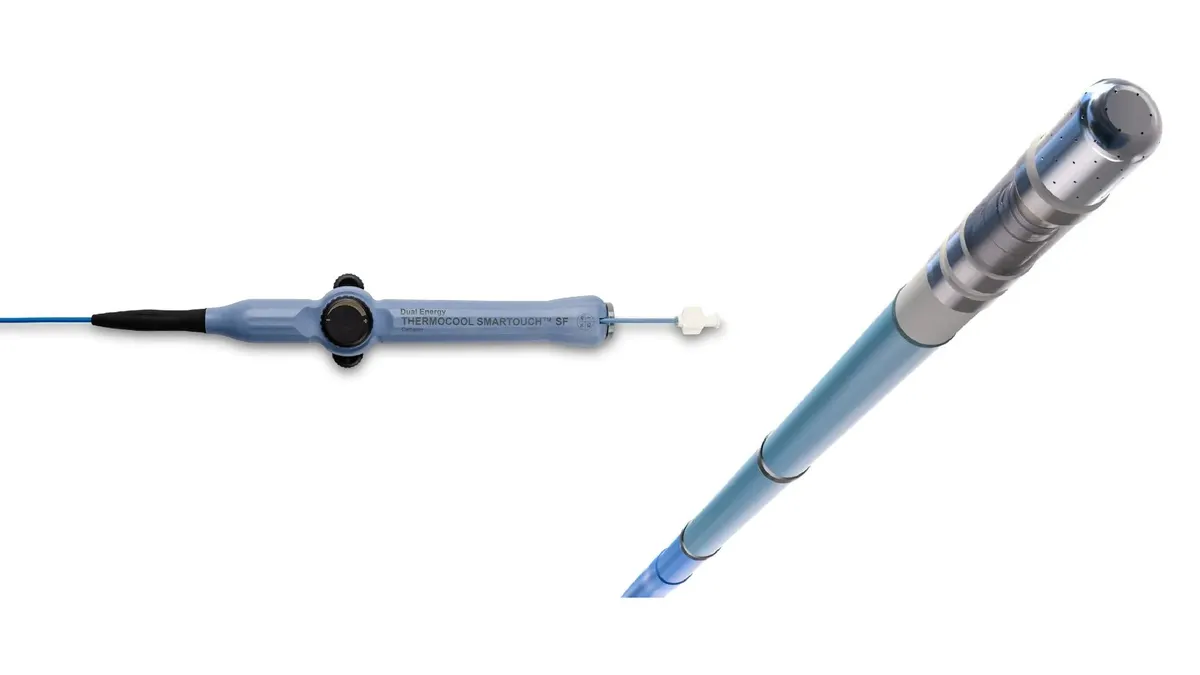
Johnson & Johnson MedTech is preparing for a pivotal summer in the competitive landscape of cardiac electrophysiology. As the company initiates a phased commercial rollout of its Dual Energy Thermocool Smarttouch SF Platform in the United States, the move represents a critical strategic pivot in the wake of previous regulatory and market hurdles. With the device already demonstrating positive traction in European markets, industry analysts and company leadership alike are watching closely to see if this innovation will solidify J&J’s standing in the rapidly evolving field of pulsed field ablation (PFA) and radiofrequency (RF) treatment.
The Evolution of Cardiac Ablation: A Chronology of Market Dynamics
The cardiac ablation market—a multi-billion dollar sector focused on treating atrial fibrillation (AFib)—has undergone a radical transformation over the past three years. For decades, radiofrequency (RF) energy was the gold standard, but the emergence of Pulsed Field Ablation (PFA) has disrupted the status quo by offering a more efficient, tissue-selective method for scarring cardiac tissue.
The Race for PFA Leadership
The competitive landscape shifted significantly when Boston Scientific and Medtronic outpaced Johnson & Johnson in bringing PFA technology to the U.S. market. While J&J attempted to bridge the gap with its Varipulse PFA device, the launch hit a major speed bump. Shortly after its introduction, the company was forced to pause all U.S. procedures to conduct an intensive investigation into four reported neurovascular events. This pause provided competitors with a window of opportunity to capture critical market share.
Regulatory Milestones and European Success
Determined to regain its momentum, J&J pivoted its focus toward a hybrid approach. In January 2025, the company secured a CE mark for the Dual Energy Thermocool Smarttouch SF catheter, which allows physicians to toggle between traditional RF energy and the newer PFA modality. By the second half of 2025, the device had entered the European clinical theater. Early feedback from the European market has been largely positive, with CEO Joaquin Duato highlighting the device’s performance during the company’s Q1 2026 earnings call, noting consistent adoption and clinical satisfaction.
The Path to U.S. Commercialization
Following the FDA’s approval of the platform in July, the current summer rollout marks the culmination of an aggressive strategy to re-establish J&J as a leader in complex ablation procedures. The company’s roadmap, as outlined by Duato in early 2026, includes an ambitious commitment to launch "a new catheter every year through the end of the decade," signaling that the Dual Energy platform is only the first of several planned technological injections into the electrophysiology market.
Supporting Data: Adoption and Market Impact
The significance of the Dual Energy platform lies in its ability to offer surgeons a choice at the point of care. Rather than forcing a binary choice between RF and PFA, the device provides a dual-modality solution.
Channel Checks and Physician Preference
Recent data provided by RBC Capital Markets analyst Shagun Singh underscores the appetite for this versatility. According to channel checks conducted in May 2026, dual-energy catheters are already being utilized in roughly 20% to 30% of applicable cases in regions where the device is available. Key opinion leaders in the field have suggested to analysts that the Dual Energy platform is particularly well-suited for the "complicated end of the procedure spectrum," where traditional PFA may face anatomical limitations.
Building on Legacy Infrastructure
One of the primary advantages of the Thermocool Smarttouch SF platform is its lineage. Michael Bodner, Company Group Chair of Electrophysiology and Neurovascular at J&J, has emphasized that the dual-energy device is engineered on the foundation of the world’s most widely used radiofrequency catheter. Because this platform is the standard training tool for many electrophysiologists, the learning curve for adopting the dual-energy functionality is substantially lower than switching to an entirely new PFA-only system.
Official Responses and Strategic Rationale
Johnson & Johnson executives have been vocal about the necessity of this versatility. The company’s strategy centers on the idea that "one size does not fit all" when it comes to cardiac tissue ablation.
The Versatility Argument
During discussions with stakeholders, Michael Bodner articulated the clinical rationale behind the Dual Energy design. When performing ablations near delicate anatomical structures—such as the coronary arteries—the ability to switch energy sources is a significant safety and efficacy advantage. By providing physicians with the control to utilize RF for precision or PFA for speed, J&J aims to minimize complications and reduce the time required for complex, multi-layered procedures.
The CEO’s Vision for Recovery
CEO Joaquin Duato has remained steadfast in his messaging to investors regarding the company’s electrophysiology segment. During the Q1 2026 earnings call, Duato explicitly stated that the company is "gaining back share in PFA." This recovery strategy relies on the dual-energy device acting as a "bridge" product—a familiar, reliable tool that incorporates the cutting-edge benefits of PFA, thereby reducing the barrier to entry for clinics that have already invested heavily in J&J’s RF ecosystem.
Clinical and Market Implications
The entry of the Dual Energy Thermocool Smarttouch SF into the U.S. market is not merely a product launch; it is a test of brand loyalty versus technological novelty.

Implications for Patient Outcomes
For patients, the implication of dual-energy technology is the promise of shorter procedure times and higher safety profiles. By utilizing PFA for general tissue destruction and RF for targeted "touch-up" ablations, physicians can theoretically achieve better long-term outcomes with fewer adverse events. The industry is currently waiting for long-term clinical data to verify if this dual-modality approach produces statistically superior results compared to single-modality PFA devices.
Competitive Pressure on Rivals
Boston Scientific and Medtronic now face a new type of competition. While they were first to market with PFA, J&J is betting that the "versatility premium" will allow them to win over centers that prefer the familiarity of the Thermocool brand. If the 20% to 30% utilization rate observed by RBC Capital Markets holds or grows in the U.S., it could signal a significant shift in market power, potentially forcing competitors to accelerate their own pipeline developments.
Long-Term Strategic Outlook
The broader outlook for Johnson & Johnson is one of aggressive re-innovation. With the commitment to launch a new catheter annually through 2030, the company is signaling that it intends to treat the electrophysiology space as a continuous-development market rather than one characterized by static product cycles. This strategy aims to insulate the company from future disruptions by ensuring that its hardware is always compatible with the latest energy delivery advancements.
Conclusion: A Turning Point for J&J MedTech
As the first procedures with the Dual Energy Thermocool Smarttouch SF Platform commence in the U.S. this summer, the eyes of the medtech industry are fixed on the clinical theater. Johnson & Johnson is fighting to reclaim its title as the dominant force in cardiac electrophysiology, banking on a combination of legacy trust, technological flexibility, and an aggressive regulatory roadmap.
While the memory of the Varipulse pause remains in the background, the company appears to have successfully recalibrated its approach. By leveraging the most widely used catheter in the world and augmenting it with the industry’s most sought-after energy modality, J&J is attempting to provide a pragmatic, clinically sound solution to the complexities of AFib treatment. Whether this dual-energy approach becomes the new standard or simply a niche tool remains to be seen, but for now, it stands as the cornerstone of J&J’s attempt to regain market leadership in the high-stakes world of cardiac intervention.