Melbourne, FL – Kalogon, a recognized innovator in advanced seating solutions, has announced the launch of Verro, a groundbreaking line of Medicare-coded custom wheelchair cushions. Designed specifically to address the complex postural support needs of individuals often underserved by conventional options, Verro introduces a revolutionary approach combining sophisticated 3D-printed lattice technology with precision-engineered dual-density foam. This strategic expansion marks a significant leap forward in rehabilitation technology, promising unprecedented levels of personalized comfort, support, and fit for wheelchair users.
The Verro line, available in two distinct models – the Verro variable-density lattice (Verro Lattice) and the Verro dual-density foam (Verro Foam) – represents a deliberate evolution in custom seating. It targets individuals facing significant challenges such as windswept posture, pelvic obliquity, or asymmetry, conditions that demand a meticulously body-conforming fit beyond the capabilities of standard cushioning. By leveraging cutting-edge manufacturing processes and a deep understanding of biomechanics, Kalogon aims to eliminate the compromise between support and pressure relief, offering a truly tailored solution.
The introduction of Verro is not merely an addition to Kalogon’s product portfolio; it signifies a paradigm shift in how complex seating needs are addressed. With Medicare coding (E2609) already secured, the Verro cushions are poised to become an accessible and impactful solution for a wide demographic of patients, promising to enhance their quality of life, reduce the risk of secondary complications, and foster greater functional independence.
Main Facts: A Paradigm Shift in Postural Support
Kalogon’s Verro custom wheelchair cushion line represents a significant advancement in the complex rehabilitation technology (CRT) market. The core innovation lies in its ability to provide hyper-personalized postural support, specifically engineered for individuals with challenging anatomical presentations that preclude effective support from off-the-shelf or even traditionally customized cushions.
A New Standard for Customization
At the heart of the Verro line’s innovation is its commitment to individualized fit. The product’s design philosophy acknowledges that no two bodies are alike, particularly when dealing with complex postural issues. Traditional custom cushions, while better than standard options, often rely on labor-intensive molding or carving processes that can limit the precision and reproducibility of the final product. Verro, conversely, embraces digital precision and advanced manufacturing to deliver a truly bespoke solution.
The Verro line’s Medicare coding (E2609) is a crucial element of its launch, ensuring that these advanced solutions are not just innovative, but also accessible to the patients who need them most. This coding facilitates reimbursement, lowering the financial barrier that often accompanies cutting-edge medical technologies and allowing clinicians to prescribe Verro with greater confidence in its patient accessibility.
Deeper Dive into Verro Lattice Technology
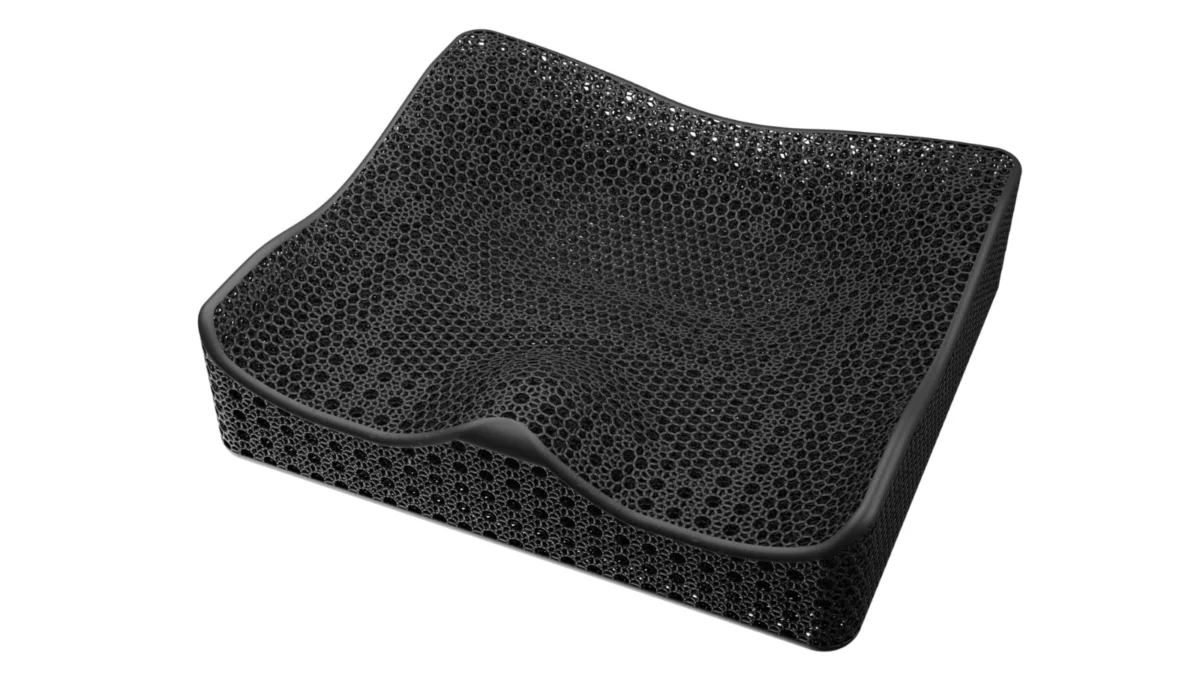
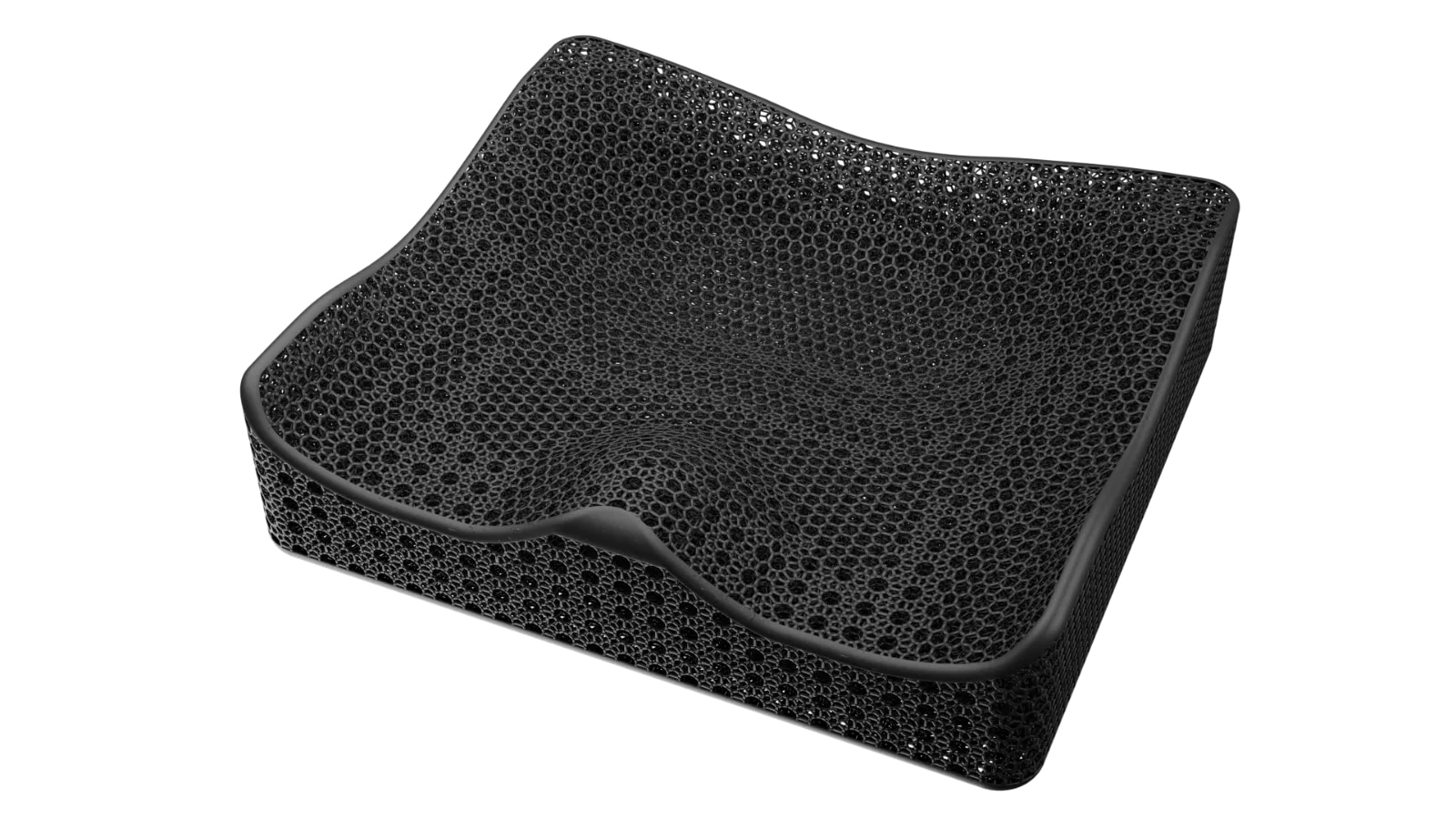
The Verro Lattice model stands out as a pioneering entry into the complex rehab tech market, featuring Kalogon’s patent-pending variable-density lattice technology. This innovation is rooted in advanced additive manufacturing – specifically, 3D printing an elastomer construction. What makes this technology revolutionary is its capacity to precisely control the firmness across the entire surface of the cushion.
Imagine a cushion that is engineered with micro-level precision: areas requiring robust support to maintain correct posture, such as those addressing pelvic obliquity or preventing windswept deformities, are printed with a firmer lattice structure. Simultaneously, regions susceptible to high pressure, like the ischial tuberosities or sacrum, are designed with a softer, more compliant lattice. This variable density is achieved through sophisticated algorithms that translate a user’s unique body contours and support requirements into a digital blueprint for the 3D printer. The elastomer material chosen for the lattice offers not only excellent mechanical properties for support and pressure distribution but also inherent breathability, which contributes significantly to temperature regulation – a critical factor in preventing skin breakdown and enhancing user comfort over long periods of sitting. This level of localized, nuanced control over material properties is virtually impossible to achieve with traditional foam or gel-based manufacturing methods.
The Versatility of Verro Foam
Complementing the Verro Lattice is the Verro Foam model, which offers a robust alternative for specific clinical needs and user preferences. This dual-density foam cushion features a dense foam base for foundational support and stability, topped with a softer foam layer for enhanced comfort and pressure relief. While not utilizing the 3D-printed lattice, Verro Foam maintains Kalogon’s commitment to customization, still beginning with a precise body capture.
The Verro Foam model is particularly valuable for seating specialists who prioritize the ability to make in-field modifications after the initial fitting. Its construction allows for traditional adjustments, such as minor contouring or wedging, which can be crucial during the initial adaptation period for users transitioning to a highly contoured cushion or for addressing evolving clinical needs. Furthermore, for users who may be new to highly contoured seating, the familiar feel and adaptability of foam can provide a smoother transition, while still delivering superior support compared to standard off-the-shelf options. This dual offering ensures that clinicians have a comprehensive toolkit to match the right solution to each individual’s unique clinical presentation, comfort preferences, and long-term care strategy.
Chronology: The Evolution of Personalized Seating
The launch of Verro is not an isolated event but rather the culmination of Kalogon’s ongoing commitment to innovation in smart seating solutions. The company has steadily built a reputation for developing technologies that push the boundaries of rehabilitation, driven by a deep understanding of user needs and clinical challenges.
Kalogon’s Journey in Smart Seating
Kalogon first garnered attention for its "smart seating solutions," which typically integrate advanced sensing and dynamic adjustment capabilities. This foundational experience in intelligent pressure management and postural sensing laid critical groundwork for the development of Verro. The journey began with identifying a persistent and often unaddressed gap in the market: patients with the most complex postural needs frequently "fell through the cracks," as described by Tim Balz, CEO and founder of Kalogon. Standard cushions were insufficient, and existing custom solutions lacked the precision and adaptability required.
The recognition of this unmet need spurred Kalogon’s research and development efforts into novel materials and manufacturing techniques. The company explored the potential of additive manufacturing, specifically 3D printing, to create structures with unprecedented control over mechanical properties. This exploration was not just theoretical; it involved extensive prototyping, material testing, and collaboration with clinicians and users to ensure that the technology translated into tangible benefits. The vision was clear: to create a cushion that could be as unique as the individual it supported, offering precise localization of firmness and softness to optimize both posture and pressure distribution. This iterative process of innovation, testing, and feedback loops is intrinsic to Kalogon’s product development philosophy.
From Concept to Medicare-Coded Reality
Bringing a sophisticated product like Verro to market, especially within the regulated medical device landscape, is a complex undertaking. The journey from initial concept to a Medicare-coded reality involved several critical phases. First, the patent-pending variable-density lattice technology had to be meticulously engineered and validated through rigorous testing for durability, performance, and safety. This included ensuring the chosen elastomer material met stringent biocompatibility and longevity standards for medical applications.
Simultaneously, Kalogon developed its "Launch Pad" interactive real-time configurator – a digital platform designed to streamline the ordering process. This configurator allows clinicians to accurately capture a user’s body contours, either through Kalogon’s proprietary body capture system or by uploading a 3D scan from other compatible devices. This digital workflow is crucial for translating individual patient data into the precise specifications required for 3D printing the Verro Lattice or manufacturing the Verro Foam.
A pivotal milestone in Verro’s development was securing the Medicare E2609 code. This designation signifies that the Verro cushions meet specific regulatory requirements and are recognized for reimbursement under Medicare, significantly enhancing their accessibility for eligible patients. The process of obtaining such coding involves extensive documentation, clinical justification, and often, independent review. Kalogon’s success in this area underscores the clinical utility and proven benefits of the Verro line.
Furthermore, Kalogon’s decision to manufacture all Verro cushions in-house at its Melbourne, Florida, facility is a strategic one. This vertical integration ensures tight quality control over every step of the production process, from raw materials to the final product. It also allows Kalogon to achieve an industry-leading turnaround time, committing to shipping cushions within 14 days of receiving an order – a stark contrast to the often months-long wait times associated with traditional custom seating solutions. This efficiency directly translates to faster access for patients, reducing the period of discomfort or risk associated with inadequate seating.
Supporting Data: The Critical Need for Personalized Seating
The context for Verro’s launch is framed by the pervasive and often debilitating challenges faced by wheelchair users with complex postural needs. These individuals represent a significant portion of the wheelchair-dependent population, and their conditions often lead to severe secondary complications if not adequately managed.
The Profound Impact of Complex Postural Needs
Conditions like windswept posture, pelvic obliquity, and asymmetry are not merely cosmetic issues; they are serious biomechanical challenges that significantly impact a user’s health, comfort, and functional independence.
- Windswept posture describes a condition where the pelvis and lower extremities are rotated to one side, leading to significant imbalances.
- Pelvic obliquity refers to an uneven pelvis, where one side is higher than the other, often causing spinal curvature and unequal pressure distribution.
- Asymmetry encompasses a broader range of uneven body presentations, impacting overall alignment.
These conditions can arise from various neurological disorders, musculoskeletal deformities, or prolonged improper seating. Their consequences are severe and multifaceted:
- Pressure Injuries (Bedsores): Uneven pressure distribution is the primary cause of pressure injuries, which are painful, difficult to treat, and can lead to serious infections, hospitalization, and even death. The annual cost of treating pressure injuries in the U.S. healthcare system is estimated to be billions of dollars.
- Pain and Discomfort: Chronic pain in the back, hips, and buttocks is common due to misaligned posture and inadequate support, significantly reducing quality of life.
- Reduced Functional Independence: Poor posture can impair a user’s ability to reach, propel their chair, or participate in daily activities, limiting their independence.
- Progression of Deformity: Without proper support, existing deformities can worsen over time, leading to more severe skeletal and muscular issues.
- Respiratory and Digestive Issues: Severe spinal deformities resulting from poor seating can compress internal organs, affecting respiratory and digestive functions.
The sheer prevalence of these issues underscores the critical need for truly personalized seating solutions. Standard cushions, designed for a "typical" anatomy, simply cannot provide the targeted support and pressure relief required for these complex presentations. Even generic contoured cushions often fall short, as a slight variation in a user’s anatomy can render a standard contour ineffective or even detrimental.
The Limitations of Traditional Custom Cushions
For decades, the standard approach to custom wheelchair seating involved methods that, while effective to a degree, had inherent limitations. These often included:
- Foam Carving: Starting with a block of foam and hand-carving contours based on a patient’s impression. This is labor-intensive, highly dependent on the skill of the technician, and difficult to reproduce perfectly. Modifications can be challenging, and the material properties are uniform.
- Molded Seating: Creating a mold of the patient’s posterior, then fabricating a cushion from this mold. While offering a good initial fit, these systems can be rigid, lack breathability, and are extremely difficult to modify once created. They also may not account for the dynamic changes in tissue behavior under pressure.
- Gel or Air Inserts: While useful for pressure redistribution, these are often integrated into a foam base and do not offer the precise postural control needed for severe asymmetries or deformities.
These traditional methods, while attempting to customize, struggle with achieving the micro-level precision and variable material properties that complex conditions demand. They often involve compromises between support, pressure relief, breathability, and adaptability. The lengthy turnaround times for these custom solutions further exacerbate patient suffering, leaving individuals in inadequate seating for extended periods.
Technological Advancements Driving Innovation
Kalogon’s Verro line is a direct beneficiary of significant advancements in several technological domains:
- 3D Printing (Additive Manufacturing): The maturation of 3D printing technology, particularly with elastomeric materials, has opened doors to creating complex, internal geometries and variable material densities within a single print. This allows for unprecedented control over mechanical properties at a localized level, which is precisely what the variable-density lattice achieves.
- Material Science: The development of advanced elastomers capable of being 3D printed with precise control, while also offering durability, flexibility, and biocompatibility, has been crucial. These materials can be engineered to withstand continuous load while maintaining their structural integrity and comfort properties.
- Digital Body Capture and Design Software: The ability to accurately and quickly capture a user’s three-dimensional body contours, and then translate that data into a digital model for cushion design, is fundamental. Kalogon’s "Launch Pad" configurator exemplifies this, enabling clinicians to directly input patient data and generate customized cushion designs efficiently. This digital workflow reduces errors, enhances precision, and accelerates the design-to-production cycle.
These converging technologies have empowered Kalogon to overcome the limitations of traditional methods, offering a solution that is not only more precise and effective but also more efficient in its production and delivery.
Official Responses: Voices on Hyper-Personalization and Flexibility
The launch of Verro has been met with enthusiasm from both Kalogon’s leadership and key advisors in the clinical community, highlighting the product’s potential to address long-standing challenges in complex rehabilitation.
Leadership’s Vision: Tim Balz on Hyper-Personalization
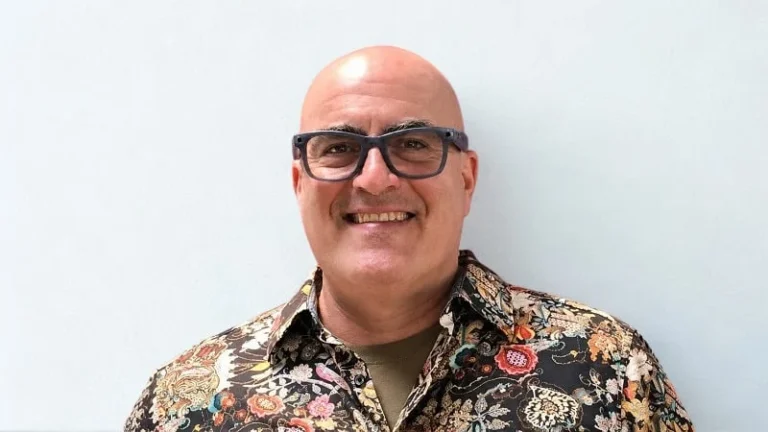
Tim Balz, CEO and founder of Kalogon, articulated the core motivation behind Verro, stating, "We kept hearing from clinicians that their most complex patients were falling through the cracks, so we developed a technology that lets us 3D print the cushion with precise, localized control over where the body gets support and where it gets relief." This statement underscores Kalogon’s patient-centric approach and its commitment to solving the most challenging seating problems.
Balz further emphasized the unique capabilities of 3D printing in this context: "With our variable-density lattice, we can create subtle variations across the surface and sides of the cushion that simply aren’t possible with traditional materials. The customization options are hyper-personalized to provide the best comfort, support and fit for every customer." This highlights the difference between traditional "custom" solutions and Verro’s "hyper-personalized" approach. Traditional methods might offer general contours, but they lack the ability to fine-tune firmness and compliance across millimeter-level areas, which is critical for intricate postural management and pressure ulcer prevention. Balz’s vision is about moving beyond generic customization to a level of individual tailoring that truly matches the unique biomechanical requirements of each user, ensuring optimal health outcomes and enhanced daily living.
Clinical Endorsement: Kelly Waugh on Flexibility and Broadened Impact
The clinical relevance of Verro is strongly supported by experts like Kelly Waugh, MA, PT, ATP, an advisor to Kalogon. Waugh’s perspective as a seasoned seating specialist provides invaluable insight into the daily challenges faced by clinicians and patients alike. She noted, "Every client is different, and seating specialists need options that reflect that. Verro gives us more ways to match the right solution to each unique person based on their postural support needs, personal preferences and desire for in-field modification."
Waugh’s statement powerfully articulates the importance of clinical flexibility. For a seating specialist, having diverse tools and options is paramount. The Verro line, with its distinct Lattice and Foam models, provides this versatility. The Lattice offers unparalleled precision and breathability, ideal for the most challenging anatomical presentations where micro-adjustments are crucial. The Foam, conversely, provides a robust, adaptable option for those who might benefit from post-fitting modifications or who prefer a more traditional material feel, especially during initial adaptation to contoured seating. This comprehensive approach means clinicians are better equipped to navigate the varied needs and preferences of their client base.
Furthermore, Waugh highlighted the broader impact of Verro: "That flexibility will allow Kalogon to serve a much wider population of people with complex seating needs than before." This underscores the market expansion potential and, more importantly, the increased access to effective solutions for individuals who previously had limited options. For clinicians, this translates to improved patient outcomes, reduced follow-up issues related to inadequate seating, and ultimately, a more effective and satisfying practice. The ability to quickly order a precisely tailored cushion, with a guaranteed 14-day shipping window, further streamlines the clinical process, ensuring that patients receive timely intervention rather than enduring prolonged periods of discomfort or risk.
Implications: Transforming Quality of Life and Setting New Standards
The introduction of Kalogon’s Verro line carries significant implications, not only for individual wheelchair users but also for the broader rehabilitation technology industry and healthcare landscape.
Transforming Quality of Life for Wheelchair Users
The most profound impact of Verro will be felt directly by wheelchair users with complex seating needs. For these individuals, proper seating is not merely about comfort; it is a fundamental determinant of their health, dignity, and ability to participate fully in life. Verro promises to deliver:
- Improved Comfort and Reduced Pain: By precisely contouring to the body and diffusing pressure, Verro cushions can significantly alleviate chronic pain and discomfort associated with poor posture and pressure points.
- Prevention of Complications: The targeted pressure redistribution and postural support offered by Verro Lattice are critical in preventing the development of pressure injuries, which are often life-threatening and costly. By preventing these complications, Verro contributes to better long-term health outcomes.
- Enhanced Functional Independence: With stable, comfortable, and correctly aligned seating, users can achieve better upper body control, improving their ability to propel their wheelchair, reach for objects, and engage in daily activities with greater ease and efficiency.
- Better Posture and Reduced Deformity Progression: Corrective and supportive seating can prevent the worsening of existing deformities and even, in some cases, help improve functional posture, leading to better respiratory function, digestion, and overall physiological well-being.
- Psychological Benefits: Beyond the physical improvements, the ability to sit comfortably and securely enhances a user’s sense of dignity, confidence, and social participation. Reduced pain and increased independence contribute significantly to mental well-being and overall quality of life.
Setting a New Standard in Rehabilitation Technology
Verro establishes a new benchmark for innovation within the complex rehabilitation technology (CRT) sector. By successfully integrating 3D printing and advanced material science into a clinically validated, Medicare-coded product, Kalogon is demonstrating the immense potential of these technologies to solve intractable problems in medical devices. This may spur further research and development across the industry, driving other manufacturers to explore similar advanced manufacturing techniques for personalized solutions.
The success of Verro could pave the way for a future where personalized medical devices, precisely tailored to individual patient anatomies and pathologies, become the norm rather than the exception. This extends beyond seating to prosthetics, orthotics, and other assistive technologies. The economic implications are also noteworthy: by preventing costly pressure injuries and improving long-term health, Verro has the potential to reduce overall healthcare expenditures associated with chronic conditions in wheelchair users.
Accessibility and Market Impact
The Medicare E2609 coding is arguably one of the most significant aspects of Verro’s launch. It ensures that this cutting-edge technology is not limited to a select few but is accessible to a broad patient population covered by Medicare. This dramatically increases the market reach and clinical utility of the product, ensuring that more individuals can benefit from its advanced features without prohibitive out-of-pocket costs.
Furthermore, Kalogon’s commitment to a 14-day shipping turnaround time is a crucial differentiator that challenges traditional industry norms. The often-protracted wait times for custom medical equipment can have severe consequences for patient health and well-being. By significantly reducing this lead time, Kalogon not only improves patient access but also streamlines the workflow for clinicians, enabling faster intervention and better patient management. This efficiency, combined with the comprehensive material options, positions Kalogon as a leader in delivering patient-centric, high-quality, and timely rehabilitation solutions.
In conclusion, Kalogon’s Verro line is more than just a new product; it represents a forward-looking vision for rehabilitation technology. By harnessing the power of 3D printing and advanced materials, Verro offers a truly hyper-personalized solution for complex seating needs, promising to profoundly improve the health, comfort, and independence of countless wheelchair users. It sets a new standard for innovation, accessibility, and efficiency in a critical area of healthcare, marking a new era where custom fit and optimal outcomes are within reach for everyone.