









For decades, the dietary advice touted by health experts has focused almost exclusively on the "what"—the composition of our meals, the calorie count, and the balance of macronutrients. However, a groundbreaking study from Oregon Health & Science University (OHSU) suggests that the "when" of our eating habits may be just as critical to our long-term health as the food itself.
New research published in Clinical Gastroenterology and Hepatology indicates that the habit of eating late in the evening is associated with a significantly higher risk of liver disease. By analyzing data from nearly 200,000 individuals, scientists have uncovered a troubling correlation: those who consume meals close to their bedtime face a 20% to 30% higher risk of developing serious liver conditions compared to those who conclude their eating earlier in the day.
Main Facts: The Intersection of Time and Biology
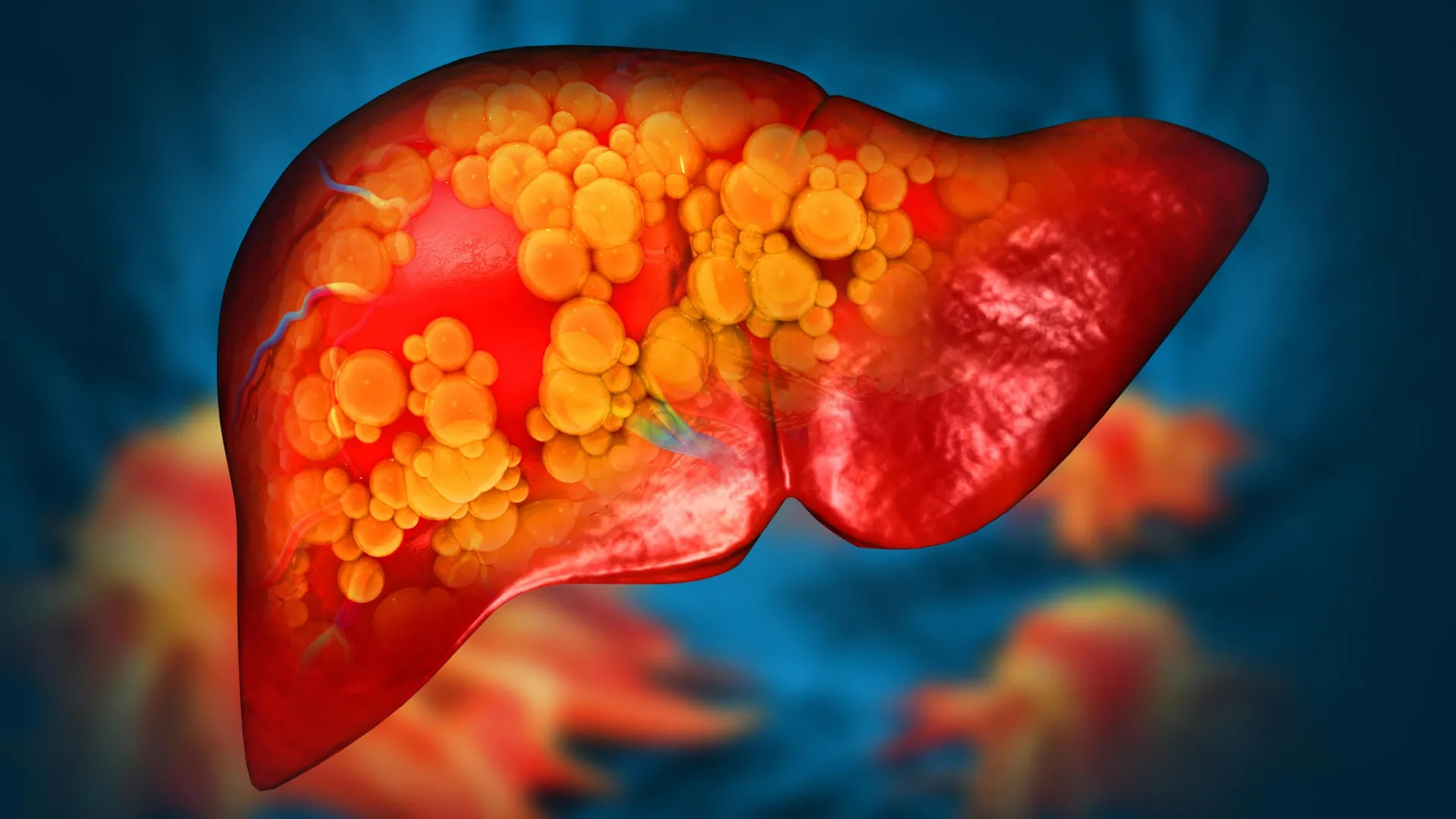
The core finding of the OHSU study is that the timing of caloric intake acts as a potential lever for metabolic health. Specifically, researchers focused on two primary manifestations of liver trouble: metabolic dysfunction-associated steatotic liver disease (MASLD)—commonly referred to as fatty liver disease—and cirrhosis, which is characterized by extensive, irreversible scarring of the liver tissue.
While previous medical literature has established a firm link between late-night snacking and systemic issues such as obesity, insulin resistance, and cardiovascular disease, this study represents one of the first long-term, large-scale analyses to explicitly isolate the liver as a primary victim of nocturnal eating patterns.
The study suggests that our organs, particularly the liver, operate on an internal clock—a circadian rhythm—that governs how we process nutrients. When we consume food late at night, we are essentially asking our digestive and metabolic systems to perform high-energy tasks at a time when the body is biologically programmed to shift into a restorative, "repair" phase. This misalignment between our behavior and our biology may be the underlying mechanism driving the increased risk of liver damage.
A Historical Perspective: How the Research Evolved
The investigation into the relationship between meal timing and organ health did not emerge in a vacuum. For years, clinicians observed that shift workers—individuals whose professional lives force them to eat and sleep at odds with the natural solar cycle—consistently exhibit higher rates of metabolic syndrome and liver issues.
The Evolution of Chrononutrition
The concept of "chrononutrition" has gained significant traction in the scientific community over the last decade. Early experiments in animal models provided the first clues: researchers noted that when mice were fed during their natural resting periods, they developed profound metabolic disruptions. The liver, being a primary metabolic hub, was consistently found to be the most vulnerable organ in these experiments.
Bridging the Gap to Human Studies
Lead author Robert Wilechansky, M.D., a hepatologist at OHSU and an expert in liver transplantation, noted that while the idea was hinted at in previous, smaller-scale studies, the current research was designed to provide a definitive, large-scale clinical answer. By leveraging three massive, longitudinal datasets—the Nurses’ Health Study, the Nurses’ Health Study II, and the Health Professionals Follow-up Study—the team was able to track participants over many years, allowing for a robust examination of eating patterns versus health outcomes.
Supporting Data: The Power of 200,000 Participants
The strength of the OHSU study lies in its sheer scale. By aggregating information from 200,000 participants across three major, long-running nationwide health studies, the researchers were able to control for a vast array of lifestyle variables, including physical activity, smoking, and overall dietary quality.
Parsing the Patterns
Participants provided detailed reports on their daily routines, including their typical meal times. The researchers stratified this data into distinct groups based on when the final meal of the day was consumed. After adjusting for potential confounding factors, the results remained consistent: the "late eaters" group demonstrated a 20% to 30% higher incidence of fatty liver disease and cirrhosis.
Understanding the Prevalence
To understand the gravity of these findings, one must look at the current state of liver health in the United States. Fatty liver disease currently affects approximately 30% of the U.S. population. While many individuals with this condition never progress to advanced stages, those who do face the risk of severe inflammation, chronic damage, and eventually, cirrhosis. Given the sheer number of people affected, even a marginal reduction in risk via a simple behavioral change—like eating dinner earlier—could have profound public health implications.
Official Perspectives: The Experts Weigh In
The study’s authors emphasize that while the link is statistically significant, it should be viewed as an invitation for further investigation rather than a definitive "cause and effect" proof.
"It’s important to remember, of the people who developed fatty liver disease, only a small fraction develop serious forms of the condition like liver cirrhosis," Dr. Wilechansky said. "Even so, the big take-away here is that confining your calorie intake to several hours before bedtime might be beneficial."
The Role of Circadian Physiology
Co-author Andrew McHill, Ph.D., an associate professor specializing in sleep and circadian physiology at OHSU, provides a biological framework for why these results make sense. According to Dr. McHill, the body’s ability to metabolize food is not static throughout the 24-hour cycle.
"We are seeing over and over again that the timing of behaviors, whether it’s sleep, eating, or exercise, really matters," McHill explained. "Eating during the night, when the internal biological clock is promoting sleep, reduces the ability of your body to metabolize foods as efficiently."
When you consume a meal, the liver must shift from its "fasting" state—where it focuses on internal maintenance and glucose regulation—to a "fed" state, where it processes incoming nutrients. When this occurs at 10:00 PM or midnight, it creates a "biological conflict" that can lead to metabolic stress, lipid accumulation in the liver, and, over years, chronic inflammation.
Implications: A New Path to Liver Health
The most compelling aspect of this research is its accessibility. In an era where many health interventions involve expensive pharmaceuticals or complex lifestyle overhauls, the idea that simply shifting the time of your last meal could protect your liver is both refreshing and practical.
The Potential for Low-Cost Intervention
"We’re interested in changing the timing of eating in a way that could make a difference in health without changing the composition of what people eat," Dr. Wilechansky noted. For many patients, restricting calories or eliminating certain food groups is a daunting task that often leads to low compliance. Shifting the window of consumption, however, is a behavior modification that is significantly easier to implement.
Future Clinical Trials
While the current findings are observational, the scientific community is already moving to the next phase. Dr. Wilechansky is currently involved in a clinical study at OHSU that is actively recruiting participants. This trial aims to move beyond self-reported data to monitor meal timing in real-time, directly measuring whether shifting food consumption to earlier in the day results in quantifiable improvements for those already diagnosed with fatty liver disease.
Limitations and Nuance
It is vital to maintain scientific rigor when interpreting these results. Because the original study relied on observational data, it is impossible to fully isolate meal timing as the sole culprit. It is possible, for instance, that individuals who eat late at night may also have other unmeasured lifestyle factors that contribute to liver stress. However, given the consistency of the findings across nearly 200,000 people, the evidence is strong enough to warrant a change in how we view the "bedtime snack."
Conclusion: A Shift in Lifestyle
As we continue to learn more about the complexities of human metabolism, the importance of our biological clocks becomes increasingly clear. The OHSU research serves as a reminder that we are not merely "what we eat," but also "when we eat."
For those looking to optimize their health, the advice is simple: listen to your internal clock. By giving your body, and specifically your liver, adequate time to rest and recover before you head to sleep, you may be providing your most vital organs the support they need to function optimally. As Dr. Wilechansky and his team continue their work, we may soon see meal-timing protocols become a standard recommendation in the prevention and management of metabolic and liver-related diseases.
For now, the science suggests that closing the kitchen earlier may be one of the most effective, and most underrated, health decisions you can make tonight.