









In the pursuit of a balanced, aesthetic physique, understanding the biomechanics of movement is not merely an advantage—it is a necessity. While the fundamental principles of hypertrophy involve mechanical tension and metabolic stress, the nuance of bodybuilding lies in the "angles of attack." Nowhere is this more apparent than in the cable fly, a staple movement that, when manipulated correctly, acts as a surgical tool for sculpting the pectoralis major.
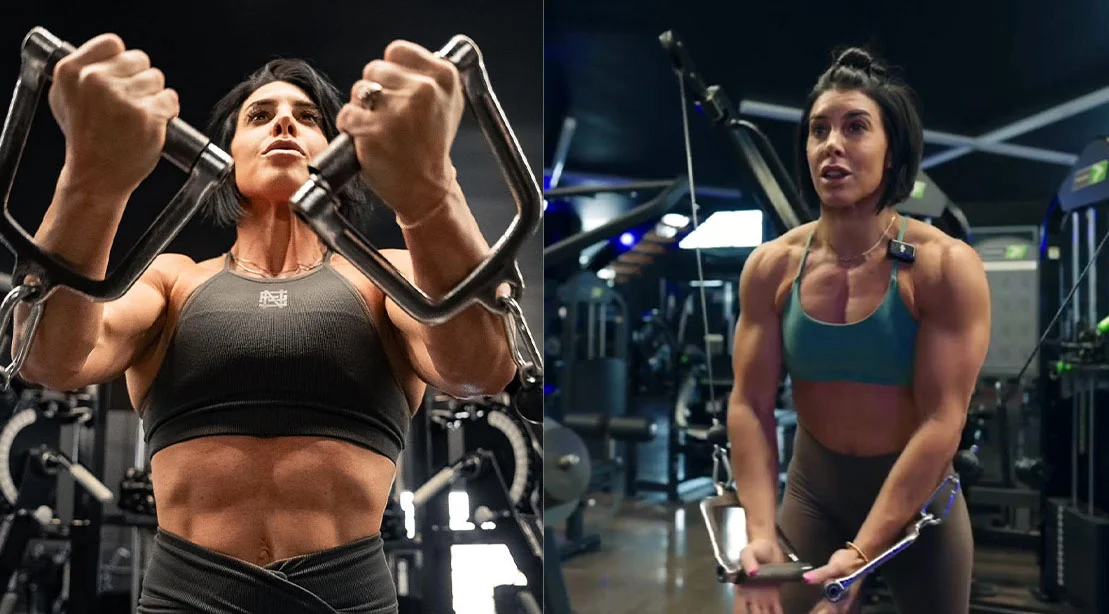
For those navigating the complexities of gym architecture, the transition from basic compound movements to angle-specific isolation can feel overwhelming. Fortunately, IFBB icon and 2013 Women’s Physique Olympia champion Dana Linn Bailey has stepped in to clarify the mechanics of the humble cable fly, offering a masterclass in how pulley positioning dictates muscle fiber recruitment.
Main Facts: The Architecture of the Cable Fly
The cable fly is a versatile exercise designed to isolate the pectorals through a horizontal adduction movement pattern. Unlike the barbell bench press, which relies on fixed movement paths, cables provide constant tension throughout the entire range of motion, allowing for a deep stretch and a peak contraction that free weights often fail to provide at the end of the concentric phase.
The core principle behind Bailey’s instruction is the "Line of Pull." By adjusting the height of the pulleys, an athlete can alter the trajectory of the cable, effectively changing which portion of the pectoralis major undergoes the greatest mechanical load.
- Mid-Cable Fly: Pulleys set at chest height; targets the overall pectoralis major.
- Decline (High-to-Low) Fly: Pulleys set at the highest position; targets the lower pectoralis major.
- Incline (Low-to-High) Fly: Pulleys set at the lowest position; targets the upper pectoralis major (clavicular head).
Chronology: The Evolution of Chest Training Philosophies
The history of bodybuilding has been marked by a shift from pure "powerlifting-style" training to more calculated, hypertrophy-focused isolation work. In the early days of the sport, the focus was primarily on heavy, compound movements—flat bench presses and heavy dips. However, as the industry matured, athletes like Dana Linn Bailey began to emphasize the importance of "sculpting."
- The Era of Compounds (1960s-1980s): The primary focus was on "mass at all costs," utilizing heavy barbells to stimulate general chest growth.
- The Rise of Isolation (1990s-2000s): The introduction of more sophisticated cable systems in commercial gyms allowed for greater experimentation. Bodybuilders began to realize that a "flat" chest was not enough; they needed to address the "shelf" (upper pecs) and the "sweep" (lower pecs).
- The Scientific Application (2010s-Present): Athletes like Bailey have utilized their platform to bridge the gap between "bro-science" and functional anatomy. By teaching the specific utility of incline and decline flyes, these experts have helped shift the focus toward precision training, ensuring that athletes can target weak points with surgical accuracy.
Supporting Data: Why Angles Matter in Hypertrophy
The pectoralis major is a fan-shaped muscle divided into three distinct segments: the clavicular head (upper), the sternocostal head (middle), and the abdominal head (lower). While these fibers work in unison during most pressing movements, EMG (electromyography) studies have consistently shown that the angle of the humerus relative to the torso significantly shifts the primary stimulus.
The Biomechanics of the Decline Fly (High-to-Low)
When performing a decline fly, the pulley is positioned at the apex of the cable tower. As the user pulls the handles toward the hips, the movement mimics the fiber orientation of the lower pectorals. By resisting the weight as it pulls the arms back and upward, the user places the lower pecs under significant mechanical tension. Bailey notes that this is the cable equivalent of a decline bench press, effectively targeting the "lower shelf" of the chest to create a sharper transition between the pectorals and the abdominal wall.
The Biomechanics of the Incline Fly (Low-to-High)
Conversely, the incline fly (or low-to-high) starts from the floor, requiring the athlete to drive the handles upward and inward toward the midline of the upper chest. This movement recruits the clavicular head—the upper portion of the chest that is essential for a "full" look when wearing a tank top or performing front-facing poses. Bailey emphasizes that this mimics the incline bench press, a movement traditionally favored for its ability to build the upper shelf.
Official Perspectives: Dana Linn Bailey’s Coaching Philosophy
Dana Linn Bailey’s approach to training is rooted in the "mind-muscle connection." For Bailey, simply moving weight from point A to point B is insufficient. "It’s going to target different areas of your chest," she explains, stressing that the inquisitive athlete must understand why they are changing the settings on the machine.
Bailey’s instruction serves as a reminder that the "mid-fly" is a fantastic general builder, but it is not a "cure-all." If an athlete finds that their upper chest is lagging, or their lower chest lacks the separation required for competitive bodybuilding, continuing to perform only flat-plane movements will yield diminishing returns. Her advice acts as a corrective measure for those who have hit a plateau in their physique development.
Implications: Building the Ideal Physique
The implications of mastering these angles are profound for both the casual gym-goer and the competitive bodybuilder.
1. Aesthetic Symmetry
The primary implication of using incline and decline flyes is the ability to create a symmetrical, balanced chest. A common critique in physique judging is a lack of upper chest thickness, which can make a chest appear "droopy." By prioritizing the low-to-high cable fly, an athlete can actively work to thicken the clavicular head, creating a more aesthetic, lifted appearance.
2. Injury Prevention and Longevity
Constant reliance on the barbell bench press can lead to shoulder impingement and repetitive strain injuries. The cable fly, being a single-joint movement, places less stress on the elbow and shoulder joints while still allowing for a high degree of intensity. By incorporating these variations, athletes can maintain a high training volume without the same risk of joint degradation.
3. Progressive Overload and Variation
One of the greatest enemies of hypertrophy is adaptation. When the body becomes too accustomed to a specific stimulus, growth stalls. By cycling through incline, decline, and mid-range flyes, an athlete keeps the musculoskeletal system under constant novel stress. This variation is the cornerstone of long-term progress.
Practical Application: How to Implement Bailey’s Tips
To integrate these findings into a weekly routine, consider the following structure:
- The Upper Chest Focus: Start your chest day with incline barbell presses, then move to low-to-high cable flyes. Focus on the squeeze at the top of the movement, pausing for one second to maximize the contraction of the clavicular fibers.
- The Lower Chest Focus: If you are focusing on the lower pecs, perform your heavy dips or decline presses first. Follow this with high-to-low cable flyes, ensuring your arms are moving in a path that aligns with your ribcage.
- The Mid-Chest Finisher: Use the mid-cable fly as a final burnout set. By this stage in the workout, your chest fibers are already fatigued; the mid-fly serves to flush the muscle with blood, maximizing the metabolic stress needed for growth.
Conclusion
Bodybuilding is often described as the art of sculpting the human form. Like any art, it requires the right tools and, more importantly, the right technique. Dana Linn Bailey’s insights into the cable fly provide a roadmap for anyone looking to refine their chest training. By moving away from generic movements and embracing the specific, angle-based science of the cable fly, athletes can move closer to their aesthetic goals with precision and purpose.
Remember, the next time you approach the cable station, don’t just mindlessly pull the handles together. Consider the trajectory, visualize the muscle fibers you are targeting, and adjust your angle accordingly. Your chest—and your mirror—will thank you for it.
To stay updated with Dana Linn Bailey’s daily training tips and physique insights, follow her journey on Instagram.