









The release of the 2025–2030 Dietary Guidelines for Americans (DGAs) was met with high anticipation, arriving under the populist banner of "Eat Real Food." Yet, for nutrition scientists and public health advocates, the document has sparked as much concern as it has celebration. While the new federal guidance makes long-overdue strides in calling out the dangers of ultra-processed foods and added sugars, it simultaneously introduces a visual and conceptual framework that critics argue could undermine decades of cardiovascular health research.
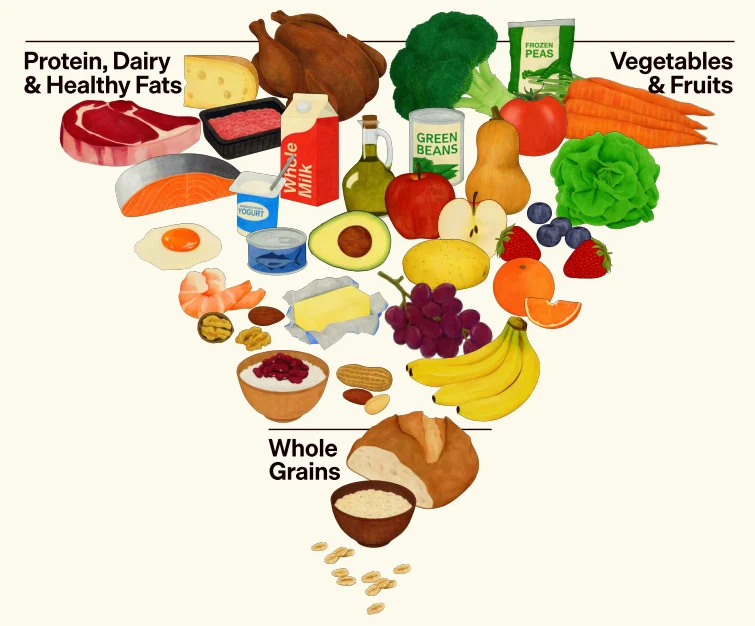
At the heart of the controversy is a newly debuted "food pyramid" graphic. In a striking reversal of previous health messaging, the pyramid is flipped, placing nutrient-dense vegetables alongside substantial servings of red meat, full-fat dairy, and butter. This visual contradiction—coupled with a opaque, controversial development process—has left both experts and the public questioning whether the latest national advice is grounded strictly in science or influenced by external industry pressures.
Main Facts: A Shift in Tone and Content
The 2025–2030 DGAs represent a significant shift in communication strategy. Recognizing that long, dense policy documents are rarely read by the average consumer, the U.S. government has pivoted toward a more "consumer-friendly" approach, prioritizing shorter text, interactive web tools, and, most notably, a redesigned visual hierarchy.
The central tenets of the new guidelines include:
- A "Real Food" Focus: For the first time, the guidelines explicitly target "highly processed foods," recommending a significant reduction in refined carbohydrates, sugary beverages, and packaged snacks.
- Stricter Sugar Limits: The guidelines move toward a more stringent stance on added sugars, suggesting that no amount of added sugar is truly part of a "healthy" diet, and extending the recommendation to avoid added sugars for children until age 10.
- Increased Protein Recommendations: Daily protein intake targets have been raised to 1.2 to 1.6 grams per kilogram of body weight—an increase of 50–100% over previous minimums.
- Saturated Fat Stasis: Despite the visual prominence of animal fats, the text maintains the long-standing scientific consensus that saturated fat should be limited to 10% of total daily caloric intake.
A Chronology of the 2025–2030 Process
The road to these guidelines was far from conventional. Traditionally, the process begins with the Dietary Guidelines Advisory Committee (DGAC), an independent body of scientists who synthesize existing research to produce a comprehensive report. This process is designed to be rigorous, transparent, and shielded from industry lobbying.
However, the 2025–2030 cycle deviated sharply from this established protocol:
- Committee Report Submission: The independent DGAC submitted its scientific report after two years of evidence synthesis.
- Administrative Rejection: In an unprecedented move, the current administration rejected the committee’s core findings.
- The Supplemental Analysis: Instead of relying solely on the DGAC, the government commissioned a "supplemental scientific analysis" conducted by a group of contractors rather than the original expert panel.
- Lack of Transparency: Critics, including former committee members, have pointed to a complete lack of transparency in the methodology used by this secondary group, raising questions about why specific topics were "relitigated" and why the peer-review process differed so substantially from federal standards.
Supporting Data: The Saturated Fat Paradox
One of the most glaring contradictions in the new guidelines is the "saturated fat math." While the text maintains the 10% limit, the visual representation in the new food pyramid—which highlights steak, butter, and cheese—makes adhering to this limit mathematically difficult.
Consider a standard 2,000-calorie diet. At a 10% limit, an individual is allotted roughly 22 grams of saturated fat per day. The new guidelines recommend three servings of dairy daily. If a consumer follows the "full-fat" examples provided in the pyramid:
- One 8-oz cup of whole milk (5g saturated fat)
- ¾ cup of full-fat Greek yogurt (6g saturated fat)
- 1 ounce of cheddar cheese (6g saturated fat)
This daily dairy intake alone totals 17 grams of saturated fat. Adding a single tablespoon of butter (7g) or beef tallow (6g)—both of which are presented as acceptable cooking fats—instantly pushes the consumer over the recommended daily limit before they have consumed a single gram of protein from meat, fish, or plant sources.
Furthermore, Dr. Frank Hu, chair of the Department of Nutrition at the Harvard T.H. Chan School of Public Health, warns that the guidelines fail to distinguish between the "protein packages" of different foods. "When we eat foods for protein, we eat everything that comes with it," Dr. Hu notes. "Plant-based proteins and fish are associated with far more favorable health outcomes than red meat, yet the guidelines fail to offer clear, actionable advice on choosing between these sources."
Official Responses and Expert Critique
The response from the scientific community has been one of cautious skepticism. While researchers like Dr. Hu welcome the focus on reducing ultra-processed foods, they fear that the mixed messaging on saturated fats will lead to increased LDL cholesterol and cardiovascular risk across the U.S. population.
Perhaps most concerning is the lack of transparency in the review process. Deirdre Tobias, a professor who served on the original 2025–2030 Advisory Committee, highlighted the deviation from established rigor: "The reviews themselves, as well as their overall presentation and integration, deviate significantly from the rigorous process that the HHS developed… to ensure conclusions were replicable, unbiased, and free from non-scientific influences."
Reports have surfaced identifying financial ties between several members of the supplemental review panel and the beef and dairy industries. While these disclosures are included in the supplementary documents, their presence has fueled public distrust regarding whether the "New Food Pyramid" was designed to serve public health or the interests of major agricultural commodity groups.
Implications for Public Health
The potential implications of these guidelines are significant. In the United States, where adherence to dietary guidelines is already historically low, providing confusing or contradictory information may further erode public trust in nutritional science.
The Environmental Gap
Notably absent from the new guidelines is any consideration of environmental sustainability. As global food systems face the pressures of climate change, the omission of the environmental impact of animal-based protein production marks a step backward compared to international standards. Sustainable nutrition is increasingly seen as a pillar of public health, yet the 2025–2030 DGAs continue to treat the human diet as an isolated variable, ignoring the socioeconomic and ecological context in which food is produced and consumed.
The "Personalization" Problem
The guidelines suggest that increased protein needs should be determined by individuals, yet they provide little guidance on how to differentiate between high-quality (plant/fish) and low-quality (processed meat/red meat) protein sources. For the average American, this creates a "choice architecture" that favors whatever is most prominent on the government’s new pyramid—which, in this case, includes foods that are high in saturated fat and cholesterol.
Conclusion: A Call for Caution
The 2025–2030 Dietary Guidelines represent a missed opportunity to provide clear, science-backed clarity to the American public. While the move away from ultra-processed foods is a positive development, the lack of transparency in the document’s creation and the contradictory visual messaging surrounding saturated fats present a genuine risk to long-term health.
For those looking to navigate these guidelines, it is critical to prioritize the quality of the "package" your food comes in. Rather than adhering to the visually confusing pyramid, health experts continue to recommend the Healthy Eating Plate model—a framework that emphasizes plant-based fats, fiber-rich whole grains, and lean protein sources. As always, for individuals with specific health concerns, personalized advice from a registered dietitian remains the most reliable path through the noise of shifting federal policy.