







By Lauren Belsky, Development Coordinator, Alliance for Aging Research
As we observe Alzheimer’s Awareness Month this June, the national conversation often centers on the clinical milestones of the disease: the progression of cognitive decline, the development of new therapeutics, and the statistical reality of a growing aging population. However, there is a profound, often unspoken dimension to this journey that requires equal attention: the emotional landscape navigated by patients, their families, and their caregivers.
When a diagnosis of Alzheimer’s or a related dementia is delivered, the immediate aftermath is defined by uncertainty and fear. While the symptoms of the disease are clearly delineated in medical literature, the lived experience—the moment those symptoms manifest in the daily life of a loved one—is rarely simple. It is a complex, often isolating experience that demands grace, patience, and a fundamental shift in how we understand caregiving.
The Spectrum of Neuropsychiatric Symptoms (NPS)
While memory loss is the hallmark of Alzheimer’s, the clinical reality is far broader. Neuropsychiatric symptoms (NPS) are common manifestations of the disease that frequently cause the most distress for families. These symptoms include agitation, anxiety, depression, apathy, sleep disturbances, wandering, and profound personality changes.
These behaviors are not merely "challenging"; they are clinical markers of the disease’s impact on the brain’s neural circuitry. Yet, because these symptoms can be subtle in the early stages, they are frequently misidentified as normal signs of aging or typical responses to stress. For many families, this creates a confusing "gray zone" where behaviors are observed but not yet understood as part of a pathology.
The Hidden Timeline: A Chronology of Confusion
The path to diagnosis is rarely a straight line. Typically, the timeline follows a pattern of subtle onset that often leaves families questioning their own observations:
- The Subclinical Phase: Subtle shifts in personality or minor sleep disturbances occur. These are often dismissed as "just getting older" or the result of a difficult life phase.
- The Emergence of NPS: Behavioral changes, such as increased withdrawal (apathy) or mild irritability, begin to occur. During this stage, caregivers often feel a sense of unease, yet they lack a concrete framework to explain the changes.
- The Diagnostic Pivot: When memory impairment finally aligns with these behavioral shifts, a clinical diagnosis is often sought. This is frequently accompanied by a heavy sense of guilt—a feeling that one "should have known" or "should have acted sooner."
- The Adaptation Phase: Families must reconcile their previous understanding of their loved one with the reality of the disease. This is where the emotional weight of grief—mourning the person who remains present but is fundamentally changed—takes hold.
- The Shift to Resolve: Through education and support, caregivers move from a reactive state of distress to a proactive state of "smarter" caregiving, focusing on preserved strengths rather than lost capabilities.
The Burden of Guilt and the Reality of Caregiving
A recurring theme among those who support someone with dementia is the pervasive feeling of guilt. Caregivers often look back at the years preceding a diagnosis and scrutinize their own actions. They wonder if a mood shift was a cry for help they ignored, or if a behavioral change was a sign they should have recognized as an early warning.
This self-blame is largely misplaced. As experts note, neuropsychiatric symptoms can manifest long before significant cognitive impairment is detectable via standard testing. Because these symptoms overlap with common life stresses—such as grief, burnout, or general aging—it is perfectly natural for family members to miss the signs.
Understanding that these behaviors are biological, not intentional, is the first step toward releasing the guilt that hinders effective caregiving.
Expert Perspectives: A New Paradigm for Care
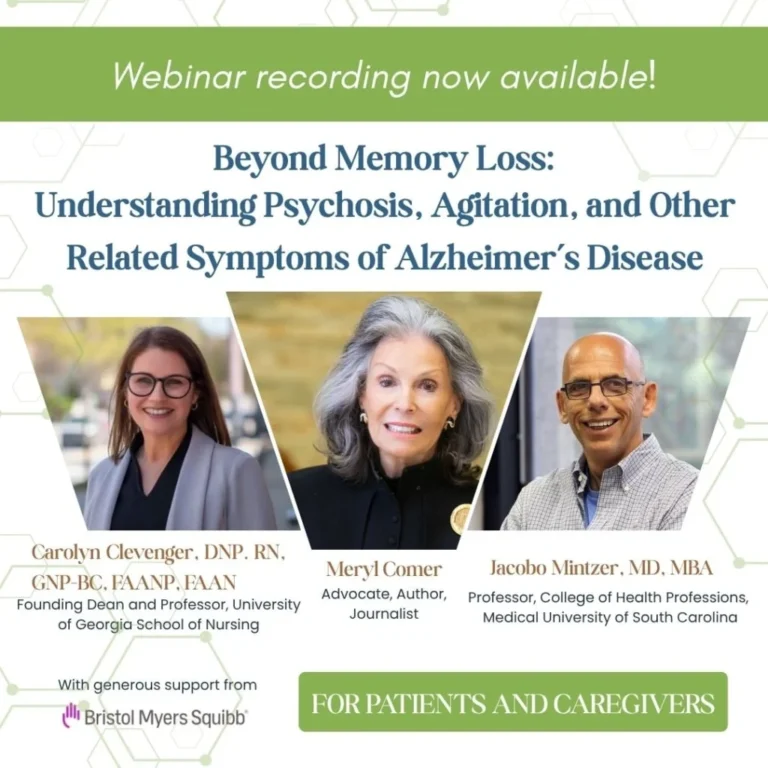
Earlier this year, the Alliance for Aging Research, in collaboration with the National Alliance for Caregiving, hosted a webinar titled "Caring Together: Empowering Families and Health Professionals with Tools for Better Neuropsychiatric Symptom Care." The session convened a diverse group of caregivers, clinicians, and researchers to address the systemic challenges of providing care for those with dementia.

The consensus from the experts was clear: we must move away from the "all-or-nothing" approach to care. Dr. Brent Forester, Psychiatrist-in-Chief and Chairman of Psychiatry at Tufts Medical Center, has been a leading voice in this transition. In his work and his book, The Complete Family Guide to Dementia, Dr. Forester advocates for a mindset shift that focuses on "what remains possible."
The "Smarter, Not Harder" Approach
Dr. Forester’s philosophy encourages families to stop measuring their loved ones against their former selves. Instead, he suggests:
- Identifying Strengths: Focus on the cognitive and emotional capacities that remain intact.
- Building Around Success: Organize routines around moments of the day when the patient feels most stable or joyful.
- Seeking Sustainable Support: Recognizing that asking for help—whether through respite care, support groups, or professional intervention—is not a sign of failure, but a tactical necessity to ensure the caregiver remains healthy enough to continue providing care.
Implications for Families and Healthcare Systems
The implications of managing neuropsychiatric symptoms extend far beyond the home. When NPS are left unmanaged, they lead to higher rates of caregiver burnout, increased hospitalizations, and earlier placement in long-term care facilities.
Addressing these symptoms requires a robust support infrastructure. This includes:
- Early Education: Providing families with the language to identify NPS as early as possible.
- Clinical Integration: Encouraging primary care physicians to screen for behavioral and personality changes, not just memory loss.
- Community Resources: Normalizing the use of support networks to prevent the isolation that exacerbates the stress of caregiving.
Research consistently shows that caregivers who have access to educational tools and support networks experience significantly lower levels of emotional exhaustion. When families understand that the personality changes they witness are part of the disease, they are better equipped to respond with patience rather than frustration.
Finding Resolve in the Midst of Change
The Alzheimer’s journey is defined by its emotional volatility. It is a process of constant adaptation, where routines must be discarded and replaced as the disease progresses. There is a distinct, painful grief associated with seeing a loved one’s personality change—a feeling that the person you know is becoming someone else.
However, there is also an immense, often untapped, capacity for resilience. The transition from the chaos of early uncertainty to the calm of "resolve" is possible. Resolve is not the absence of difficulty; it is the deliberate choice to find connection in the present. It is the decision to enjoy a shared cup of coffee, a familiar song, or a quiet walk, despite the looming shadow of the diagnosis.
Conclusion: You Are Not Alone
As we continue to push for better research, more effective treatments, and greater public awareness, we must never lose sight of the human element. The Alliance for Aging Research remains committed to fostering an environment where caregivers feel seen, heard, and supported.
If you are currently navigating the complexities of Alzheimer’s, remember that your emotions—the guilt, the grief, the fear—are valid. You are dealing with a profound life transition. Yet, you are not alone. By utilizing available resources, leaning on support networks, and embracing the "smarter, not harder" approach to care, you can navigate this journey with the dignity and compassion that both you and your loved one deserve.
The journey with Alzheimer’s is undeniably challenging, but it is also a testament to the endurance of the human spirit. Through education and communal support, we can transform the fear of the unknown into a pathway of meaningful, resilient care.