











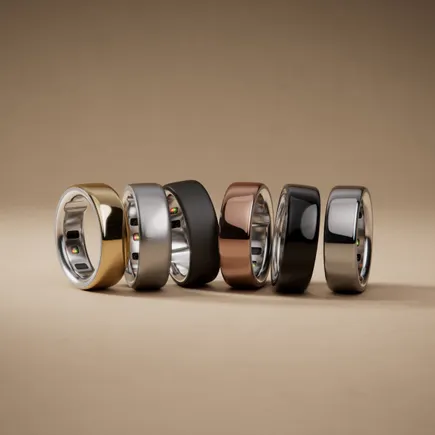
In a decisive move that has sent ripples through the wearable technology sector, Oura, the Finnish-founded leader in smart ring innovation, officially announced on Tuesday that it is postponing its highly anticipated initial public offering (IPO). Despite a robust financial performance and a valuation that has climbed to the upper echelons of the health-tech industry, the company cited persistent “market uncertainty” as the primary driver for hitting the pause button on its transition to the public markets.
The decision arrives as a surprise to many industry analysts, particularly given the aggressive momentum Oura had built over the previous eighteen months. Having confidentially filed for an IPO in May, the company recently signaled its intent to raise as much as $2.2 billion, a move that would have solidified its status as a cornerstone player in the health-tech ecosystem.
The Chronology of a High-Stakes Expansion
To understand the weight of this decision, one must look at the meteoric rise of the company over the last several years. Oura’s journey toward the public markets has been characterized by rapid innovation and a pivot toward comprehensive health diagnostics.
- 2025 – The Growth Surge: Oura reported a massive $907.9 million in revenue for its 2025 fiscal year, underscoring the explosive popularity of its ring-based health tracking.
- Late 2025 – Massive Funding: The company secured a significant capital injection, raising over $900 million. This funding round, which valued the company at roughly $11 billion, was earmarked specifically for research and development to expand its suite of clinical-grade health features.
- May 2026 – The Confidential Filing: Oura moved from the private to the pre-public sphere, submitting a confidential registration statement to the Securities and Exchange Commission (SEC), signaling its intent to test the public markets.
- Mid-2026 – Public Ambitions: As the filing became public knowledge, details emerged that the company was targeting a $2.2 billion raise, a figure that signaled immense confidence in its market position.
- September 2026 – The Strategic Pivot: Facing a volatile macroeconomic climate, Oura’s leadership team opted to postpone the listing, prioritizing long-term stability over immediate market entry.
Financial Strength: A Portrait of Profitability
Unlike many tech startups that enter the public arena fueled solely by growth projections and venture capital, Oura enters this period of reflection from a position of relative strength. According to its prospectus, the company has successfully achieved profitability, a rarity in the crowded wearable health market.
The fiscal data provided paints a picture of a company scaling at an unprecedented rate. Oura currently boasts 5.7 million paid members, a subscription base that provides a recurring, predictable revenue stream that investors typically covet. Perhaps most impressively, the company expects its revenue to grow by 90% year-over-year for the 2026 fiscal period.
This growth trajectory suggests that while the IPO is on hold, the business engine remains firing on all cylinders. By maintaining profitability while simultaneously doubling down on revenue growth, Oura has distinguished itself from competitors who have struggled to convert users into sustainable, long-term subscribers.
Leadership Perspective: The “Luxury” of Timing
In a statement addressing the delay, Oura CEO Tom Hale framed the decision not as a failure, but as a strategic maneuver designed to protect shareholder value and employee interests.
“We aim to deliver an extraordinary IPO for our employees and investors and we have the luxury of choosing our moment,” Hale stated. “In the meantime, we will execute against the opportunities ahead.”
This rhetoric suggests that the company’s internal metrics remain strong enough that it does not need to go public immediately to secure capital for survival. By framing the delay as a choice rather than a necessity, Hale is attempting to reassure both its current private investors—who may be looking for liquidity—and prospective public shareholders that the company is playing the long game. The leadership team is clearly betting that a more stable market environment in the future will result in a more favorable valuation and a more successful debut.
Implications for the Wearable Health Sector
The decision to pause the IPO has broader implications for the wearable health market, which has recently seen increased scrutiny from both regulators and consumers.
1. Market Volatility as a Barrier
Oura is not alone in its caution. The broader IPO market has been characterized by extreme sensitivity to interest rates, inflation data, and geopolitical instability. For a consumer-facing hardware company, the market is particularly unforgiving; investors are often wary of the long-term hardware refresh cycles and the high cost of customer acquisition associated with wearables. By pulling back, Oura is shielding itself from the potential for a “down round” or an underwhelming stock performance that could damage the brand’s reputation.
2. The Pressure of R&D
Oura’s massive $900 million funding round in 2025 was designed to fuel its pivot from a sleep-tracker to a holistic health platform. With the IPO delayed, the company must now rely on its existing cash reserves and cash flow from operations to continue funding its aggressive R&D roadmap. This places pressure on the product team to continue delivering features that justify the subscription price, as the company can no longer rely on a public offering to replenish its coffers in the short term.
3. Consolidation and Competition
The wearable market is increasingly dominated by "Big Tech" players like Apple, Samsung, and Google (Fitbit). Oura’s independence has been a point of pride and a competitive advantage, allowing it to focus on specialized, accurate, and unintrusive hardware. However, the postponement of the IPO keeps the company in a private, high-stakes battle with these giants. Without the public scrutiny and the influx of capital that an IPO provides, Oura must maintain its lean, high-growth culture to remain the "best-in-class" alternative to the integrated ecosystems of its larger rivals.
What Lies Ahead: The Road to the SEC
Despite the delay, the regulatory machinery remains in motion. Oura has confirmed that it has filed a registration statement with the SEC. While this document has not yet been declared effective—meaning the company cannot legally sell shares to the public—it keeps the infrastructure for an IPO in place.
The company is effectively in a “wait-and-see” mode. Analysts suggest that Oura will likely monitor the performance of other tech-sector IPOs over the coming quarters. If the market shows signs of thawing and appetite for growth-stage tech companies returns, Oura is positioned to restart the process with minimal friction.
Conclusion: A Measured Pause
For Oura, the decision to delay its IPO is a calculated risk. On one hand, it avoids the volatility that could result in a lower-than-desired valuation. On the other hand, it extends the period of time that its current investors must wait for a liquidity event.
However, when viewed through the lens of its 90% projected revenue growth and a massive, loyal subscriber base, the company appears to be in a position of power. By opting for patience, CEO Tom Hale is signaling that Oura is not a company looking for a quick exit, but rather one looking to build a sustainable, long-term legacy in the global health and wellness industry. Whether this gamble pays off will depend on the company’s ability to maintain its growth velocity in a market that remains, for now, stubbornly unpredictable.
As the wearable industry continues to evolve, Oura’s next steps will be closely watched by competitors and investors alike, as the company remains one of the most significant test cases for the viability of independent, subscription-based hardware firms in the modern digital economy.