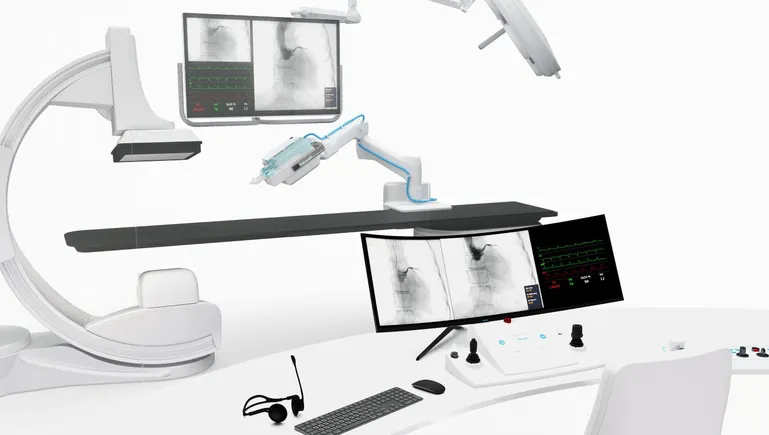
Main Facts: Consolidating the Future of Robotic Surgery
In a move that signals a significant shift in the landscape of robotic-assisted interventional medicine, Stereotaxis, a pioneer in innovative robotic technologies for the treatment of cardiac arrhythmias, has announced the acquisition of Robocath. The deal, valued at $20 million in upfront consideration with an additional $25 million contingent upon reaching specific regulatory and commercial milestones, marks a definitive step toward creating a comprehensive, multi-platform ecosystem for endovascular procedures.
Stereotaxis has spent the last year aggressively refining its product portfolio. Following the November FDA clearance of its GenesisX robotic magnetic navigation system—a platform meticulously redesigned to bypass the hospital infrastructure hurdles that hindered its predecessor—the company is pivoting toward a vertically integrated future. By acquiring Robocath, a French firm founded in 2009, Stereotaxis is expanding its reach from cardiac electrophysiology into the broader, high-growth field of percutaneous coronary intervention (PCI).
The integration of Robocath’s R-One+ technology, which is already established in European and Chinese markets, provides Stereotaxis with a robust foundation to accelerate the development of next-generation robotic platforms capable of multi-device manipulation.
Chronology: A Path to Strategic Consolidation
The journey to this acquisition did not happen in a vacuum. It is the culmination of a multi-year strategy aimed at overcoming supply chain dependencies and technological limitations.
- 2009: Philippe Bencteux founds Robocath in France, focusing on robotic solutions for vascular interventions.
- 2023 (July): Stereotaxis receives the CE Mark for its GenesisX system, signaling the company’s intent to revitalize its market presence.
- 2024 (November): The FDA grants clearance to the GenesisX system in the United States, validating the new, more compact design.
- Early 2025: Stereotaxis secures FDA authorization for its proprietary MAGiC catheter and the Synchrony digital operating room system, effectively ending its reliance on external catheter supply partnerships, most notably its long-standing relationship with Johnson & Johnson.
- 2025 (May): CEO David Fischel publicly describes the company’s performance as showing the “initial green shoots of commercial success,” setting the stage for aggressive expansion.
- The Acquisition: Stereotaxis finalizes the purchase of Robocath, integrating both the R-One+ platform and the ongoing development of a five-device, next-generation interventional system.
Supporting Data: The Commercial and Clinical Case
The logic behind the acquisition rests on the clinical need for precision and safety in endovascular interventions. Robocath’s R-One+ robot provides a standardized approach to PCI, reducing radiation exposure for physicians while increasing the precision of guide wire and balloon catheter placement in blocked arteries.
For Stereotaxis, the acquisition is as much about intellectual property as it is about market access. The "next-generation robot" currently under development at Robocath is designed to handle up to five interventional devices simultaneously—a capability that would vastly outperform current market offerings. Stereotaxis has committed to accelerating this development cycle, with the goal of submitting regulatory filings in both the United States and the European Union within the next 24 months.
The financial structure of the deal—$20 million upfront with $25 million in performance-linked earn-outs—is designed to align incentives. By tying the secondary payments to FDA clearance and specific commercial milestones, Stereotaxis ensures that the acquisition remains accretive and that the development team at Robocath remains focused on the rigorous standards required by the FDA.
Official Responses and Corporate Vision
In his recent investor communications, Stereotaxis CEO David Fischel has maintained a tone of measured optimism. While the company faced significant headwinds in the past—largely due to the heavy infrastructure requirements of its original robotic systems—the "Genesis" era represents a total overhaul.
"The initial green shoots of commercial success are evident," Fischel noted during the Q1 2026 financial results briefing. By bringing Robocath under the Stereotaxis umbrella, the company is effectively doubling its addressable market. The vision is to offer a "digital operating room" that is agnostic to the specific type of vascular procedure, whether it be an electrophysiology ablation or a coronary stent placement.
Philippe Bencteux, founder of Robocath, has emphasized the synergies between the two companies. "Joining forces with Stereotaxis allows our R-One+ platform to reach a global scale, particularly within the US market where the regulatory and commercial infrastructure of Stereotaxis will prove invaluable," he stated.
Implications: A New Era of Endovascular Robotics
The acquisition of Robocath by Stereotaxis carries profound implications for the medical device industry, hospitals, and patients alike.
For Hospitals: Lowering the Barrier to Entry
The primary challenge for robotic surgery has always been capital expenditure and spatial footprint. By redesigning its systems to be smaller and more modular, and by acquiring technology that complements existing cath-lab workflows, Stereotaxis is lowering the barrier to entry. Hospitals that were previously unable to justify the space or cost of legacy robotic systems may now find the Stereotaxis-Robocath suite a much more attractive proposition.
For Patients: Precision and Reduced Radiation
The core benefit of these robotic systems is the reduction of radiation exposure for the medical team and the increased precision of the procedure. Robotic manipulation allows for more nuanced control of catheters and wires, potentially reducing the duration of surgeries and improving patient outcomes in complex cases. As the next-generation robot gains the ability to manipulate five devices at once, the complexity of cases that can be treated robotically will increase, moving the industry closer to a reality where the majority of vascular interventions are performed with robotic assistance.
For Competitors: A Shift in Market Dynamics
The acquisition disrupts the current competitive landscape. With the integration of the MAGiC catheter and the Synchrony digital OR, Stereotaxis is no longer just a hardware manufacturer; it is a full-stack provider. By cutting ties with major suppliers like Johnson & Johnson, Stereotaxis has signaled that it intends to control its own technological destiny. This vertical integration forces competitors—many of whom still rely on fragmented partnerships for catheters, visualization, and robotics—to reconsider their own supply chain strategies.
Regulatory and Future Outlook
The next two years will be a critical litmus test for the merged entity. The primary hurdle will be the regulatory pathway for the next-generation five-device robot. The FDA has historically been cautious regarding complex multi-device robotic platforms, necessitating extensive clinical data. Stereotaxis has promised to prioritize this development, but investors will be looking for clear updates on the R&D milestones.
If successful, the combined company will hold a unique position as a leader in both cardiac rhythm management and broader vascular interventional robotics. As healthcare systems globally move toward digitization and AI-assisted surgical planning, the infrastructure that Stereotaxis is building—centered around the Synchrony platform—will likely become the standard for the modern, tech-forward catheterization lab.
Conclusion
The acquisition of Robocath by Stereotaxis is a defining moment for the company and the field of robotic interventional surgery. By successfully moving past the infrastructure-heavy legacy of its earlier years and embracing a future of proprietary, integrated, and highly capable robotic systems, Stereotaxis has positioned itself as a formidable force. The path forward—characterized by the upcoming regulatory filings for their next-generation robot and the continued commercial expansion of the GenesisX system—will be watched closely by industry analysts and healthcare providers alike. As the "green shoots" of success begin to mature, the company’s ability to execute on these promises will determine if they truly usher in a new, fully automated era of interventional medicine.