







Vaccines have long served as the cornerstone of public health, saving millions of lives by training our immune systems to recognize and neutralize pathogens. Yet, a persistent enigma has haunted clinicians and immunologists alike: why does the same vaccine trigger a robust, life-saving response in one individual, while leaving another with only marginal protection?
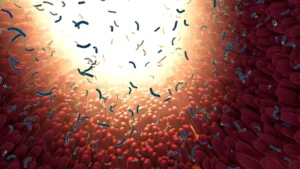
New research led by Arizona State University (ASU) is finally pulling back the curtain on this variability. By leveraging the power of artificial intelligence to analyze the complex "antibody landscape" of the human body, scientists have discovered that our immune system’s potential for response is etched in our blood long before we ever receive a vaccine dose.
Main Facts: A New Paradigm in Immunological Forecasting
The study, published in the journal Cell Press Blue, represents a departure from traditional vaccine evaluation. Historically, the efficacy of a vaccine is measured post-vaccination—clinicians check for the emergence of specific antibodies days or weeks after the shot. This reactive approach, while necessary, does little to help those whose immune systems are ill-equipped to handle the challenge.
The ASU-led team, directed by Joshua LaBaer, M.D., Ph.D., flipped the script. Instead of looking at what the immune system did after a vaccine, they examined what the immune system was before the vaccine. By analyzing blood samples from over 4,000 individuals, researchers identified "sentinel" antibodies—biomarkers that, when interpreted by machine learning algorithms, act as a predictive barometer for vaccine readiness.
These findings suggest that a person’s ability to mount a strong defense against a novel virus, such as SARS-CoV-2, is not merely a product of their current health status or age, but a reflection of their entire immunological history—a "fingerprint" shaped by a lifetime of exposure to various bacteria and viruses.
Chronology of the Research
The journey to these findings was a massive, multi-institutional effort that spanned years of data collection and computational analysis.
Phase I: Building the Dataset
The project began with the recruitment of 4,089 participants, resulting in a robust repository of 8,687 blood samples. This cohort was intentionally diverse, including healthy volunteers alongside individuals with compromised immune systems—such as those living with HIV, multiple myeloma, solid organ malignancies, autoimmune diseases, inflammatory bowel disease, and transplant recipients.
Phase II: Measuring the Landscape
Researchers measured the levels of antibodies against 185 distinct antigens. These targets were selected to represent a wide spectrum of the immune system’s memory, including SARS-CoV-2, various respiratory viruses, common bacteria like Staphylococcus aureus, and markers associated with autoimmune pathologies.
Phase III: The AI Integration
Once the biological data was quantified, the team employed deep learning models. Conventional statistics often struggle to find correlations in massive, high-dimensional datasets. By contrast, AI excels at identifying subtle patterns across millions of data points. The model was tasked with correlating pre-vaccination antibody profiles with the actual immune response observed post-vaccination.
Phase IV: Identifying the Sentinel Antibodies
The analysis revealed that specific antibody levels—particularly those targeting common microbes—correlated with vaccine efficacy. These "sentinel" antibodies served as reliable indicators of how "primed" the immune system was to engage with a new challenge.
Supporting Data: Beyond Simple Categorization
One of the most striking revelations of the study is the failure of traditional "health categories" to act as perfect predictors of vaccine success.
Common wisdom suggests that an immunocompromised patient will necessarily have a poor vaccine response. However, the data told a more nuanced story. While it was true that certain immunosuppressed groups, on average, showed reduced responses, the correlation was far from absolute. Many participants with significant immune suppression still developed high-level protection.
Conversely, the study identified a "blind spot" in the healthy population: approximately 5% to 6% of participants who were classified as healthy showed unexpectedly weak vaccine responses. This indicates that health status alone is an insufficient metric for clinical decision-making.
The predictive power of the AI model was derived from the totality of the antibody panel. By looking at the "interconnected whole" of the immune system, the researchers were able to identify patterns that individual biomarkers simply could not reveal. The presence of antibodies against common pathogens like RSV (Respiratory Syncytial Virus) and human respirovirus 3 proved to be surprisingly potent indicators of a "ready" immune system.
Official Responses and Expert Insights
Joshua LaBaer, executive director of the Biodesign Institute at ASU and director of the Virginia G. Piper Center for Personalized Diagnostics, emphasizes the paradigm shift this research represents.
"What our study found is that certain biomarkers, when analyzed with AI, can predict who is likely to respond well to a vaccine, even before they receive it," LaBaer stated. "This suggests that some people may be more immune-ready than others."
LaBaer and his colleagues believe the project’s success validates the use of "systems immunology"—the practice of viewing the immune system as a complex, dynamic network rather than a series of isolated components. By moving away from the "one-size-fits-all" model of vaccination, researchers are beginning to understand why some individuals are "high responders" while others remain vulnerable despite vaccination.
The study involved a vast network of collaborators from medical and research institutions across the United States, underscoring the interdisciplinary nature of the work. The integration of clinicians, immunologists, and data scientists was critical to bridging the gap between raw biological data and actionable clinical insights.
Implications: The Future of Personalized Immunization
The implications of this research are profound, potentially transforming how we approach both routine vaccinations and the response to future pandemics.
Tailored Vaccination Strategies
If this approach is validated in larger, prospective trials, it could pave the way for "precision vaccination." Rather than recommending the same number of doses or the same booster schedule for everyone, clinicians could profile a patient’s immune readiness. Those identified as having low "sentinel" antibody levels could be prioritized for additional doses, adjusted formulations, or closer clinical monitoring.
Enhancing Vaccine Development
For vaccine developers, these findings offer a new way to stratify clinical trial participants. Understanding why certain groups respond poorly can help scientists design vaccines that are more inclusive and effective for populations that have historically been excluded or left unprotected.
A Proactive Medical Infrastructure
Perhaps the most significant takeaway is the move toward a proactive medical model. By profiling an individual’s immune landscape, doctors could identify vulnerabilities before a patient is ever exposed to a dangerous pathogen. This is particularly vital for the elderly or the chronically ill, for whom a failed vaccine response can have catastrophic consequences.
The Power of AI in Biomedicine
Finally, the study serves as a masterclass in the application of machine learning to medicine. By demonstrating that AI can parse the "noise" of biological data to find meaningful signals, the ASU team has opened a door to a new era of diagnostics. The ability to measure many antibody responses simultaneously—a "broad immune landscape"—is a tool that will likely become standard in the coming years.
Conclusion
The research conducted at the Biodesign Institute at ASU provides more than just a new method for predicting vaccine success; it offers a deeper understanding of the human immune system itself. We are learning that our past encounters with the microbial world leave a permanent mark on our biology, a "fingerprint" that dictates our future survival.
As we look toward the future of medicine, the goal is clear: to transition from reactive treatment to personalized, data-driven prevention. By unlocking the secrets held within our own blood, we are moving closer to a time when vaccination is no longer a gamble, but a precisely calibrated tool tailored to the unique biological signature of every individual. The "sentinel" antibodies are the first step, and the road ahead promises a more resilient, better-protected future for all.