










Published July 5, 2026
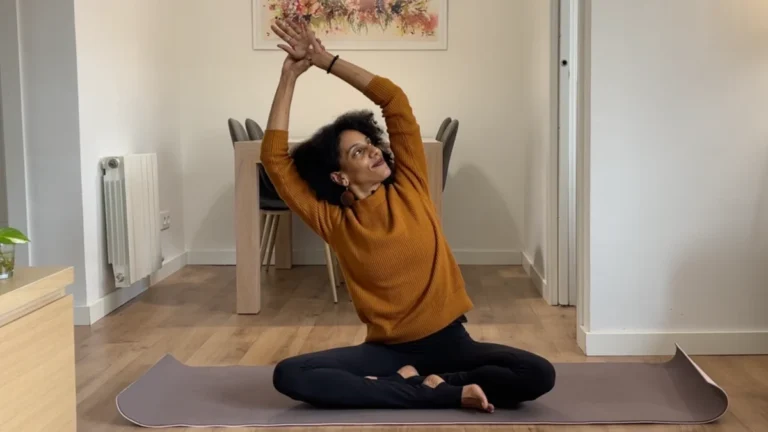
In the quiet, deliberate space of a yoga studio, the physical practice of asana—postures—is often mistaken for mere exercise. Yet, for the seasoned practitioner, the mat is a laboratory for the most profound inquiry known to human philosophy: the nature of consciousness itself. By bridging ancient Vedic wisdom with contemporary somatic science, we begin to see the body not as a static vessel, but as a vast, interconnected community of sentient parts.
The Philosophical Foundation: Brahman and the Universal Soul
At the heart of the yogic tradition lies the concept of Brahman. Far from a distant deity, Brahman represents the "swelling of the spirit"—a fundamental, underlying reality that permeates all of existence. The Chandogya Upanishad, a cornerstone text composed over 2,800 years ago, defines this essence as "what is real and what is true."
This consciousness is not localized; it is ubiquitous. As the philosopher and mystic Sri Aurobindo famously posited, this awareness exists "in the plant, in the metal, in the atom, in electricity, in everything that belongs to physical nature." In this view, the goal of yoga is not to "achieve" a state of relaxation, but to abide in the immediate, unadorned consciousness of consciousness. When we reach this state, the boundaries between the self and the universe begin to dissolve.
A Cellular Democracy: The Interior Landscape
To understand how this universal consciousness manifests in the human form, one must look at the body’s smallest constituents. Sir John Woodroffe, in his seminal work The Serpent Power, argues that every cell in the human body possesses a consciousness all its own.
This creates a fascinating biological paradox: we are not singular, monolithic beings. Rather, we are a community of diverse, specialized voices—fluids, skin, nerves, and organs—each contributing to the overall consonance of the individual. When these cellular voices align, they create entirely new layers of awareness. Recognizing this allows the practitioner to shift their perspective from "moving the body" to "facilitating a conversation" among the various parts of the self.
The Stage of Commencement: From Toes to Transcendence
The journey toward self-realization begins with what the tradition calls arambha avastha, or the "stage of commencement." B.K.S. Iyengar, the legendary architect of modern alignment-based yoga, famously challenged his students with a simple, biting question: "If you cannot see your little toe, how can you see the Self?"
This serves as a vital reminder that transcendence is not an escape from the body, but a deep, granular inventory of our physical estate. Traditionally, asana is the primary tool for this inquiry. However, most practitioners remain on the "borderlands"—focusing primarily on the musculoskeletal system. While developing an intimate knowledge of the hamstrings or the spine is essential for physical health, it is only the first step. To make sense of the full census of our being, we must venture beyond the bones and into the "heart" of the country: our internal organs.
Somatic Integration: The Body-Mind Centering Approach
In recent decades, the work of Bonnie Bainbridge Cohen and her discipline, "Body-Mind Centering," has provided a bridge between these ancient insights and modern anatomical understanding. Cohen describes the exterior body as a "container," while the interior—the organs, glands, and fluids—acts as the "contents."
The Role of the Organs in Emotional and Physical Tone
The organs are not merely biological machines; they are the architects of our emotional lives. They provide the "sense of volume and full-bodiedness" that defines our inner vitality. Whether our demeanor is rigid, flaccid, or steady, the state of our organs dictates our posture and our interaction with the world. Because the organs are wired directly into the nervous system, their specific "state of mind" influences how we initiate movement.
When we move from the muscles, we often do so with superficial power. When we move from the organs, the movement is characterized by:
- Form: A deeper, structural integrity.
- Clarity: A reduction in unnecessary strain.
- Grace: A fluid coordination of disparate body parts.
- Intent: An alignment with the "core" of the being.
The Implications of "Out-Body" Practice
Bainbridge Cohen suggests that most humans habitually inhabit only a fraction of their movement potential. We unconsciously "hold" ourselves—locking our joints or bracing our breath—thereby limiting our physical and cognitive range. Learning to "em-body" or "out-body" every aspect of the self allows us to break through these self-imposed barriers.
Students who transition to organ-led movement report a distinct phenomenon: the posture feels "quieter." The exertion shifts from the superficial tension of the muscles to a deeper, supported effort that feels integrated rather than strenuous.
Official Perspectives and Scientific Parallels
While the yogic tradition views this through the lens of Brahman, modern neurobiology offers a compelling parallel. The "Enteric Nervous System," often called the "second brain," consists of a vast network of neurons lining the digestive tract. This system communicates constantly with the brain, influencing our mood, stress levels, and overall health.
When a practitioner focuses their attention on the organs during a posture like Vasisthasana (Side Plank), they are, in effect, performing a biofeedback loop. By consciously engaging these deep, internal structures, the practitioner reduces the "noise" of the superficial muscles, allowing the nervous system to recalibrate. This alignment of the "second brain" with the "first brain" results in the "articulated whole" described by practitioners of Body-Mind Centering.
Toward a Universal Community
The final implication of this practice is the expansion of the individual ego into a universal context. Through the invigorated "mind" of an organ, the practitioner can access what the yogis call "universal symbols and myths"—essentially, the various faces of Brahman.
By fathomng the internal community of our own consciousness, we realize that the barrier between "me" and "everything else" is a construct of our limited focus. When we sit in the quiet center of our own organs, we are no longer just an individual performing an exercise; we are a conduit for the same consciousness that permeates the atom, the electricity, and the stars.
Conclusion: The Path Ahead
The practice of yoga, when performed with this depth of awareness, becomes a life-long journey of mapping the infinite. We begin by noticing the little toe, and through the patient, organ-centered investigation of our inner landscape, we arrive at a place where the body is no longer a limit, but a gateway.
As we continue to explore the intersection of consciousness and the physical form, we move closer to the realization that we are not simply inhabitants of the world—we are the world experiencing itself.
For further study on the practical application of these principles, readers are encouraged to explore companion articles regarding the physiological alignment of Vasisthasana and the integration of the breath in deep-tissue somatic release.