








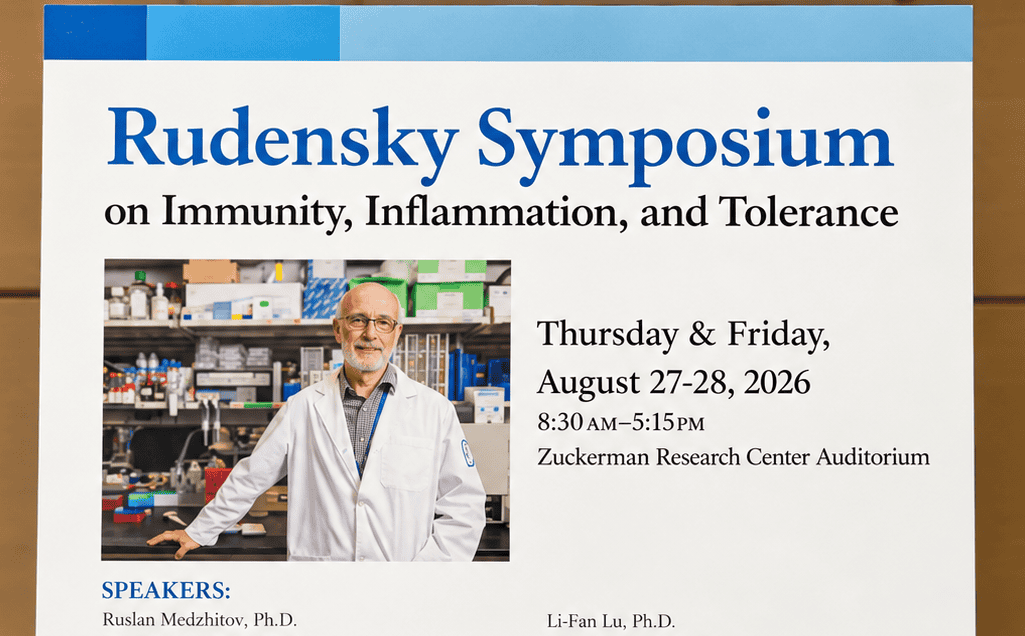
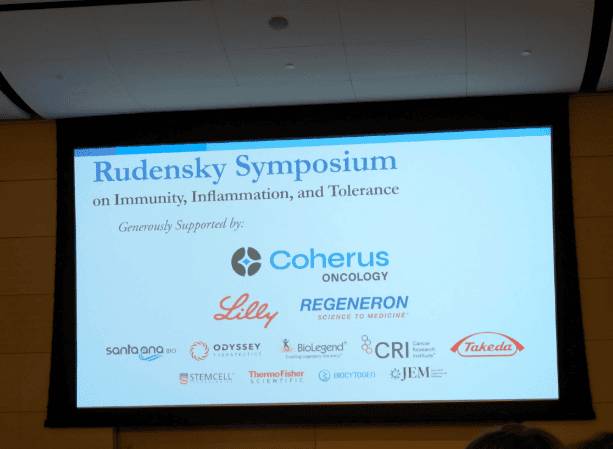
On August 27–28, 2026, the scientific community gathered not merely for a conference, but for a celebration of a life dedicated to the fundamental mechanics of human health. The Rudensky Symposium on Immunity, Inflammation, and Tolerance served as a landmark tribute to the 70th birthday of Dr. Alexander “Sasha” Rudensky, a titan of immunology at Memorial Sloan Kettering Cancer Center (MSKCC) and a cornerstone of the Cancer Research Institute’s (CRI) mission.
Beyond the academic rigor of the presentations, the symposium was a testament to the enduring power of mentorship. It brought together decades of trainees, collaborators, and peers whose collective work has fundamentally altered our understanding of how the body maintains the delicate balance between protection and self-destruction.
The Foundation: A Legacy of Mentorship and Discovery
For over two decades, the Cancer Research Institute has been a steady benefactor of Dr. Rudensky’s laboratory. This relationship has yielded more than a dozen CRI-funded fellows—many of whom are now prominent investigators in their own right—and has solidified the institute’s commitment to basic immunology as the bedrock of cancer therapy.
In 2015, Dr. Rudensky was honored with the prestigious CRI William B. Coley Award, recognizing his pioneering research into regulatory T cells (Tregs). These cells, which act as the “brakes” of the immune system, are essential for preventing autoimmunity. However, in the context of oncology, they often serve as the gatekeepers that allow tumors to evade detection. Understanding this duality—how to suppress Tregs to fight cancer without inducing the systemic inflammation that leads to autoimmune disease—is one of the most sophisticated challenges in modern medicine.
Chronology of a Scientific Milestone
The two-day symposium was structured to mirror the evolution of immunology, moving from the foundational principles of cellular maintenance to the high-stakes arena of cancer immunosurveillance.
Day One: The Homeostasis Paradigm
The opening sessions focused on how tissues remain in balance, shifting the narrative from "attack" to "maintenance." Dr. Ruslan Medzhitov, a 2003 CRI Coley Awardee, set the tone by reframing the role of macrophages. Rather than being viewed solely as soldiers against infection, he argued that they function as “tissue maintenance crews,” clearing away cellular debris and damaged proteins.
This theme of maintenance was extended by Drs. Diane Mathis and Christophe Benoist, both 2024 CRI Coley Awardees. Their presentations highlighted that the identity of a Treg is not static; it is defined by the specific molecular signals it recognizes. Dr. Mathis, in particular, shed light on how specific Treg populations manage inflammation in injured muscle, facilitating repair rather than just suppression. This shift in perspective—viewing the immune system as a restorative force—is providing new insights into why immune restraint must be perfectly calibrated.
Day Two: From Prevention to the Tumor Microenvironment
The second day turned toward the clinical frontier: can we catch cancer before it becomes a clinical reality? Dr. Richard A. Flavell, a 2012 CRI Coley Awardee, presented compelling evidence from mouse models showing that the immune system begins its surveillance of mutant intestinal stem cells long before a tumor is even visible.
The findings suggest that the immune system acts as an evolutionary filter, weeding out cells with cancer-linked mutations like BRAF. When these mutant cells find a way to silence their communication signals with T cells, they gain a competitive advantage, allowing them to form tumors. This discovery implies that the window for cancer prevention might be much earlier than previously thought, provided we can bolster the immune system’s ability to recognize these “early-stage” threats.
Supporting Data: The Complex Ecosystem of the Tumor
The symposium also addressed the “wider ecosystem” of cancer, emphasizing that a tumor is not an island, but a parasite that reshapes its environment.
- The Microbiome Connection: Dr. Dan Littman, a CRI SAC member and 2016 CRI Coley Awardee, underscored the role of gut bacteria in training T cells. His research illustrates that the efficacy of checkpoint immunotherapy can be dictated by the microbial composition of the patient’s gut, bridging the gap between diet, gut health, and cancer survival.
- The Physical Scaffold: Dr. Paula D. Bos presented findings on how Tregs influence the tumor microenvironment by manipulating macrophages and collagen structures. By depleting specific Treg subsets in mouse models, her team observed a shift in macrophages toward a tumor-fighting state, which simultaneously degraded the "collagen highways" that tumors use to metastasize.
- Engineered Neighborhoods: Dr. Nicholas Arpaia and CRI Lloyd J. Old STAR awardee Dr. Tal Danino discussed the engineering of bacteria to deliver therapies directly into the tumor. By creating localized "immune-hot" zones, they hope to avoid the systemic toxicity that often plagues traditional chemotherapy.
Official Perspectives: The CRI Commitment
The Cancer Research Institute’s involvement in the Rudensky Symposium is a reflection of a long-term strategic philosophy. By funding the "basic science" that may not have an immediate clinical application, CRI creates the knowledge base upon which future breakthroughs are built.
"The Rudensky Symposium highlights that progress is not a straight line," noted a representative from the CRI. "It is a tapestry woven from years of rigorous disagreement, shared curiosity, and the freedom to pursue questions that seem peripheral until they aren’t."
The symposium served as a reminder that every major clinical success—from checkpoint inhibitors to CAR-T cell therapy—started with a curiosity about how a single cell functions. The investment in Dr. Rudensky’s lab is an investment in that curiosity, ensuring that the next generation of scientists has the support to explore the unknown.
Implications for the Future of Oncology
The core takeaway from the two-day gathering was the concept of "precision modulation." The field has moved past the era of simply "activating" the immune system. We are entering an era of tuning it.
1. Precision Therapy
We are learning that the immune system is a master of context. A Treg that is beneficial in an injured muscle can be detrimental in a breast tumor. Future therapies will likely focus on localized, context-specific immune modulation—such as the engineered bacteria discussed by Dr. Arpaia—rather than blunt-force systemic drugs.
2. Early Detection as Prevention
The work of Dr. Flavell and Dr. Marie suggests that we may eventually be able to screen for "pre-cancerous" immune profiles. If we can identify the moment the immune system loses its ability to restrain an early clone, we might intervene with prophylactic immunotherapy before a full-blown malignancy arises.
3. The Holistic Immune Approach
The link between the gut microbiome, tissue repair, and cancer means that oncologists of the future will need to think more like systems biologists. Cancer treatment will increasingly involve managing the "total patient," including their inflammatory status and their internal microbial environment.
Conclusion: A Living Legacy
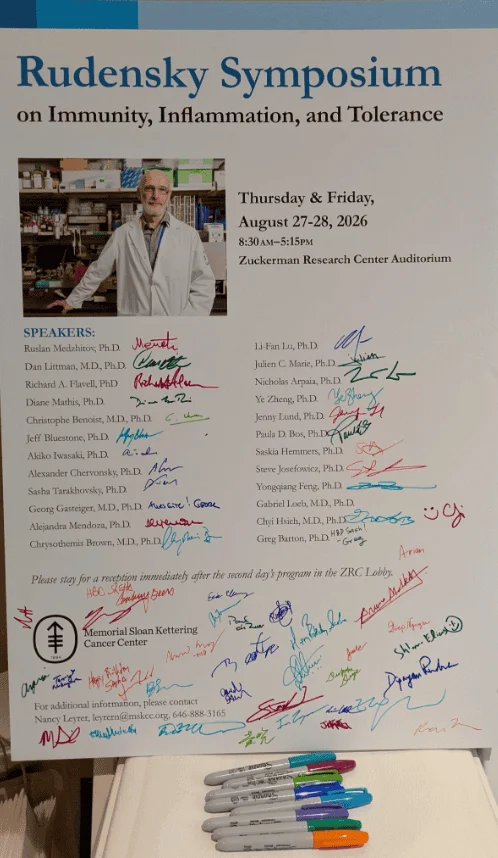
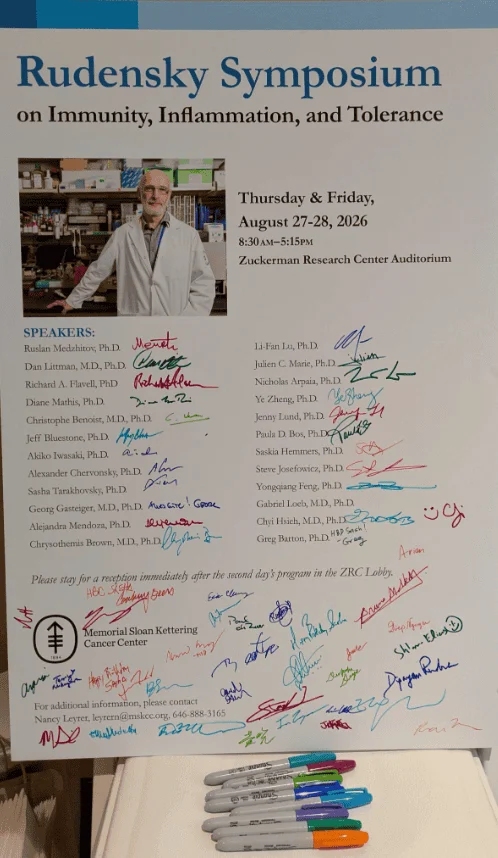
As the symposium concluded, the image of the poster board—signed by generations of Dr. Rudensky’s "research family"—served as the perfect metaphor for the progress of science itself. It is a generational effort.
The Rudensky Symposium was more than a birthday celebration; it was a progress report on the health of human immunology. By looking back at the fundamental questions that have occupied Dr. Rudensky for 70 years, the participants were able to see a clearer path forward. As these trainees move into their own labs, they carry with them the rigor and the vision that have defined their mentor’s career. The result is a vibrant, collaborative network that continues to push the boundaries of what is possible in the fight against cancer.
In the world of science, the most enduring discoveries are not just the papers published or the awards won; they are the people who are trained to ask the next, more difficult question. In that regard, the Rudensky Symposium confirmed that the future of cancer research is in capable hands.