









In the complex landscape of oncology, not all tumors are created equal. While some cancers remain indolent for years, others transform into aggressive, treatment-resistant adversaries with terrifying speed. For decades, researchers have grappled with the fundamental "why" behind these disparate outcomes. Now, a team of researchers at Virginia Tech has unveiled a series of groundbreaking discoveries that suggest the answers lie deep within the architectural anomalies of cancer cells themselves.
By meticulously dissecting the behavior of tetraploid cells—cells carrying double the standard complement of chromosomes—scientists have identified two novel mechanisms that fuel tumor progression: the recruitment of healthy "bystander" tissue to support malignancy, and the counterintuitive reality that smaller, rather than larger, abnormal cells are often the most lethal.
The Laboratory Bench: A Study in Patience
The quest to understand these microscopic engines of destruction requires immense dedication. In a refrigerated metal chamber at Virginia Tech, graduate student Megan Sweet performs the delicate, high-stakes ritual of tissue preparation. Her task involves slicing tumor samples, often no larger than a pinkie fingernail, into sections so thin that light can pass through them.
"It’s all about fine-tuning and making sure it’s going to be an even slice," Sweet explains, the rhythmic chopping of the microtome blade providing a meditative backdrop to her work. This painstaking process—cutting, staining, and viewing samples under high-powered microscopes—is the cornerstone of the team’s research. It is a slow, iterative cycle of discovery that has recently yielded significant insights published in the Proceedings of the National Academy of Sciences and Cancer Research.
The Genesis of Chaos: Chromosomal Errors
To understand the team’s findings, one must first understand the "normal" state of a human cell. Most cells in the body are diploid, housing two complete sets of chromosomes—one from each parent. During healthy cell division, these chromosomes are replicated and distributed with near-perfect fidelity.
However, cancer is often a story of instability. Sometimes, the machinery of cell division falters, leaving a daughter cell with an abnormal number of chromosomes. These errors, if not corrected, can accumulate, creating a cellular environment of chaos.
For the past five years, Sweet and fellow graduate student Mat Bloomfield, under the guidance of cell biologist Daniela Cimini, have focused on a specific type of chromosomal error: tetraploidy. These cells possess four sets of chromosomes rather than the standard two. While tetraploid cells can be artificially induced in the lab, they also occur spontaneously in human tumors, where their presence has long been a clinical marker for poor patient outcomes.
Recruitment: The Dark Alliance Between Cancer and Healthy Tissue
One of the most persistent mysteries in oncology has been how a relatively small population of abnormal cells can command a massive, aggressive tumor. If tetraploid cells are sometimes in the minority, how do they exert such outsized influence?
The Virginia Tech team discovered a startling answer: the tetraploid cells act as "recruiters." Through a series of experiments comparing tumors grown from diploid cells versus those containing tetraploid cells, researchers observed that the latter could orchestrate their microenvironment.
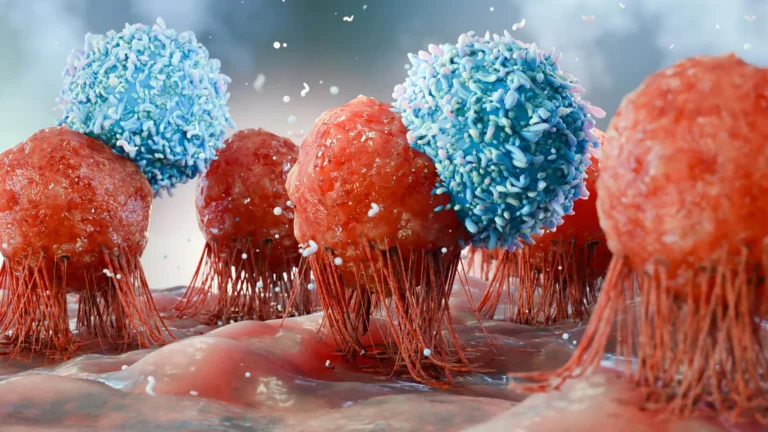
As the tumors grew, the percentage of tetraploid cells actually diminished. Yet, the tumors continued to expand at an alarming rate. The researchers discovered that the tetraploid cells were signaling to the surrounding environment, specifically recruiting "stromal cells." Stromal cells are non-cancerous connective tissue cells that provide the structural architecture for organs. By effectively hijacking these healthy neighbors, the tetraploid cancer cells created a supportive, nutrient-rich "niche" that allowed the tumor to flourish.
"The presence of even a small fraction of these tetraploid cells can promote the recruitment of extra non-cancerous cells that support further tumor progression," Sweet noted. This revelation flips the traditional script: the danger of a tumor is not always dictated by the sheer volume of cancerous cells, but by the "bystander" support network that the primary abnormal cells can command.
The Paradox of Scale: Why Smaller Cells Pose Greater Risks
If recruitment is the first pillar of the team’s findings, the second is a direct challenge to biological intuition: the relationship between cell size and malignancy.
Mat Bloomfield, while establishing colonies derived from individual tetraploid cells, observed a curious discrepancy. Given that these cells possessed twice the genetic material, they were expected to be significantly larger than their diploid counterparts. While many were indeed larger, a subset of the cells was 25 to 30 percent smaller than predicted.
When the team tested these "smaller" tetraploid clones, the results were sobering. These cells proved to be more invasive, more proliferative, and notably more resilient against common chemotherapy drugs and stress-inducing environments.
"The smaller clones are more aggressive," Bloomfield explained. "They grow faster, are more invasive, and more tolerant of common anti-cancer and stress-inducing drugs." This phenomenon was observed consistently across both breast and colorectal cancer models, suggesting that the "size-aggression" correlation is a fundamental property of these abnormal cell populations rather than a quirk of a specific cancer type.
From Petri Dish to Patient Outcomes
The ultimate goal of any cancer research is clinical application. The Virginia Tech team transitioned from laboratory mice to the "human" scale by analyzing data from the Cancer Genome Atlas, a massive repository of clinical and genomic data from thousands of cancer patients.
The findings were definitive: across multiple cancer types, the presence of these smaller, abnormal cells was a strong predictor of lower survival rates and more aggressive disease progression.
"We already knew that tetraploidy can make cells more tumorigenic, but now we know that if you incorporate the size of the cells, it can be more predictive of tumorigenic potential," said Daniela Cimini. This provides a new, tangible metric for clinicians. By integrating cell-size analysis into diagnostic pathology, doctors may one day be able to predict, with greater accuracy, which tumors are likely to become aggressive and which might remain manageable.
Implications for Future Cancer Therapy
The implications of this work extend far beyond the laboratory. By identifying how these abnormal cells recruit healthy neighbors, researchers may be able to develop therapies that block these "recruitment signals," effectively starving the tumor of its support structure. Similarly, if smaller, highly aggressive tetraploid cells are indeed the primary drivers of treatment failure, future diagnostic tools could be calibrated to identify and target these specific cell populations before they lead to metastasis.
The research also highlights the need for a more nuanced view of tumor heterogeneity. A tumor is not a monolithic entity; it is a dynamic, evolving ecosystem where different cell types—some larger, some smaller, some diploid, some tetraploid—compete and cooperate. Understanding the "social" interactions between these cells is the next frontier of cancer biology.
Looking Ahead: The Search Continues
As the team looks toward the future, they plan to delve deeper into the biological mechanisms that allow smaller tetraploid cells to achieve such heightened aggressiveness. What specific genes are upregulated in these cells? What metabolic pathways allow them to bypass the stress responses that normally trigger cell death?
For researchers like Megan Sweet and Mat Bloomfield, the work is far from finished. The laboratory remains a place of intense, quiet discovery. Every slide prepared and every microscopic measurement taken represents a step forward in the long, arduous journey toward outsmarting one of humanity’s most persistent threats.
The Virginia Tech team has provided the field with a new lens through which to view the progression of cancer—a lens that focuses not just on the genetic mutations within the cell, but on the physical size of the cell and its ability to manipulate its neighbors. As these findings move from the laboratory bench to potential clinical applications, they offer a glimmer of hope: by understanding the mechanics of cancer’s growth, we move one step closer to dismantling its engine of destruction.