








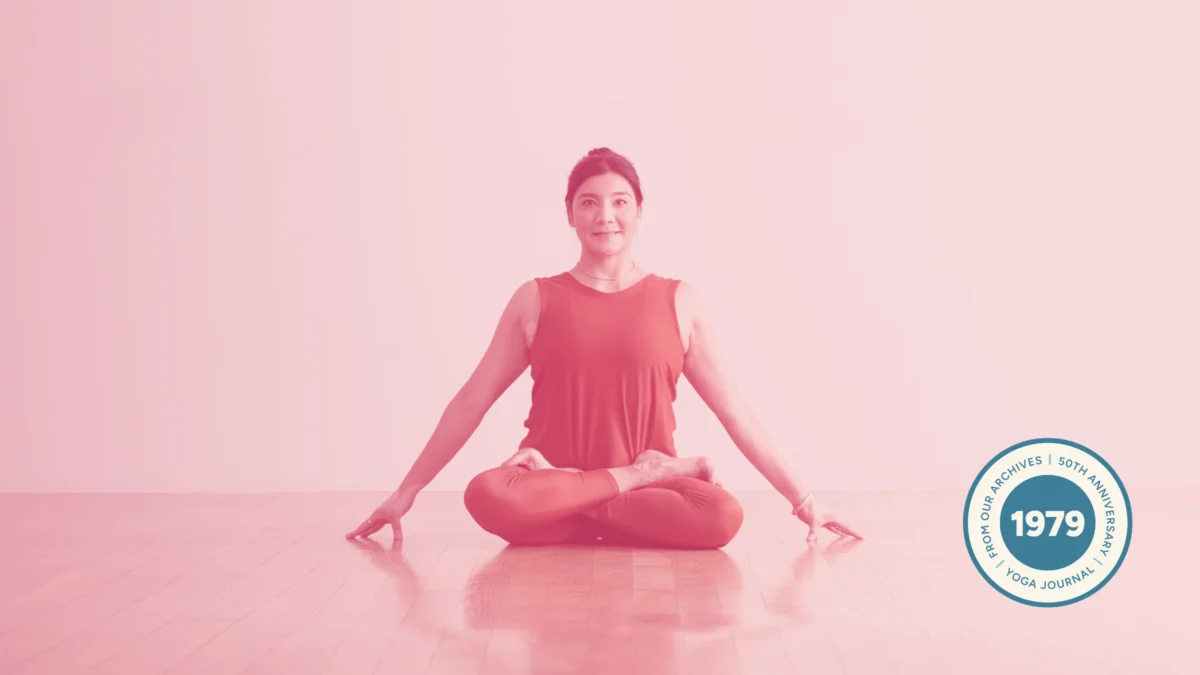
Originally published in the November-December 1979 issue of Yoga Journal, this archival feature explores the enduring significance, physiological risks, and spiritual foundations of the Lotus Pose.
The Iconic Silhouette: An Introduction to Padmasana
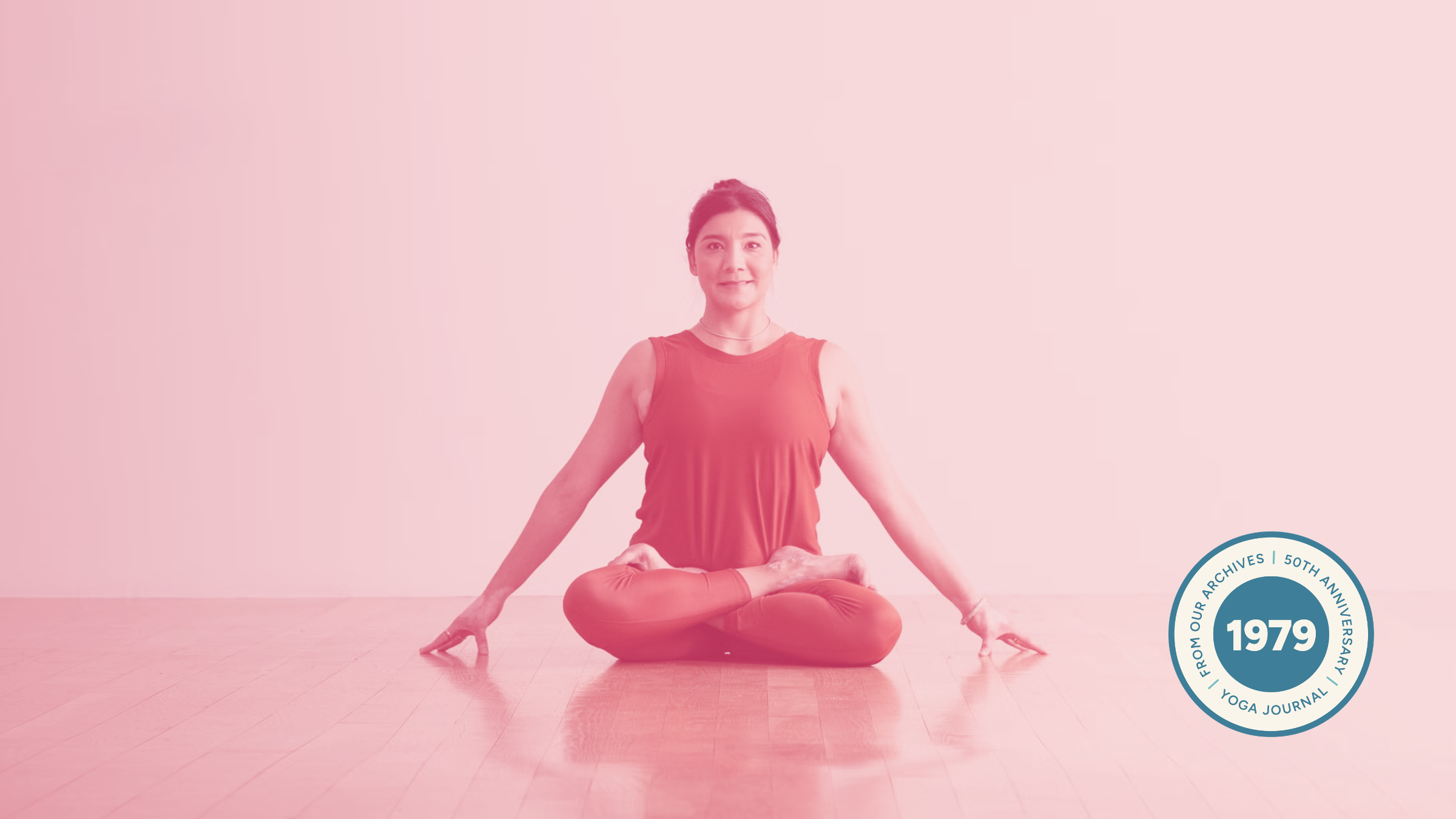
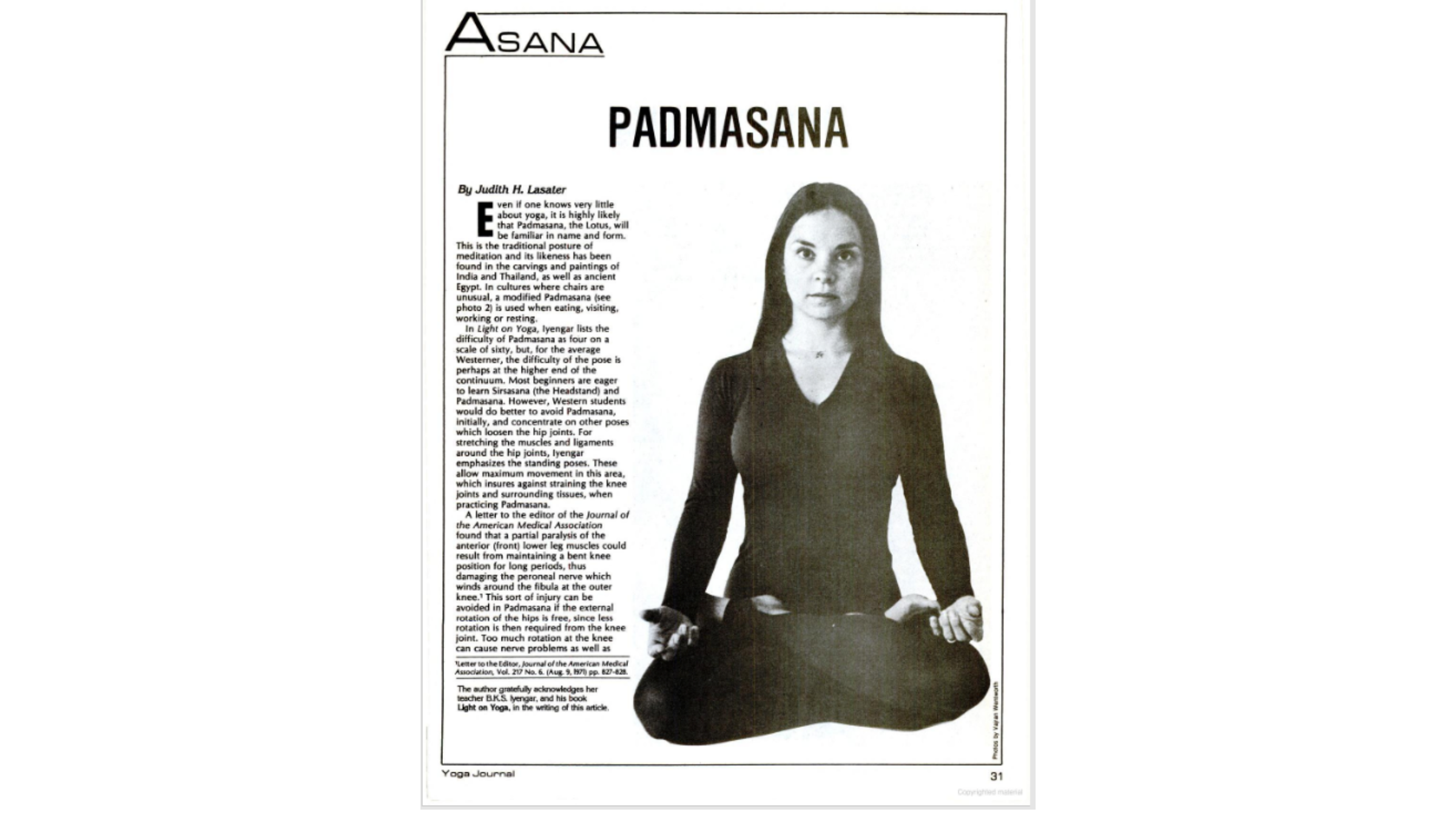
Few symbols are as synonymous with the practice of yoga as Padmasana, or the Lotus Pose. Whether rendered in the intricate stone carvings of ancient India, depicted in the contemplative frescoes of Thailand, or unearthed in artifacts from antiquity, the image of a practitioner seated in a perfect cross-legged fold is the universal shorthand for “yoga.”
While the Western world often views Padmasana as an aesthetic goal—a hallmark of advanced flexibility—the tradition tells a different story. In cultures where chair-sitting is not the cultural norm, a variation of the Lotus Pose is the default human posture for eating, labor, and resting. It is not merely a pose to be "attained"; it is a foundational, functional way of being. As we revisit this 1979 archival piece, we examine why this posture remains the gold standard for meditation and how modern practitioners can approach it with both reverence and anatomical safety.
Chronology of the Lotus: From Ancient Roots to Modern Practice
The evolution of Padmasana from a natural sitting position to a codified asana reflects the history of yoga itself.
- Antiquity: Historically, Padmasana was utilized as the primary vessel for pranayama (breath control) and deep meditative states. Ancient texts, including the Hatha Yoga Pradipika, cite the pose as the superior foundation for the energetic work of the yogi.
- The Mid-20th Century: With the global dissemination of yoga, particularly through the influence of B.K.S. Iyengar, Padmasana was codified into a structured practice. In his seminal work, Light on Yoga (1966), Iyengar famously assigned it a difficulty rating of four out of sixty. However, this rating is often deceptive to the Western student, whose anatomy—conditioned by years of chair-sitting—is rarely prepared for the degree of hip external rotation required to execute the pose safely.
- 1979 and Beyond: The late 1970s marked a pivotal moment where Western yoga literature began to reconcile ancient tradition with modern medical understanding. This period saw a shift in focus from "forcing" the body into the shape of the Lotus to preparing the body through standing poses and preparatory hip openers.
Physiological Implications: The Anatomy of the Knee and Hip
The most significant shift in the pedagogy of Padmasana over the last half-century has been the emphasis on safety. In 1971, a letter published in the Journal of the American Medical Association highlighted a concerning clinical reality: the "yogi’s palsy."
Researchers documented cases of partial paralysis in the anterior lower leg muscles resulting from sustained, incorrect knee flexion. The culprit is often the peroneal nerve, which wraps around the fibula near the outer knee. When the hips lack the necessary external rotation, the knee joint is forced to compensate by twisting, which places direct, dangerous pressure on the nerve and the delicate cartilage of the knee joint.
The Hierarchy of Alignment
To mitigate these risks, practitioners must understand the biomechanics of the joint:
- Hip Mobility: The rotation must originate in the hip socket. If the hip is restricted, the knee becomes a pivot point, which it is not designed to be.
- The Spine as a Conduit: The physiological goal of the pose is a perfectly erect spinal column. This alignment allows for the unimpeded expansion of the lungs during pranayama.
- The Triangle of Stability: Padmasana creates a triangular base of support—the buttocks and two knees—which acts as a tripod. A secondary triangle is formed by the head and the knees, which practitioners believe aligns the nadis (energy channels) of the body.
Supporting Data: Why the Spine Dictates the Mind
The physiological benefits of Padmasana are inextricably linked to the neurological state of the practitioner. According to the traditional understanding of Hatha Yoga, the human nervous system is mirrored in the spine.
When the spine slumps, the nervous system enters a state of dullness or tamas. Conversely, when the spine is held in a forced, rigid manner, it creates muscular tension that translates to an over-active, restless brain. The "Goldilocks" zone of Padmasana is a neutral, vertical stack where the neck remains a natural continuation of the spinal column. When this balance is achieved, the brain naturally transitions into a state of equanimity.
Furthermore, intermediate students are cautioned against the habit of "unilateral practice"—always crossing the same leg first. Because the position of the legs directly affects the pelvic tilt and the corresponding spinal curvature, alternating the lead leg is essential for maintaining symmetry in the lungs and balancing the hemispheres of the brain during meditation.
Official Recommendations for Safe Practice
For those looking to integrate Padmasana into their practice, the transition from beginner to advanced must be deliberate. The following protocols are recommended:
The Preparatory Phase
- Prioritize Standing Poses: Before attempting to sit in Lotus, one must open the hip joints. Standing poses provide the range of motion necessary to safely rotate the femur in the acetabulum (hip socket).
- Utilize Props: There is no shame in utilizing support. Elevating the buttocks on a folded mat or blanket tilts the pelvis forward, which relieves the pressure on the knees. A block or book under a lifted knee can prevent strain on the ankle and knee ligaments.
The Execution
- Grounding: Sit on the floor with legs extended. Ensure the spine is maximally extended.
- The Fold: Bend the knee and draw the shin toward the navel. Keep the ankle extended to avoid torque on the joint.
- Placement: Place the heel high on the opposite thigh. Ensure the foot is not straining the ankle ligaments; the sole should eventually face upward, mimicking the petals of the lotus flower.
- Refinement: Use your hands to adjust the weight on the buttocks until it feels perfectly even. If you feel a tilt, insert a pad under the higher hip.
The Metaphor of the Lotus
Beyond the biomechanics and the medical warnings, Padmasana remains a profound philosophical symbol. The lotus flower is unique in its resilience; it roots itself in the thick, murky mud of the riverbed, yet rises above the water to bloom in pristine, untouched beauty.
For the modern practitioner, this is the ultimate lesson of the asana. We live in an imperfect world, often distracted by the "mud" of daily stressors and physical limitations. By practicing Padmasana—by taking the time to align our bodies, calm our nerves, and stabilize our breath—we are engaging in a process of transformation. We are moving from the ordinary, rigid state of the modern body into an exquisite, aligned state of stillness.
As B.K.S. Iyengar noted in his foundational teachings, the practice is not merely about the destination of the pose, but the discipline required to reach it. Whether you are a beginner working with a modified seat or an intermediate student refining your balance, the intent remains the same: to create a foundation of stability that allows the mind to transcend the physical form.
Footnotes & References
- Letter to the Editor, Journal of the American Medical Association, Vol. 217 No. 6, (Aug. 9, 1971).
- Iyengar, B.K.S. (1966). Light on Yoga. Schocken Books.
- Svatmarama. Hatha Yoga Pradipika (Commentary by Brahmananda). Theosophical Society, 1972.
- Woodroffe, Sir John. (1973). The Serpent Power. Ganesh & Co.
The author gratefully acknowledges the teachings of B.K.S. Iyengar for the technical insights provided in this guide.