









In a stark reversal of decades of public health progress, the United States has officially lost its measles-elimination status. The determination, announced Tuesday by the Pan American Health Organization (PAHO), marks the first time in 26 years that the nation has failed to meet the rigorous international criteria required to keep the highly contagious virus at bay. With over 5,400 confirmed cases and six reported deaths in 2026 alone, health officials now classify measles as endemic within the United States.
For the American public, the loss of this formal designation is more than a bureaucratic setback; it is a signal that the protective barrier of herd immunity has eroded. While the status loss carries no immediate legal penalties, experts warn that it represents a dangerous trajectory for a nation that once served as a global model for disease eradication.
The Chronology of a Public Health Retreat
The road to this moment has been paved with years of declining vaccination rates and rising vaccine hesitancy. To understand how the U.S. arrived at this crisis, one must look at the historical timeline of its fight against the virus:
- 2000: The U.S. is officially declared to have eliminated measles, a feat achieved through decades of aggressive, widespread vaccination campaigns.
- 2024: As vaccination coverage among kindergarteners begins to slip, public health experts begin to sound the alarm on the rise of non-medical vaccine exemptions.
- 2025: Measles cases begin to surge across the country. Canada loses its elimination status, and the broader Americas region is flagged for a significant decline in its disease-free designation.
- 2026 (January–November): The U.S. reports 43 distinct outbreaks—defined by the CDC as three or more related cases. The total case count climbs to over 5,400, leading to six fatalities.
- November 10–13, 2026: PAHO conducts a formal review of member nations. On Tuesday, the organization officially strips the United States, Bolivia, and Mexico of their measles-elimination status.
Understanding "Elimination" vs. "Endemic"
To the layperson, the term "elimination" can be confusing. It does not imply that a country has zero cases of a disease. Rather, it signifies that the virus is no longer circulating continuously within the population. Elimination is maintained when there are no large-scale, ongoing outbreaks of the virus that persist for 12 months or longer.
When a country loses this status, it means the virus has become "endemic"—it is now a permanent fixture of the local environment. As William Moss, an epidemiology professor at Johns Hopkins University, explains: "For most citizens of the United States, the loss of that formal status probably doesn’t have much meaning. What is much more important for citizens is that there is a lot of measles, and people are at risk of acquiring it."
Supporting Data: The Science of the Surge
The primary driver behind this decline is a widening gap in population immunity. Measles is one of the most contagious pathogens known to science, transmitted through respiratory droplets that can linger in the air for up to two hours after an infected person has left a room.
The Power of the MMR Vaccine
The measles, mumps, and rubella (MMR) vaccine remains the "gold standard" of prevention. According to the Centers for Disease Control and Prevention (CDC), two doses of the vaccine are 97% effective at preventing infection. However, when vaccination rates drop even slightly below the required threshold of approximately 95% for herd immunity, the virus finds its way to the most vulnerable.
The "Spark" Metaphor
Epidemiologists often compare measles outbreaks to forest fires. A "spark" is an infected individual. In a highly vaccinated community, the spark lands on "wet wood" and fails to ignite. In a community with declining vaccination rates, the wood is dry, and the resulting blaze can spread rapidly.
Data from the New England Journal of Medicine Evidence highlights the gravity of these outbreaks. Between January 2025 and September 2026, 112 confirmed cases occurred during pregnancy, with 13 cases of congenital measles—a tragic consequence where the virus is passed from mother to child. Beyond the immediate infection, measles is known to cause "immune amnesia," a phenomenon where the virus wipes out the body’s memory of previous infections, leaving survivors susceptible to other illnesses for months or even years.
Official Responses and Political Friction
The loss of status has triggered a complex debate regarding the role of government, the impact of public policy, and the influence of political messaging on health outcomes.
The Federal Stance
CDC Director Dr. Erica Schwartz emphasized that while the designation is symbolic, the agency’s mission remains unchanged. "The measles elimination designation is not what protects Americans. Vaccination does," she stated. The agency has committed $100 million to assist state and local health departments in tracking the virus and bolstering vaccination efforts.
The Political Divide
Critics point to the current administration’s messaging as a significant barrier to regaining the lost status. Health and Human Services Secretary Robert F. Kennedy Jr. has frequently questioned the safety of vaccines, repeating debunked claims linking them to autism. Furthermore, President Donald Trump has proposed separating the MMR vaccine into three distinct doses, a move that medical experts—including the American Academy of Pediatrics—have roundly criticized as scientifically baseless and logistically unfeasible.
Amira Roess, a professor of global health at George Mason University, noted that the crisis is a "natural consequence of being unable to mount an effective response to growing misinformation." She argues that the federal government must provide consistent, evidence-based messaging to counteract the spread of anti-vaccine sentiment.
The Long Road to Recovery
Can the United States return to its former status? The answer, according to experts like Aubree Gordon from the University of Michigan, is a firm yes—but it will not be quick or easy.
Lessons from Brazil
Brazil provides a roadmap for recovery. After losing its elimination status in 2019, the country invested heavily in intensive vaccination campaigns, improved surveillance, and rapid outbreak response. By 2024, Brazil had successfully reclaimed its status.
Necessary Steps for the U.S.
To replicate this success, the U.S. must undertake a multi-pronged approach:
- Strengthening Infrastructure: Local health departments require increased funding to conduct contact tracing and manage outbreaks.
- Addressing Exemptions: Policy experts suggest that state legislatures must tighten non-medical vaccine exemptions for children entering school.
- Restoring Trust: Achieving the necessary vaccination threshold will require a national campaign to rebuild confidence in the safety and efficacy of the MMR vaccine.
Most experts, including Dr. Moss, believe that regaining the status will likely take at least five years. "It would take a new administration and a real focus on clear messaging about the value of vaccines," Moss noted.
A Call to Action
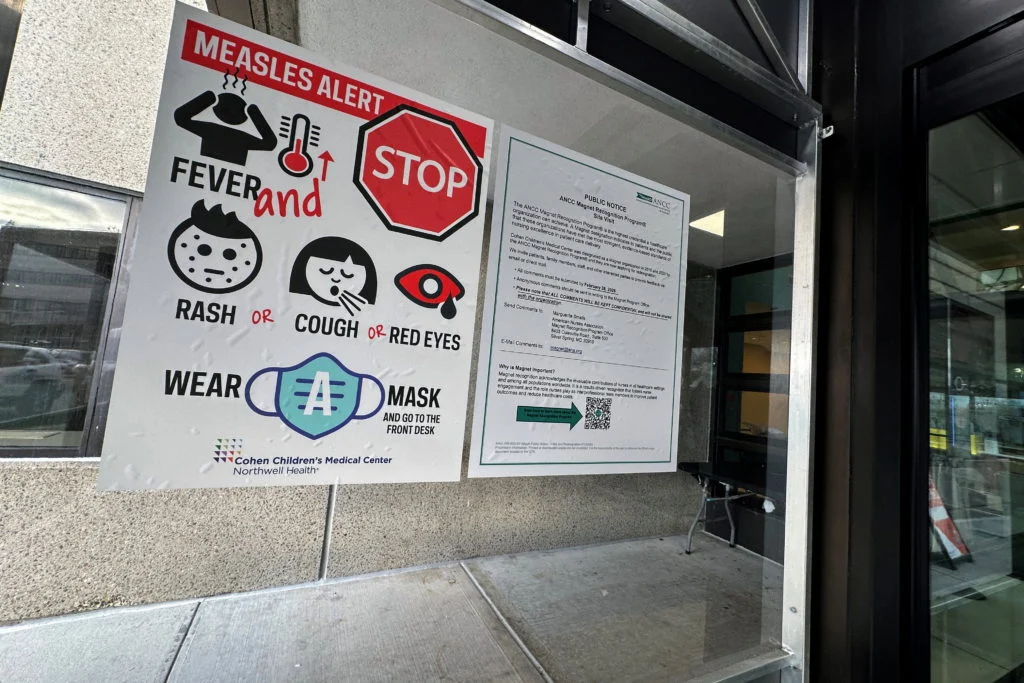
As the U.S. grapples with its new reality, the medical community urges citizens to stay informed. Those who believe they have been exposed or are exhibiting symptoms—characterized by fever, rash, dry cough, and red eyes—should contact healthcare providers via phone before entering a facility to avoid exposing others.
Ultimately, the loss of measles-elimination status serves as a somber reminder of the fragility of modern health. The tools to eradicate the virus exist, but as the current data shows, they are only as effective as the public’s willingness to use them. The task ahead for the nation is to bridge the gap between scientific consensus and public confidence, ensuring that the next generation is not left vulnerable to a disease that was once all but forgotten.