From the viral corridors of TikTok to the bestseller lists of health-conscious bookstores, "seed oils"—commonly referred to as vegetable oils—have become the lightning rod of modern nutrition. You may have seen them vilified in online forums as "toxic sludge," "motor oil," or "the hateful eight." Detractors claim these oils are the hidden architects of the chronic disease epidemic, contributing to everything from obesity and anxiety to ulcerative colitis.
Conversely, mainstream nutritional organizations continue to recommend them as heart-healthy alternatives to saturated animal fats. With such conflicting narratives, it is time to move beyond the sensationalism of social media memes and examine the science of how these oils are made, how they interact with the body, and how they fit into a balanced diet.
The Evolution of the Controversy: A Brief Chronology
The debate over vegetable oils is not new; it dates back to the very moment these products entered the commercial marketplace in the early 20th century.
- Early 1900s: The advent of industrial seed oil extraction allowed companies to turn previously discarded seeds (like cottonseed) into shelf-stable, inexpensive cooking fats. This was marketed as a miracle of modern food science.
- The 1980s and 90s: Health authorities urged a shift away from saturated animal fats (like butter and lard) toward polyunsaturated vegetable oils and trans-fat-laden margarines, citing concerns over cardiovascular health.
- The 2010s to Present: A "back-to-basics" movement, exemplified by the rise of the Carnivore Diet and ancestral health communities, sparked a fierce backlash. Critics argued that humans evolved consuming animal fats and that highly processed vegetable oils are a modern, inflammatory intrusion into our physiology.
Defining the "Vegetable" Oil Category
To understand the nuance, we must first define what we are talking about. "Vegetable" or "seed" oils typically include:
- Canola (rapeseed) oil
- Soybean oil
- Corn oil
- Sunflower oil
- Safflower oil
- Cottonseed oil
- Grapeseed oil
It is important to note that oils such as olive, avocado, palm, and coconut oil are technically fruit oils, not seed oils. They are derived from the flesh of the fruit rather than the embryo of the seed, a distinction that significantly alters their chemical stability and the processing required to extract them.
The Manufacturing Process: Nature vs. Industry
The primary grievance against seed oils often centers on how they are processed. Traditional fats like olive oil or butter can be extracted through simple physical pressure—a process called "cold-pressing." Olives, for instance, are naturally so oil-rich that they can be squeezed at home.
In contrast, seeds like corn, soybeans, and canola contain very little oil. To extract it, manufacturers must employ an intensive, multi-stage industrial process:

- Cleaning and De-hulling: Removing foreign matter.
- Heating and Pressing: Using high temperatures to soften the seed.
- Solvent Extraction: Using chemicals (often hexane) to chemically strip the remaining oil from the seed meal.
- Refining, Bleaching, and Deodorizing (RBD): Using further heat and chemical treatments to create a neutral, long-lasting product.
During this aggressive processing, natural antioxidants and polyphenols are largely stripped away. Furthermore, if the oil is subjected to extreme temperatures, it can lead to the formation of small amounts of trans fatty acids. While the FDA banned the addition of trans fats to processed foods in 2018, the reality remains that highly processed oils are fundamentally different from the whole foods they originated from.
Supporting Data: Examining the "Inflammation" Claim
The core argument against seed oils—specifically those high in omega-6 fatty acids—is that they promote systemic inflammation.
The typical Western diet contains an omega-6 to omega-3 ratio of roughly 16:1 or 20:1. Evolutionary researchers argue that this is a drastic departure from the 1:1 or 4:1 ratio humans historically maintained. The theory suggests this imbalance drives chronic inflammation, which is a precursor to metabolic syndrome, heart disease, and diabetes.
However, clinical research offers a more complex picture. A 2019 review published in the journal Circulation found that, contrary to the "inflammatory" hypothesis, the consumption of linoleic acid (the primary omega-6 in seed oils) was associated with a reduced risk of heart disease and early death.
The disconnect lies in the source. When omega-6s are consumed via whole foods like walnuts, seeds, and healthy oils, they arrive in a "package" containing fiber, protein, and phytonutrients. When consumed via highly processed snack foods, these fats are stripped of their protective partners and combined with refined sugars and sodium—a combination that is unequivocally linked to poor health outcomes.
Official Stance and Scientific Consensus
Health organizations, including the American Heart Association (AHA), generally support the use of polyunsaturated fats as a replacement for saturated fats. They point to data showing that reducing saturated fat intake—specifically by replacing it with vegetable-based fats—can lower LDL cholesterol levels.
However, there is a growing consensus that the quality of the fat matters more than the specific label. The "toxic" label is largely an exaggeration, but the "health-promoting" label is also often an overstatement for highly refined oils. The scientific consensus is shifting toward a hierarchy:

- Whole Food Fats: Avocados, nuts, olives, and seeds.
- Minimally Processed Oils: Extra virgin olive oil (EVOO) and expeller-pressed oils.
- Highly Refined Oils: Standard supermarket vegetable oils, especially when used in ultra-processed, calorie-dense foods.
Implications for Your Kitchen: A Practical Guide
If you are looking to optimize your health, consider the following evidence-based approach:
1. The Gold Standard: Extra Virgin Olive Oil (EVOO)
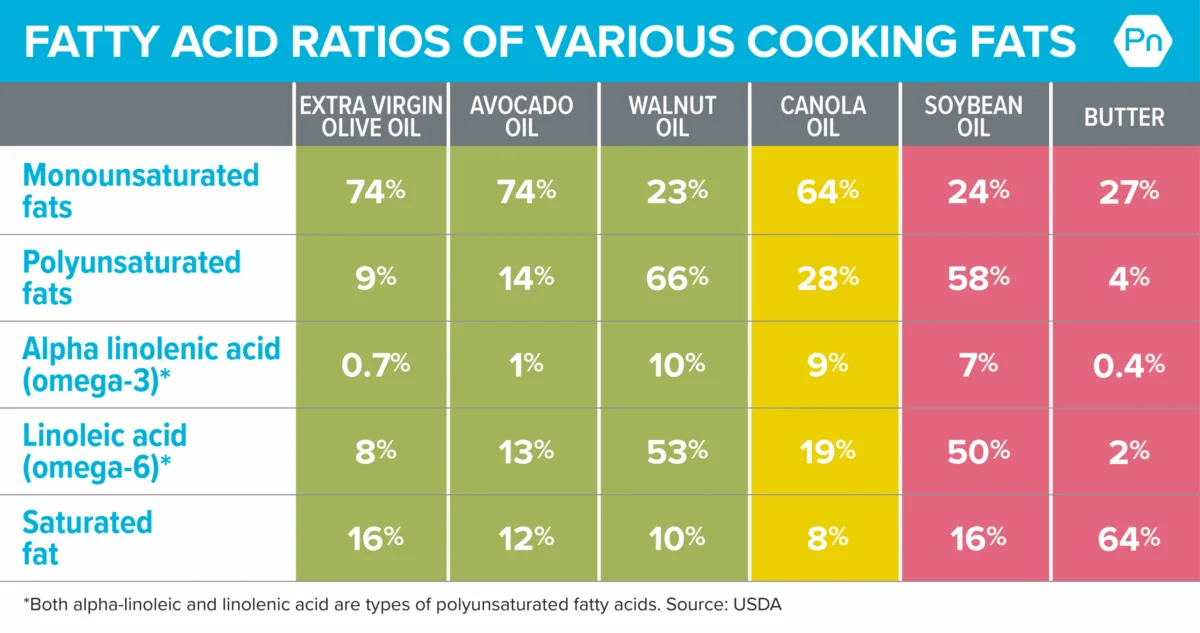
EVOO is arguably the most well-researched cooking fat in existence. It is rich in monounsaturated fats and polyphenols that combat cellular damage. Recent studies have dispelled the myth that EVOO has a low smoke point; its chemical composition makes it remarkably stable, even during high-heat cooking.
2. The Budget-Friendly Runner-Up: Expeller-Pressed Canola
If you need a neutral oil for baking or are on a budget, expeller-pressed (not solvent-extracted) canola oil is a viable option. It contains alpha-linolenic acid (an omega-3) and is far more stable than many other refined seed oils.
3. The "Limit" Category: Ultra-Processed Foods
The greatest danger is not necessarily the tablespoon of oil you use to roast your vegetables; it is the hidden oils in ultra-processed foods. Store-bought chips, crackers, frozen dinners, and dressings are the primary source of refined seed oils for most people. These products are engineered for hyper-palatability, making it difficult to regulate caloric intake, which directly contributes to obesity and its associated health risks.
Conclusion: Nutrition is More Than a Meme
Are seed oils "toxic"? In the context of a diet dominated by whole foods, fresh vegetables, and lean proteins, the occasional use of refined vegetable oil is unlikely to be the sole cause of chronic illness. However, the obsession with labeling them as "health foods" ignores the reality of how they are processed.
The most effective strategy is to prioritize fats that come from whole sources—olives, avocados, and nuts—and reserve refined oils for moderate use. By focusing on the "whole food" matrix, you bypass the inflammatory debate entirely, ensuring that the fats you consume provide not just calories, but the protective phytonutrients your body needs to thrive.
Ultimately, nutrition is not about finding a single "villain" to blame for all modern ailments. It is about the cumulative effect of your dietary patterns. Aim for high-quality, minimally processed sources, and when in doubt, remember: the best fats are the ones that still look like the foods they came from.