










For over a decade, the American electorate has watched the political landscape shift from a battle of competing ideologies to a theater of managed decline. As the credibility of the two-party system wanes, a chorus of high-profile voices—including media firebrand Tucker Carlson, Congresswoman Marjorie Taylor Greene, and political activist Joe Kent—has begun to openly declare the current federal structure irreparably broken.
The temptation to seek salvation through a "third party" is, in this context, entirely logical. When the duopoly produces outcomes that seem to disregard the will of the base, voters naturally gravitate toward the idea of a new political vehicle. Yet, a dispassionate analysis suggests that the rot within the American administrative state is so foundational that mere electoral retooling is akin to rearranging deck chairs on the Titanic.
The Structural Deadlock: Why Third Parties Fail
The allure of a third party rests on the premise that our current political malaise is a simple failure of leadership. However, this diagnosis overlooks the reality that the two-party system is not broken; it is functioning exactly as it was designed—to perpetuate a specific status quo.
History has shown that third-party movements in the United States are systematically dismantled by a combination of ballot access restrictions, media blackouts, and intelligence-community interference. Even if a third party were to miraculously gain traction, it would inevitably be absorbed or neutered by the existing power structures. The "Groundhog Day" loop of American politics—where parties trade control of the White House while policies remain largely static—is the inevitable result of a system where the foundational questions of sovereignty, monetary policy, and foreign intervention are never on the ballot.
The Fourth Branch: Bureaucracy as an Unaccountable Sovereign
The most compelling evidence for the futility of electoral reform lies in the entrenched power of the "fourth branch" of government: the administrative state. The recent, well-documented struggles of Robert F. Kennedy Jr. during his tenure at the Department of Health and Human Services serve as a definitive case study. Despite being granted nominal authority over federal health policy, Kennedy found himself unable to halt the institutional inertia of the FDA.
This power dynamic reveals a sobering truth: the regulatory state—encompassing agencies like the FDA, CDC, EPA, and ATF—operates as a self-sustaining entity that transcends partisan turnover. These agencies function as the enforcement arm for corporate monopolies, particularly within the pharmaceutical and military-industrial sectors. When an agency’s mission is to protect its own budgetary growth and the profits of its corporate partners, the party label of the President becomes a secondary concern. The regulatory apparatus is designed to ensure that no meaningful change ever reaches the surface, regardless of the mandates delivered by the voting public.
The Erosion of Hegemony: A Chronology of Decline
The American empire is not merely stagnant; it is currently undergoing a rapid, multi-front collapse. To understand the gravity of the situation, one must look at the timeline of the last two decades:
- 2008–2012: The Global Financial Crisis exposes the fragility of the banking system, leading to "Too Big to Fail" policies that permanently weld the government to the interests of high finance.
- 2016–2020: The rise of populist movements signals a profound rejection of the neoliberal consensus, yet the bureaucratic response is a hardening of institutional defenses.
- 2020–2024: The pandemic era accelerates the consolidation of power within federal health agencies, bypassing local governance and individual medical autonomy.
- 2024–Present: The military-industrial complex faces a crisis of credibility as the U.S. struggles to maintain its influence in the Middle East and Eastern Europe, while the dollar—the bedrock of American power—faces unprecedented inflationary pressure and international de-dollarization efforts.
The geopolitical reality is stark: the United States spends more on its military than the next ten nations combined, yet it increasingly finds itself unable to project power or secure its own strategic interests. This disconnect between expenditure and outcome is a hallmark of a decaying empire.
Financial Destabilization and the Dollar Crisis
The financial foundation of the American republic is being systematically hollowed out. Despite the political rhetoric of fiscal conservatism, the national debt continues to expand at an exponential rate. Current policies are effectively detonating the purchasing power of the American dollar, leading to a de facto devaluation of living standards for the middle class.
Economists observing these trends suggest that the collapse of the dollar is no longer a "risk" but an accelerating eventuality. When a nation’s currency is no longer backed by productive output or fiscal responsibility, but rather by the threat of force and the whims of a central bank, its collapse is historically inevitable. We are currently witnessing the terminal phase of this cycle.
Reimagining Liberty: From Reform to Reboot
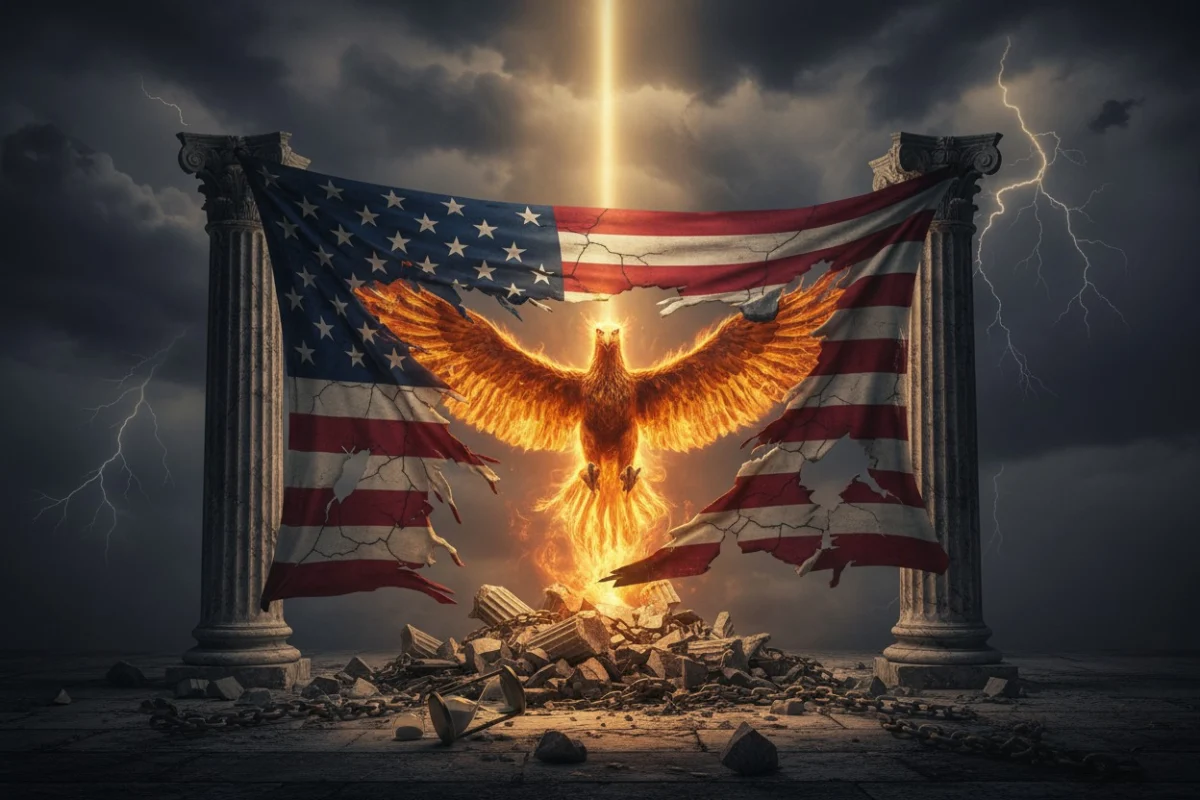
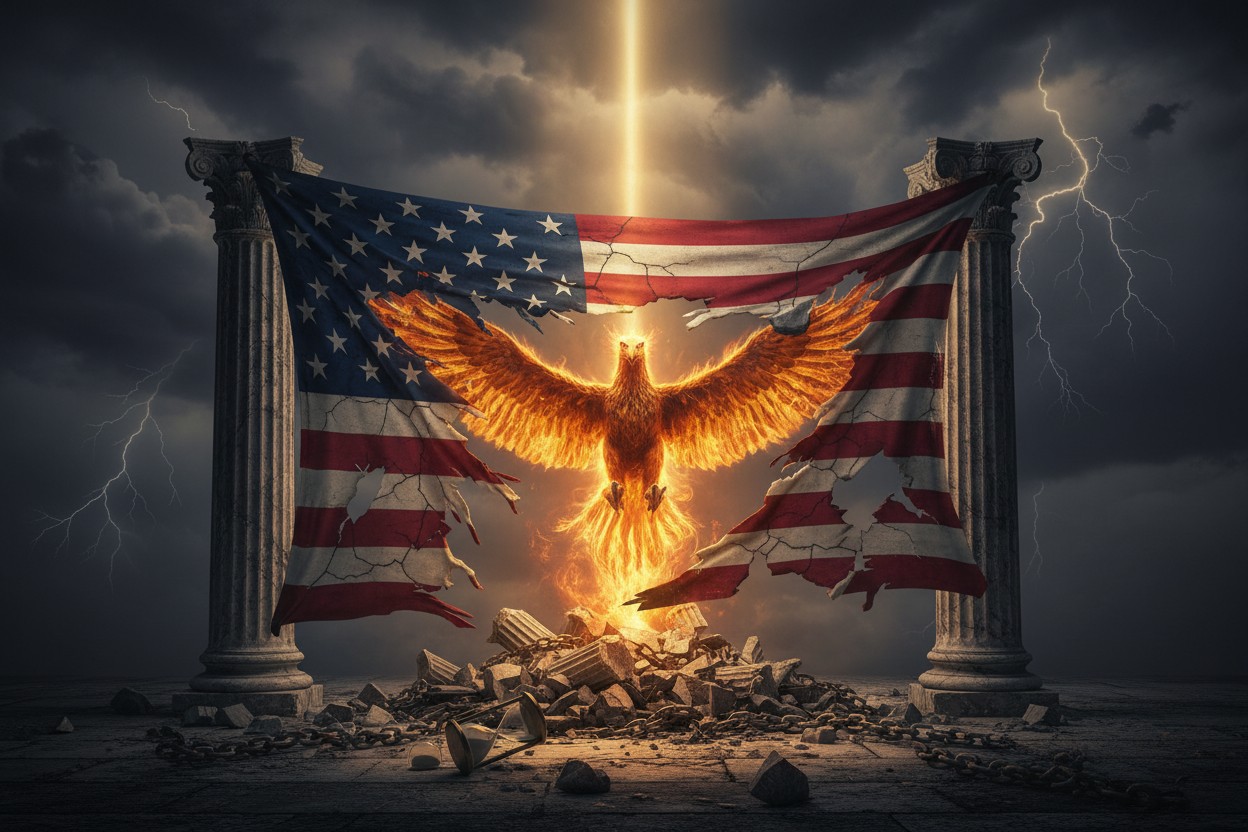
If the current system is indeed a prison designed to mimic a choice, then the only logical response is not to vote, but to fundamentally reconsider the structure of the state. Reform is no longer a viable pathway; a "hard reset" is the only remaining option for the restoration of individual liberty.
The Path Toward a New Republic:
- Massive Decentralization: The federal government must be reduced to a fraction of its current size, with power returned to the states in accordance with a strict reading of the Tenth Amendment.
- Medical Sovereignty: We must move beyond the constraints of the existing Bill of Rights. Proponents argue for a new constitutional amendment explicitly protecting medical freedom, effectively stripping the pharmaceutical industry of its monopolistic influence over public health.
- Monetary Integrity: The restoration of honest money is non-negotiable. Without a stable, non-manipulated currency, the republic cannot exist as a free society.
Implications for the Future
The path forward is undeniably perilous. The entrenched power structures are too wealthy and too ruthless to relinquish control voluntarily. However, the coming chaos is not merely a tragedy—it is a prerequisite for a meaningful reconstruction.
While figures like Tucker Carlson provide a necessary cultural critique of the status quo, the realist perspective dictates that we cannot vote our way out of a collapse that is already written into the ledger. The mission for the next generation is not to "save" the bloated, corrupt, and aggressive American state, but to nurture the seeds of a new republic from the ashes of the old.
In this new order, the government would serve the people, rather than dictate their daily existence. Liberty would be defined by the right to heal, the right to earn honest wages, and the right to live free from the oversight of an administrative police state. The ship of state has hit the iceberg; it is time to stop rearranging the deck chairs and begin the work of building the lifeboats.
Supporting Data Summary
- Regulatory Independence: Studies of agency capture suggest that the "revolving door" between private industry and federal oversight bodies ensures that legislative intent is routinely subverted by bureaucratic preference.
- Fiscal Metrics: Federal spending as a percentage of GDP has reached historic highs, while the debt-to-GDP ratio has surpassed levels historically associated with sovereign defaults.
- Global Credibility: Diplomatic polling indicates a sharp decline in international trust regarding U.S. institutional stability, directly impacting the demand for U.S. Treasuries and the long-term viability of the dollar as the global reserve currency.
Official Responses
To date, the political establishment has remained largely silent on the prospect of systemic collapse, choosing instead to focus on incremental policy adjustments. Spokespersons for both major parties continue to emphasize the resiliency of American institutions, maintaining that the current "check and balance" system is sufficient to address the grievances of the populace. However, critics argue that this rhetoric is designed to maintain the appearance of normalcy while the underlying infrastructure of the nation continues to degrade.