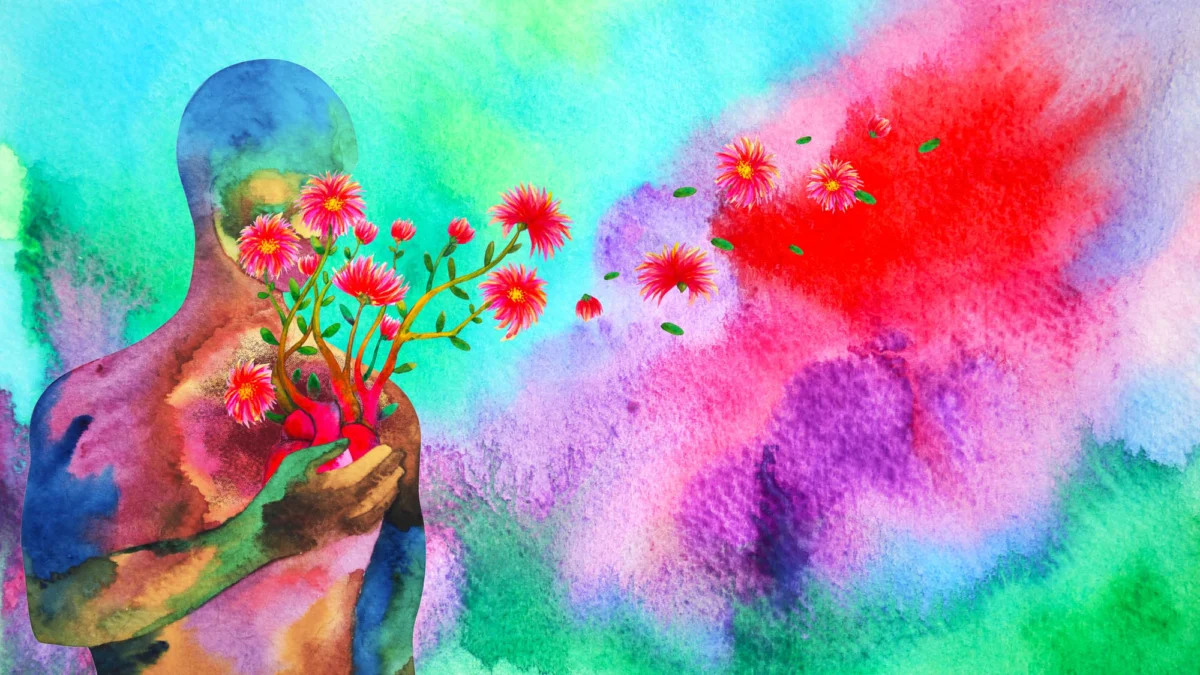
For more than three decades, the psychiatric establishment has maintained a rigid wall between "madness" and "medicine." On one side lies the pathological diagnosis of psychosis—an experience often met with restraint, heavy sedation, and social isolation. On the other lies the burgeoning field of Psychedelic-Assisted Therapy (PAT), a "renaissance" celebrated for its ability to induce transcendent, ego-dissolving states of consciousness.
However, a growing movement of researchers and individuals with lived experience is now challenging this binary. They argue that the very experiences labeled as "psychotic" often mirror the "mystical" states sought in psychedelic trials, yet the patients who might benefit most from these therapies are systematically excluded. Through the lens of one woman’s journey from a 1990 psychiatric crisis to a 2023 psilocybin-assisted breakthrough, a new perspective emerges: the problem may not be the "madness" itself, but the medical world’s failure to integrate it.
Main Facts: The Exclusion of the "Fragile" Psyche
The current landscape of psychedelic research is defined by a paradox. While drugs like psilocybin and LSD are praised for their capacity to "dissolve the ego" and foster a sense of "oneness with the universe," the people who naturally experience these states—those diagnosed with schizophrenia or bipolar disorder with psychosis—are strictly barred from clinical trials.
This exclusion is rooted in a "risk-averse" model. Researchers fear that psychedelics could trigger a permanent psychotic break or exacerbate existing vulnerabilities. Consequently, even a family history of psychosis is often enough to disqualify a participant from a study.
The result is a gaping disparity in mental health outcomes. While psychedelic research focuses on "meaning-making," "warmth," and "compassion," the treatment for spontaneous psychosis remains largely reductionist, focusing on the suppression of symptoms through pharmaceutical intervention. Critics argue that this creates a two-tiered system of consciousness: one that is "sacred" (when induced by a therapist) and one that is "broken" (when it occurs spontaneously).
Chronology: From Consensus Reality to Transcendent Integration
1990: The Crisis and the "Brutal Re-entry"
In 1990, the author of a recent study published in the journal Psychedelics experienced a life-altering crisis. Diagnosed as psychosis, the experience was a "pan-dimensional hellscape" of voices and terror. However, hidden within this "madness" were pockets of "expansive clarity" and "exquisite insight into the miraculous."
At the time, the psychiatric response was focused entirely on suppression. The goal was a "brutal re-entry into consensus reality." To remain a "good mother" and a functioning member of society, the author was encouraged to cast out the memories of these altered states. The price of stability was a "nameless yearning" and a sense of loss that would echo for thirty years.
2021: The Shift in Perspective
By late 2021, the cultural conversation around psychedelic therapy began to reach the author. Despite decades of fear regarding her "fragile psyche," she began to wonder if the very substances she had eschewed in her youth could offer a way back to the spiritual awareness she had glimpsed in 1990—this time with a "container" for the experience.
2023: The Psilocybin Journey and Integration
Following 18 months of intensive preparation with a skilled therapist, the author underwent a psilocybin session. Unlike her spontaneous psychosis, the trip was not "enjoyable," but it was safe. The most profound shift, however, did not happen during the "trip" itself, but during the subsequent months of integration.
Integration—the process of exploring and re-stitching the meaning of an altered state in a space of trust—allowed the author to find a "gentle transcendence" manageable in the mundane world. It was a bridge that had been missing for 36 years.
Supporting Data: The Cost of Exclusion
The exclusion of people with psychotic disorders from psychedelic research is not merely a matter of scientific caution; it is a public health concern.
In a recent paper, researcher Khaleel Rajwani highlights the "alarming crisis" facing those diagnosed with schizophrenia. The statistics are stark:

- Life Expectancy: Individuals diagnosed with schizophrenia live, on average, 20 years less than the general population.
- Mortality: They are 13 times more likely to die by suicide.
- Stagnation: The rate of clinical or social improvement for this demographic has remained largely unchanged for decades.
Furthermore, researcher Phoebe Friesen has documented the "disturbing differences" in how the medical community views psychedelic states versus psychotic ones. Friesen points to the Ego-Dissolution Inventory (EDI), a scale used in psychedelic research to measure feelings of "oneness with the universe."
While a psychedelic user reporting these feelings is seen as having a "breakthrough," a person with psychosis reporting the exact same feelings is often met with "restraint, seclusion, and weapons." This suggests that the medical establishment values the method of the experience over the content of the experience.
Official Responses and the Move Toward "Mad Liberation"
The psychiatric establishment remains cautious. The "pharmaceuticalization" of psychedelics is moving toward a medicalized model where integration is often viewed as an expensive "extra." Some companies are even looking to "automate" or minimize the integration process to make the treatment more scalable.
In response, a nascent collective known as the MadPsychedelics Collaboratory has emerged. This group, composed of researchers and individuals with lived experience, seeks to build a pipeline for "Mad-led" research. Their goal is to:
- Challenge Blanket Exclusions: Advocate for a more nuanced assessment of risk rather than a total ban on those with a history of psychosis.
- Incorporate Lived Experience: Ensure that data is analyzed without the "unreflected fear or stigma" typically directed at non-ordinary states of consciousness.
- Reform Integration: Use the "long histories of madness liberation movements" to sharpen how research and therapy are conducted.
The Collaboratory argues that the "fascinating territory" of spontaneous altered states is often more profound than induced ones. By dismissing these experiences as merely "symptoms," psychiatry misses an opportunity to help patients find meaning in their suffering.
Implications: A New Model for Mental Health
The author’s journey suggests that the "integration" model used in psychedelic therapy should be the standard for all psychiatric care involving altered states. If spontaneous psychosis were treated with the same "compassionate curiosity" as a psilocybin trip, the suffering of millions might be alleviated.
The Risk of Automation
As the psychedelic industry grows, there is a risk that it will inherit the flaws of the very system it seeks to disrupt. If integration is "automated" or treated as a secondary concern, the therapeutic potential of these substances will be hollowed out. True healing, as the author notes, comes from the "re-stitching" of the self—a process that requires human connection and time.
Redefining Recovery
The current definition of recovery in psychiatry is often "symptom management." The "MadPsychedelics" movement proposes a broader definition: the ability to find a balance between the mundane and the profound.
For the woman who survived the 1990 crisis, the goal was never to simply "stop being mad." It was to find a way to carry the "radiant vistas of truth" she had seen into her life as a mother and a citizen.
As the "psychedelic renaissance" continues, the challenge for the medical community will be to decide who is allowed to access these "radiant vistas." If the goal of medicine is truly to heal, then the wall between the "mystic" and the "psychotic" must eventually come down.
As the author wrote in her poem, "Ask Us":
"I wish it had occurred to you, instead of calling lunacy, / To ask what I experienced; embrace the opportunity / To gaze across the border and begin to hear the language / Of the fascinating territory that lay beyond my anguish."
The "fascinating territory" of the human mind is not a place to be feared or medicated into oblivion; it is a place to be explored, integrated, and finally understood.