









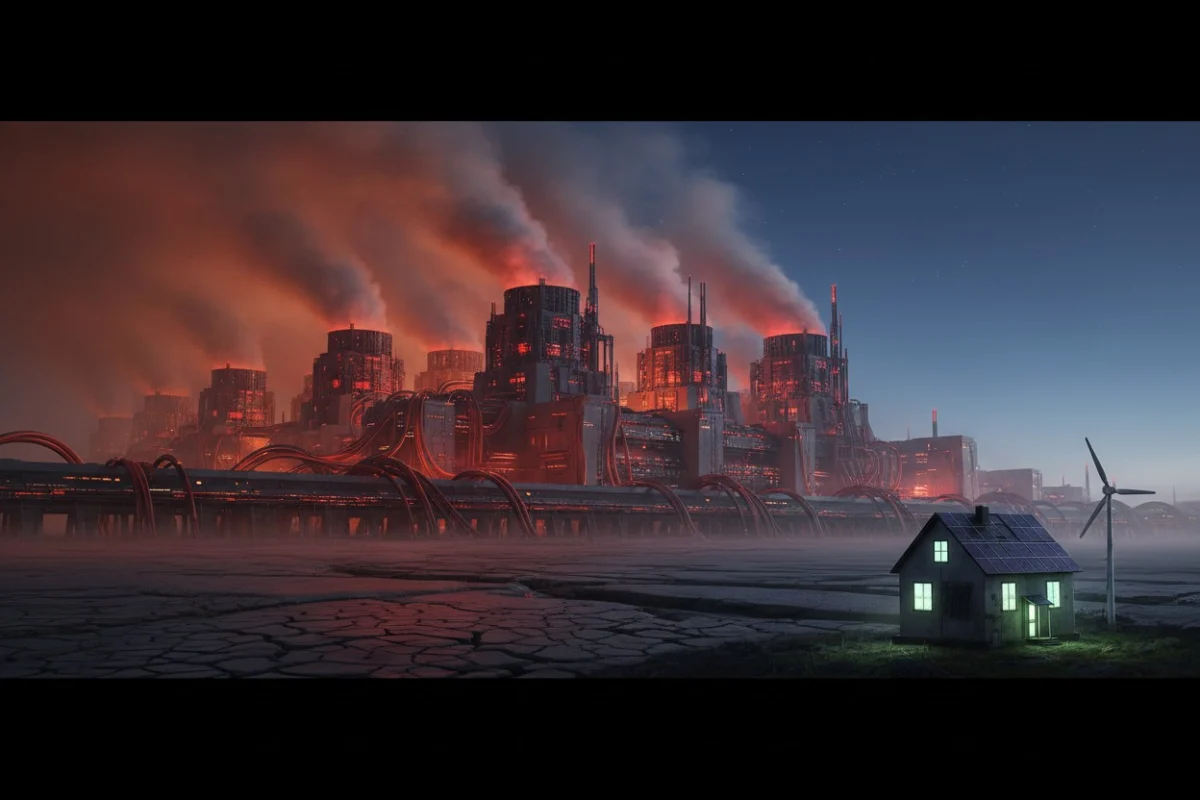
For years, warnings regarding Big Tech’s surveillance apparatus and environmental footprint were dismissed by many as alarmist. Today, those warnings have materialized into a tangible, physical reality. The rapid proliferation of Artificial Intelligence is not merely a digital phenomenon; it is a colossal industrial expansion that is fundamentally altering the physical landscape of the United States. While the public anticipated the "Terminator" scenarios of science fiction, the reality is far more grounded: a sprawling network of hyper-scale data centers that are consuming land, water, and electricity at an unprecedented rate.
The Architecture of Extraction: Main Facts
The infrastructure underpinning the current AI boom is built for profit and control, often at the direct expense of local community stability. Unlike traditional factories or office parks, modern "hyperscale" facilities are energy-dense behemoths that act as vacuums for local resources.
The primary conflict arises from the sheer scale of energy demand. According to data cited by the White House, data centers currently account for approximately 4.4 percent of total U.S. electricity consumption. This figure is not static; industry projections suggest it could balloon to 12 percent by 2030. Industry leaders like OpenAI have signaled a demand for 100 gigawatts of new energy capacity annually—a staggering requirement equivalent to the power consumption of roughly 80 million households.
This is not a development that has been subjected to democratic consensus. Instead, hundreds of massive projects are being pushed through planning commissions and utility boards with minimal public awareness. As of recent tracking, more than 300 municipalities across the United States have enacted bans or moratoriums on hyperscale construction, signaling a growing grassroots revolt against a model of growth that treats community infrastructure as a limitless fuel source.
A Chronology of Unchecked Expansion
The rise of the data center industry has followed a rapid, often opaque, trajectory:
- Pre-2020: Data centers were seen as benign digital storage facilities. Zoning boards often fast-tracked these projects, viewing them as lucrative additions to the tax base.
- 2021–2023: The emergence of Large Language Models (LLMs) shifted the industry’s needs. The demand for "compute" skyrocketed, turning small server rooms into massive, power-hungry hyperscale campuses.
- 2024: The physical constraints became unavoidable. Regional power grids began reporting reliability concerns. The state of Texas, a major hub for data centers, saw Governor Greg Abbott order a temporary halt on approvals to conduct a formal audit of grid stability.
- 2025–Present: A national conversation has emerged regarding the "Ratepayer Protection Pledge." Municipalities are increasingly pushing back, discovering that the promised economic windfall—jobs and tax revenue—is often eclipsed by the massive burden placed on local infrastructure, from water scarcity to the potential for residential blackouts.
Supporting Data: The High Cost of the "Cloud"
The term "cloud" is a marketing euphemism that obscures a reality of concrete, copper, and cooling towers. The AI industry is not solely powered by green energy; it remains heavily tethered to natural gas and coal-fired plants to meet its 24/7 baseload requirements.
The Energy and Water Nexus
- Energy Intensity: In Utah, a single hyperscale project covering 40,000 acres is projected to consume more electricity than the entire state’s current load.
- Water Consumption: The environmental impact extends to water security. Data centers require millions of gallons of water daily for cooling, particularly during peak operations. The same Utah installation could consume nearly 17 billion gallons of water per year while increasing regional CO2 emissions by up to 75 percent.
- Grid Strain: The issue is not just total annual usage, but peak demand. During heatwaves or cold snaps, the massive draw of data centers threatens to exceed the capacity of local power grids, leading to higher rates for residents and a heightened risk of blackouts.
Official Responses and Regulatory Capture
The regulatory framework intended to oversee this expansion has been widely criticized as inadequate. Investigations have revealed that many data center developers are exploiting loopholes created by recent Supreme Court decisions, which narrowed the scope of the Clean Water Act. By classifying projects under different regulatory categories—such as utilizing solar project permits for data centers—developers have been able to bypass rigorous environmental impact reviews.
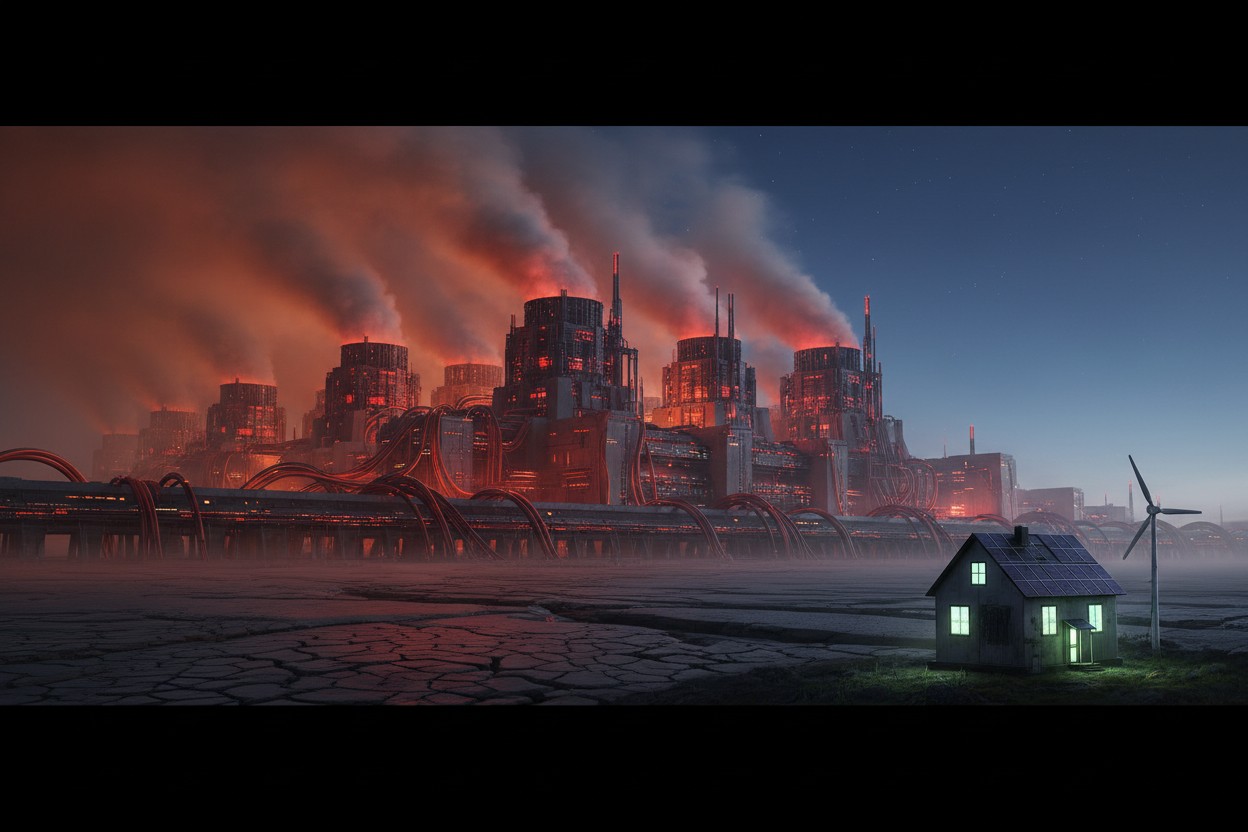
The current administration has begun to react, attempting to force technology companies to internalize the costs of their infrastructure needs. However, current measures, such as the White House’s "Ratepayer Protection Pledge," remain largely voluntary. Meanwhile, public utilities—such as Georgia Power—have moved toward the use of eminent domain to seize private homes and land to build transmission lines, with the explicit goal of delivering up to 80 percent of that new capacity to AI data centers. This has sparked widespread outrage, as citizens find themselves being displaced to subsidize the digital infrastructure of multi-billion dollar corporations.
The Implications: A Future of Scarcity or Sovereignty?
The long-term implications of the current trajectory are grim if left unchecked. We are witnessing the industrialization of the digital age at the cost of basic human survival.
The Risk of Controlled Utility
One of the most alarming developments is the potential for utility companies to exert control over residential energy use. In Ohio, legislators have debated measures that would allow utility companies to remotely control residential thermostats during peak demand periods—a direct response to the energy scarcity created by data center growth. This serves as a cautionary tale: if citizens allow their resources to be captured by private hyperscalers, the eventual solution to the resulting scarcity will be the rationing of power to the public.
The Case for Decentralization
The path forward is not necessarily to abandon technology, but to decentralize it. The current "centralized compute" model is fragile and exclusionary. By contrast, local action offers a viable alternative:
- Local Zoning Accountability: The most effective resistance occurs at the municipal level. Citizens who engage in zoning hearings and question water permits are already successfully stalling or blocking predatory projects.
- Local Compute: Moving away from the model where every prompt must be processed by a hyperscaler and instead adopting local, private models on owned hardware reduces the collective reliance on massive data centers.
- Islanded Utilities: Communities are beginning to explore the development of privately funded, off-grid utilities. By bypassing the traditional public utility framework, these communities can build sustainable, resilient energy systems that serve local needs first.
Conclusion: Reclaiming the Foundation
The AI boom has reached a critical juncture. The scarcity spreading across the globe is not an accidental byproduct of market growth; it is an engineered reality that prioritizes the computing needs of a handful of tech giants over the electricity and water security of the general public.
We still possess a narrow window of opportunity to reverse this course. The tools for a decentralized future exist—from local renewable energy planning to peer-to-peer computing. What is required now is the collective willingness to act. We must stop asking for permission to defend our homes, our resources, and our communities. By producing our own power, managing our own water, and maintaining our own computing independence, we can ensure that the future of technology serves the many, rather than the few. The era of the invisible infrastructure is ending; the era of community reclamation must begin.