In an era defined by high-tech health tracking, biohacking, and a relentless cultural push for peak performance, the pursuit of longevity has shifted from a personal wellness goal into a high-stakes, data-driven arms race. Influencers, Silicon Valley entrepreneurs, and high-profile podcasters are constantly championing complex protocols—ranging from expensive blood panels and daily ice baths to a revolving door of fringe supplements—all in the name of "optimizing" human biology to outlive our ancestors.
The promise is intoxicating: the ability to fend off disease, retain youthful vigor well into your 90s, and essentially hack the aging process. Yet, for the average person, this "optimization culture" creates an overwhelming paradox. It suggests that if you aren’t tracking your glucose levels, measuring your heart rate variability (HRV) during sleep, and adhering to an ultra-specific, time-consuming regimen, you are failing your future self.

But is this extreme effort actually necessary? Or is it simply a distraction from the foundational habits that yield the vast majority of our health benefits?
The Myth of Optimization
The current obsession with "optimal" health is predicated on several common misconceptions. Chief among them is the belief that the "basics" of health—exercise, nutrition, sleep, and social connection—are no longer enough. We have been conditioned to believe that because science is moving fast, our lifestyle habits must be equally complex.

However, clinical experience and longitudinal data tell a different story. In the world of health coaching, we have observed that "optimal" is rarely realistic, and more importantly, it is not required for a long, high-quality life. The reality is that modest, consistent efforts toward well-being consistently outperform intense, sporadic, or highly restrictive protocols.
When you look at the trajectory of health improvement, there is a clear law of diminishing returns. The gap between doing "nothing" and doing the "basics" is massive. The gap between doing the "basics" and "optimizing" to the extreme, however, is statistically slim, yet it requires an exponential increase in time, financial resources, and mental energy.

The Foundations of Longevity: A Hierarchy of Impact
If we strip away the marketing hype surrounding longevity, we are left with a set of core behaviors that have been scientifically validated for decades. These are not glamorous, but they are effective.
1. The Power of Movement
Physical activity is the single most potent tool for extending lifespan. Research, including long-term studies of Harvard alumni, indicates that any amount of physical activity reduces the risk of all-cause mortality, regardless of genetics or starting body weight. The "sweet spot" for exercise—where the greatest reduction in risk occurs—is generally between 7.5 and 15 MET-hours per week.

Crucially, this doesn’t require a marathon training schedule. Walking, for instance, is highly underrated; increasing daily steps by even 1,000 can result in a 12 percent reduction in mortality risk. When cardiovascular movement is paired with resistance training, the benefits compound, improving bone density, balance, and metabolic health, which are the primary determinants of independence in later life.
2. Nutritional Realism
Nutrition has become perhaps the most "optimized" field, filled with restrictive diets and expensive superfoods. Yet, the evidence points toward a much simpler path: a diet dominated by whole and minimally processed foods.

The primary nutritional goal should be reducing ultra-processed foods (UPFs), which are linked to a vast array of chronic health conditions. Instead of chasing the latest supplement trend, the focus should be on:
- Protein intake: Aiming for 1.2g to 1.6g per kilogram of body weight to support muscle mass.
- Produce intake: Reaching five fist-sized servings of fruits and vegetables daily, which serves as a plateau for disease risk reduction.
- Balance: Allowing for flexibility so that food remains a source of joy rather than a source of stress.
3. Sleep and Stress Management
Sleep is the great equalizer. Studies consistently show that individuals who sleep 7 to 9 hours per night live significantly longer and have lower risks of dementia and cardiovascular disease.

Similarly, stress management is not about eliminating stress—which is an inevitable part of a meaningful life—but about finding a "sweet spot." Chronic, unmanaged stress triggers inflammation and systemic damage, but purposeful recovery (through breathing, movement, or social interaction) can effectively "refill" the body’s resources.
The Social Imperative
Perhaps the most overlooked factor in the longevity conversation is the strength of our social fabric. The Harvard Study of Adult Development, which has spanned over 87 years, has identified strong relationships as the single greatest predictor of longevity and life satisfaction.

The data is sobering: the health risks associated with chronic social isolation are comparable to smoking 15 cigarettes a day. This implies that having three to five close friends with whom you interact regularly is a more effective health intervention than most of the supplements found on a biohacker’s shelf.
The Tradeoffs: Time, Money, and Quality of Life
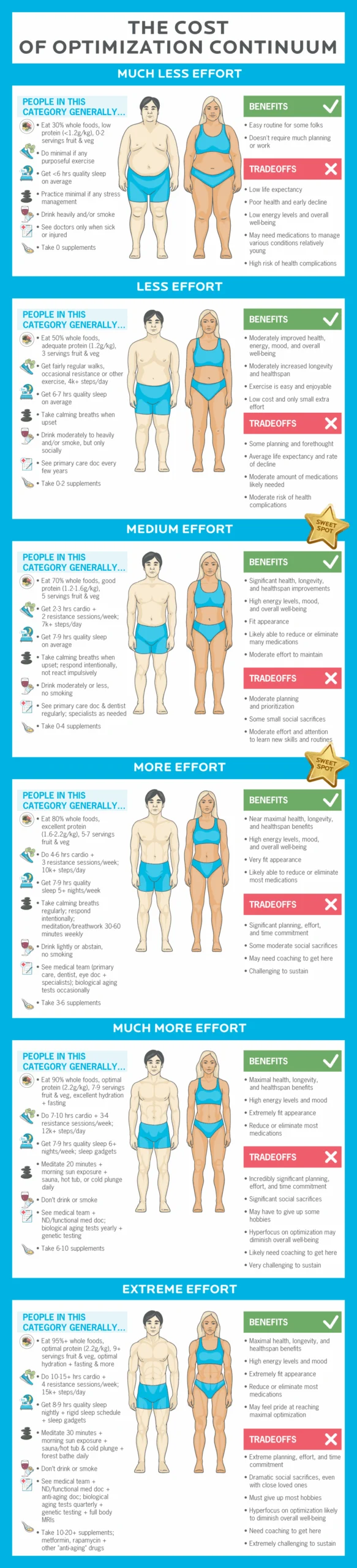
When we move from "healthy" to "optimized," we enter a realm of diminishing returns. A "medium-effort" lifestyle involves consistent exercise, a nutritious diet, and adequate sleep. An "optimized" lifestyle adds regular blood testing, expensive longevity supplements, specialized recovery therapies, and high-frequency data monitoring.

The financial cost of this optimization can easily exceed $10,000 per year, and the time commitment can triple or quadruple compared to a standard healthy lifestyle. When we obsess over these metrics, we often sacrifice the very thing that makes life worth living: our connection to others, our ability to engage in spontaneous activities, and our mental peace.
Implications for the Future
The goal of longevity should not be to live the longest possible life at the highest possible cost of effort. It should be to maximize our "healthspan"—the number of years we live in good health—while remaining active participants in our own lives.

If you are already doing the basics—moving your body, eating mostly whole foods, prioritizing sleep, and maintaining meaningful relationships—you are likely capturing 80 to 90 percent of the available health benefits. The pursuit of the remaining 10 percent through extreme optimization is a personal choice, but it should not be mistaken for the standard of care.
A New Approach:
- Clarify your goals: Decide what kind of life you want to lead.
- Audit your current baseline: Are you hitting the fundamentals? If not, start there.
- Reject the noise: Understand that influencers and social media experts are not designing protocols for your specific, unique life.
- Prioritize "Deep Health": Remember that physical longevity is only one component of health. Social, emotional, and existential well-being are just as critical to a long and happy life.
Ultimately, health is a lifelong practice, not a technical project. By focusing on the foundational behaviors that actually move the needle, we can build a sustainable, enjoyable, and genuinely healthy future—without the stress, cost, and complexity of the modern optimization trap.