










Introduction: The Engine of the Economy at a Breaking Point
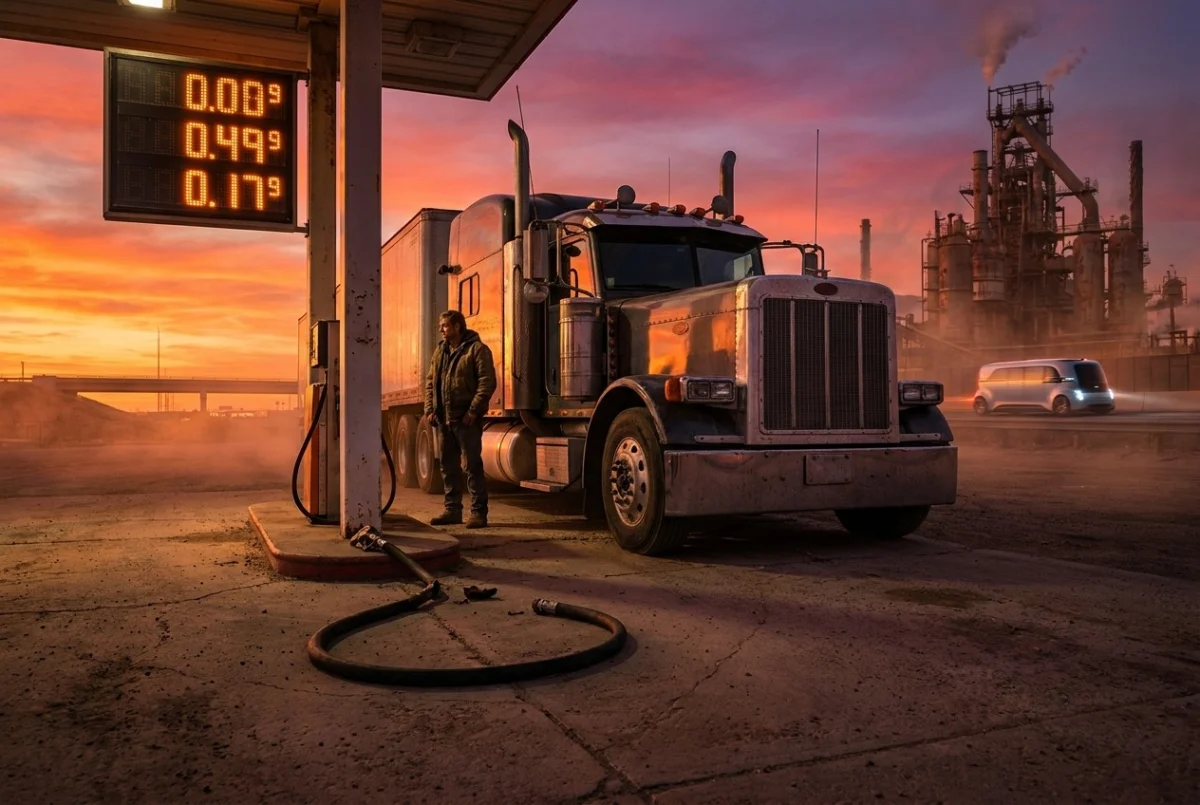
The American trucking industry—the circulatory system of the national economy—is currently navigating an unprecedented convergence of pressures that threatens to dismantle the logistics framework upon which modern commerce relies. Often dismissed by mainstream discourse as peripheral labor disputes, the growing rumblings of organized work stoppages among independent owner-operators and unionized drivers represent a profound, systemic dissatisfaction. With roughly 90% of the industry comprised of independent entities, the current unrest is not merely about wages; it is a grassroots reaction to a perceived "war on freight" that threatens to displace the human element of logistics entirely.
This crisis extends far beyond the cab of an 18-wheeler. Because nearly every consumer good, from food to apparel, travels via pallet at some point in its journey, the volatility in trucking is a direct precursor to broader inflation and supply chain instability. As the industry faces a trifecta of record-high diesel costs, localized fuel scarcity, and the encroaching shadow of autonomous technology, the stability of the American supply chain hangs in the balance.
Chronology: The Escalation of the Triple Threat
The current crisis did not emerge overnight; it is the culmination of years of regulatory shifts, geopolitical volatility, and technological acceleration.
- Mid-2025: Regulatory pressures in major logistical hubs, particularly California, began to squeeze refinery margins, leading to the first significant spikes in regional diesel pricing.
- October 2025: The closure of the Phillips 66 Wilmington refinery removed 139,000 barrels per day of refined product from the market, signaling the beginning of a sustained capacity crunch.
- January 2026: Valero’s decision to shutter its Benicia refinery, following a $1.1 billion loss, further exacerbated the West Coast fuel shortage.
- September 2026: A series of geopolitical shocks, including pipeline disruptions in the Middle East and the intensification of drone strikes on critical energy infrastructure, crippled global supply lines, causing crude prices to surge.
- October 2026: The Channahon, Illinois, grid failure, which forced an emergency shutdown of the ExxonMobil Joliet refinery, served as the "black swan" event that proved the fragility of the Midwestern fuel supply.
- Late 2026 – Present: Industry-wide talk of coordinated parking of rigs—a de facto strike—has gained momentum as independent owner-operators find it financially impossible to absorb the costs of $1,200 fill-ups.
Supporting Data: The Economics of the Crunch
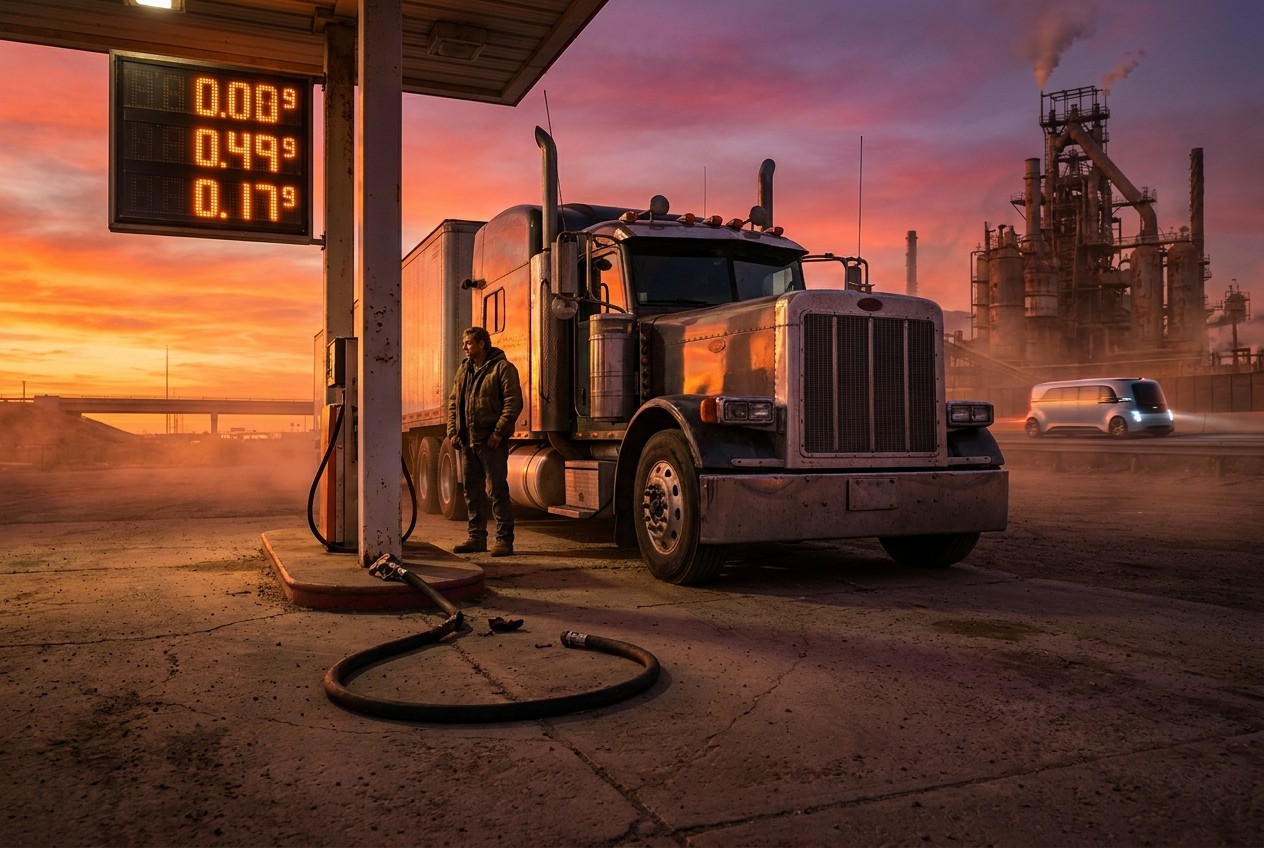
The math of the modern trucking industry has become unsustainable for the small business owner. The heavy truck fleet in the United States consumes approximately 2.9 million barrels of diesel per day, moving roughly 7 billion ton-miles of freight daily. When the price of diesel climbs from an average of $3.55 per gallon a year ago to over $6.29 today—with localized spikes exceeding $9.00 in high-regulatory environments—the margin for the independent operator is effectively erased.
The Refinery Collapse
The decline in domestic refining capacity is a matter of record. Legislative mandates, such as California’s Assembly Bill X2-1, have forced refineries to maintain storage levels that rendered operations economically unfeasible. By stripping the market of domestic production, the industry has become hypersensitive to global supply disruptions. When the East-West Pipeline in Saudi Arabia was compromised, the resulting lack of "buffer" capacity meant that prices shifted from a localized issue to a national inflationary crisis almost instantly.
Infrastructure Decay
The crisis is compounded by deferred maintenance. Refineries across the Midwest and the Gulf Coast are running on aging equipment pushed to the brink of failure. The Joliet, Illinois, outage is the most recent case study: when an aging power grid fails, the refineries attached to it cannot simply "restart" like a computer. These facilities require weeks, sometimes months, of recalibration, creating long-term supply voids that cause regional diesel scarcity.
Implications: The Autonomous Threat and the End of the Owner-Operator
While fuel prices and scarcity are cyclical, the shift toward autonomous freight is structural and likely permanent. The industry is currently witnessing a massive influx of capital into autonomous trucking fleets. These systems, designed to operate 24/7 without the constraints of "hours-of-service" (HOS) regulations, offer a cost-efficiency model that human-operated, independent rigs cannot match.
The Centralization Agenda
The deployment of autonomous trucks poses an existential threat to the independent owner-operator. This transition is not merely about replacing human labor with software; it is about the centralization of the entire supply chain. Mega-corporations with the capital to build proprietary charging infrastructure and autonomous fleets will inevitably squeeze out small-scale competitors.
The social implication is equally significant. The trucking profession has long served as a pathway to middle-class stability for millions of Americans. The transition to autonomous systems effectively terminates this career path, replacing a decentralized, independent workforce with a centralized, corporate-controlled system. This reduces resilience: if a corporation determines that a remote, rural route is not sufficiently profitable, the autonomous fleet will simply bypass that location, leaving small-town America at the mercy of algorithmic logistics.
Official Responses and Industry Outlook
Governmental responses to date have been characterized by reactive policy rather than proactive mitigation. Regulatory bodies have attempted to address supply shortages by issuing temporary waivers, but these measures fail to address the core issue of refining capacity. Industry analysts, including representatives from major energy firms, have begun to issue warnings that fuel availability will remain inconsistent throughout 2027.
Major freight carriers are currently caught in a dilemma: they must pass the skyrocketing fuel surcharges to the consumer, which further fuels the inflationary environment, or face bankruptcy. Retailers, already struggling with "just-in-time" inventory models, are finding that the cost of moving a single pallet of goods has reached levels that force them to reconsider the viability of stocking certain items entirely.
The Path Forward: Decentralization and Resilience
The current "Triple Crisis" suggests that the era of inexpensive, abundant, and easily accessible consumer goods is facing a fundamental reset. As the nation grapples with these challenges, the conversation is shifting toward the necessity of decentralization.
1. Energy Autonomy
The reliance on a brittle, centralized fossil fuel infrastructure has proven to be a strategic liability. There is a growing movement toward hyper-local energy production—solar, wind, and decentralized microgrids—which can provide a buffer against the type of refinery and grid-failure events seen in Illinois and California.
2. Localized Supply Chains
The fragility of the "long-haul" model highlights the importance of supporting local manufacturing and regional agriculture. By shortening the distance between the source of a product and the end consumer, the dependency on a volatile, diesel-dependent trucking industry is reduced.
3. Individual Preparedness
For the individual, the lesson of the current crisis is clear: the centralized systems that have provided convenience for decades are no longer guaranteed. Preparing for the coming volatility requires a shift in mindset—prioritizing essential goods, reducing reliance on luxury consumerism, and fostering community-based logistical networks.
The trucking industry’s struggle is a mirror for the nation. If the backbone of the economy—the driver—is forced out of business by a combination of government overreach, fuel scarcity, and technological displacement, the society that depends on them will inevitably follow. The coming year will be a "rough ride," but it will also be a period of necessary recalibration. Those who recognize the structural shifts occurring now will be the only ones equipped to navigate the future.
As we look toward 2027, the choice is between continuing to depend on a crumbling, centralized infrastructure or proactively building a decentralized, resilient system that places human work and local stability at its core. The time to initiate this transition is not when the pumps run dry or the shelves are empty, but today.