





For many adults entering their sixties and beyond, the pursuit of a "strong core" is often synonymous with the dreaded floor crunch. Decades of fitness media have conditioned us to believe that the path to a sturdy midsection is paved with hundreds of repetitive, spine-straining sit-ups. However, recent developments in sports science and geriatric physical therapy suggest that this approach is not only outdated but often counterproductive.
As we age, the primary function of the core shifts. It is less about achieving a "six-pack" aesthetic and more about cultivating the internal stability required to navigate daily life—whether that means carrying groceries, maintaining balance on uneven terrain, or simply sitting and standing with ease. True abdominal health after 60 is a matter of control, bracing, and anti-rotation.
The Paradigm Shift: Strength vs. Control
The prevailing misconception among the over-60 demographic is that a lack of "definition" is equivalent to a lack of strength. In reality, many individuals possess sufficient muscular mass but lack the neurological "control" to activate those muscles effectively when the body is in motion.
When you struggle to maintain stability while stepping onto a curb, or if you feel a sense of instability when carrying a heavy bag on one side, you are not suffering from weak abs in the traditional sense. You are experiencing a breakdown in core integration. Your core’s primary role is to protect the spine by resisting unwanted movement. If your muscles cannot "brace" against external forces, the risk of back pain, injury, and postural degradation increases significantly.
The Role of Functional Core Training
The modern approach to core training emphasizes "functional movement." Instead of isolating the rectus abdominis through spinal flexion (crunches), we look to movements that simulate the real-world demands placed on the body. This involves training the obliques, the transverse abdominis, and the posterior chain to act in concert. By focusing on bracing, anti-rotation, and stability, you can rebuild the muscular corset that supports your spine and improves your quality of life.
The Four Pillars of Functional Core Stability
To restore your core without the need for floor-based acrobatics or intense, long-duration circuits, we have identified four specific movements that serve as the gold standard for individuals over 60. These exercises require minimal equipment—typically just a resistance band, a light weight, and a sturdy household surface—making them ideal for a home-based routine.
1. The Band Pallof Press: Mastering Anti-Rotation
The Pallof press is arguably the most effective tool for training "anti-rotation." In daily life, we are constantly subjected to forces that want to twist our torso—holding a suitcase, opening a heavy door, or reaching for an object.
The Mechanics: By securing a resistance band to a stationary object at chest height and pressing your hands outward while resisting the band’s attempt to pull your torso toward the anchor, you force your deep core muscles to stabilize the spine.
- Why it works: It teaches the obliques to engage without requiring the high-impact stress of traditional rotational movements.
- The Strategy: Aim for 2 to 3 sets of 8 to 12 reps per side. The movement should be deliberate; if your shoulders are shrugging or your hips are swaying, reduce the tension of the band.
2. Goblet Hold Marching: Integrating Hips and Core
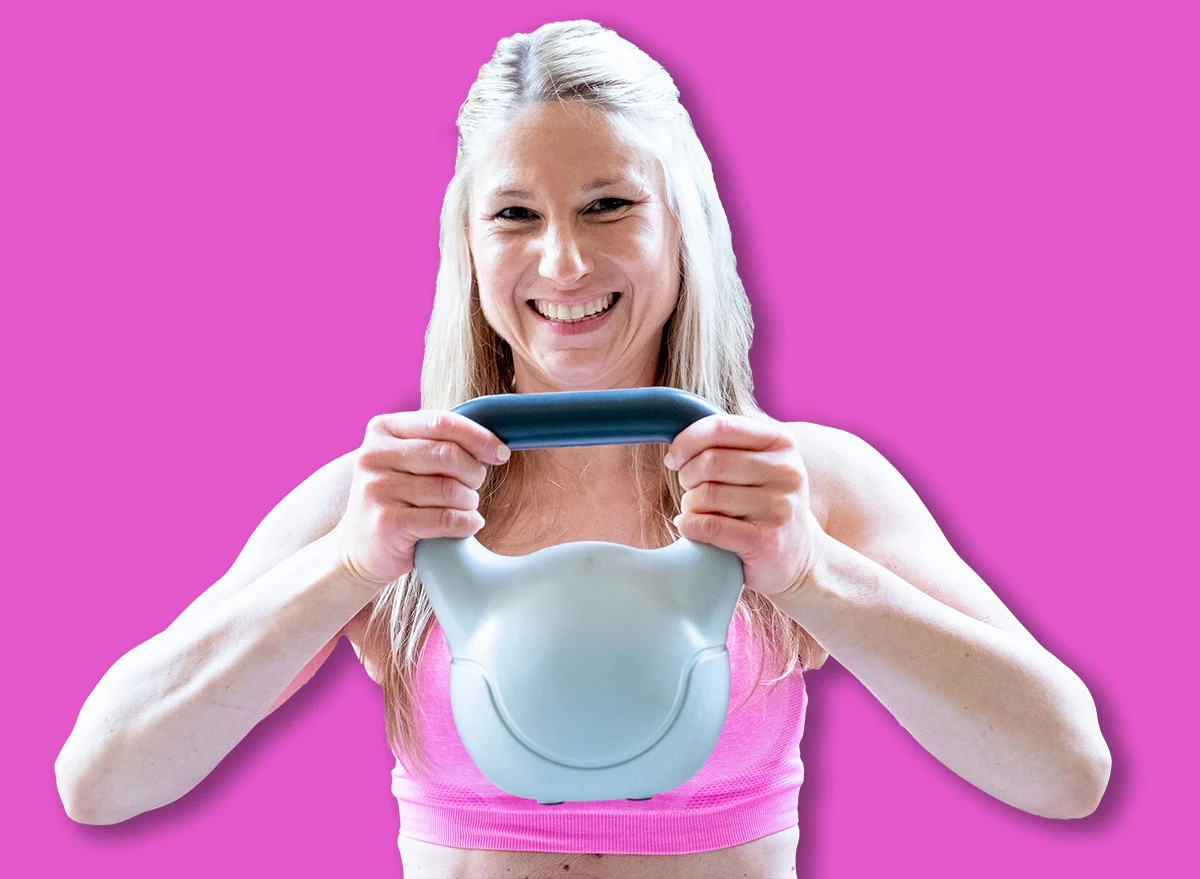
Many of us experience a decline in balance that stems from an inability to stabilize the torso while the legs are in motion. Goblet marching bridges this gap by adding a counter-weight (the goblet hold) to the standard knee-march.
The Mechanics: Hold a light weight or a sturdy household item close to your sternum. As you lift one knee, your core must compensate to prevent your torso from shifting.
- Why it works: It trains the hip flexors and the abs simultaneously, improving gait stability.
- The Strategy: Focus on vertical posture. If you find yourself leaning backward or forward, move closer to a wall for support until your coordination improves.
3. The Suitcase Carry: Real-World Load Management
The suitcase carry is perhaps the most practical exercise you can perform. It replicates the exact physiological demand of carrying a grocery bag or a piece of luggage.
The Mechanics: Hold a weight in one hand while maintaining a perfectly upright posture. Walk for a set distance or time without allowing the weight to pull your shoulder or spine to one side.

- Why it works: It builds "lateral stability." It forces the opposite-side obliques to fire to counteract the load.
- The Strategy: Keep the distance short initially. Quality of form is the objective. If you find your posture failing, terminate the set.
4. The Incline Plank: Bracing Without the Floor
The traditional floor plank is often contraindicated for those with wrist issues or difficulty getting up and down from the ground. The incline plank solves this by utilizing a kitchen counter, a sturdy table, or the back of a sofa.
The Mechanics: Place your hands on an elevated surface and maintain a rigid, straight line from your head to your heels. Engage your glutes and pull your belly button toward your spine.
- Why it works: It allows you to adjust the difficulty based on the angle. The higher the surface, the easier the hold; the lower the surface, the greater the challenge.
- The Strategy: Focus on "bracing"—the sensation of preparing to be punched in the stomach. Hold for 20 to 40 seconds.
Chronology of Progress: How to Implement the Routine
For the best results, consistency is far more important than intensity. You do not need to spend an hour in the gym. Instead, consider this "Core Habit" structure:
- Weeks 1–2 (The Foundation Phase): Focus exclusively on form. Perform these moves twice per week. Use a very light band and minimal weight. The goal is to feel the muscles "waking up."
- Weeks 3–6 (The Consolidation Phase): Increase to three days per week. You may slightly increase the resistance on the Pallof press or the duration of the suitcase carries.
- Weeks 7 and beyond (The Integration Phase): By this point, you should notice that daily tasks—like standing from a chair or walking up stairs—feel less taxing. You can begin to treat these as a standard maintenance routine, performed 3 to 4 times per week.
Supporting Data: Why Age-Related Muscle Loss Requires Attention
Clinical data supports the transition to this type of functional training. According to recent studies published in journals such as the National Center for Biotechnology Information (NCBI), sarcopenia (age-related muscle loss) specifically targets the muscles responsible for postural stability.
A 2023 review highlighted that after age 60, the muscle fibers responsible for rapid stabilization (Type II fibers) decrease at a faster rate than those responsible for endurance. By performing movements that require constant, small-scale adjustments—like the Pallof press or the suitcase carry—we are essentially forcing the nervous system to maintain the recruitment of these critical fibers.
Furthermore, the "bracing" technique utilized in these movements has been shown to increase intra-abdominal pressure, which acts as a hydraulic support system for the lumbar spine. This effectively reduces the load on the spinal discs during daily activities.
Official Perspectives: The Expert Consensus
Fitness professionals and geriatric specialists are increasingly moving away from "isolation" training. Jarrod Nobbe, a noted Sports Performance Coach, emphasizes that for the over-60 demographic, the goal is "transferability."
"If the exercise doesn’t make your daily life easier, it’s just noise," Nobbe suggests. "We see many people come in with back pain because they’ve spent years doing exercises that aren’t specific to how they actually move. By focusing on the core’s ability to act as a bridge between the upper and lower body, we see immediate improvements in confidence and balance."
This consensus is shared by physical therapists who note that fall prevention in the elderly is largely tied to core-to-extremity coordination. When the core is responsive, the body can react to a trip or a slip much faster, significantly reducing the risk of injury.
Implications for Longevity and Quality of Life
The implications of adopting a functional core routine extend far beyond the abdominal wall. A stronger, more responsive core leads to:
- Reduced Fall Risk: Improved stability during the transition from standing to walking.
- Increased Independence: The ability to lift and carry items without assistance or fear of back strain.
- Improved Posture: A reduction in the "hunching" often associated with aging, which improves respiratory capacity and digestion.
- Pain Mitigation: By taking the load off the lower back and distributing it across the entire core, chronic lumbar pain is often significantly reduced.
In conclusion, the goal of training your abs after 60 is to reclaim your body’s innate ability to move with stability and purpose. By abandoning the outdated obsession with the floor crunch and embracing movements that mimic the demands of daily life, you can build a foundation that supports you for decades to come. Consistency is your greatest ally; start small, focus on the quality of your movement, and the physical benefits will naturally follow.