











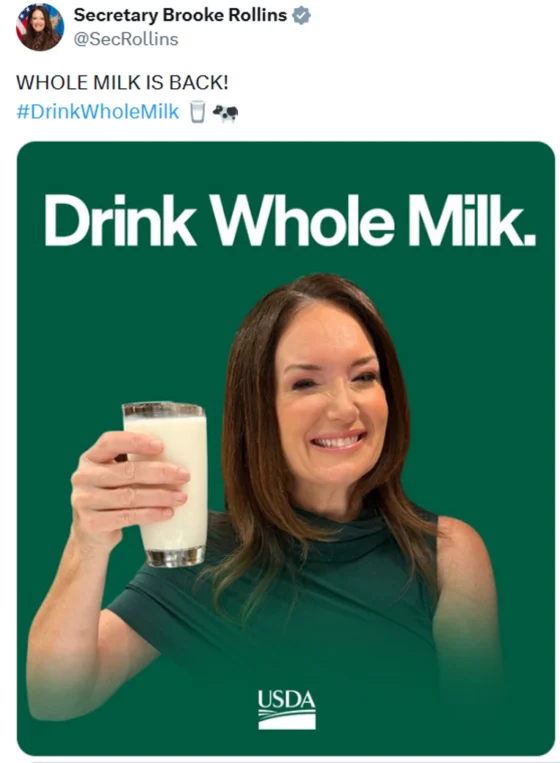
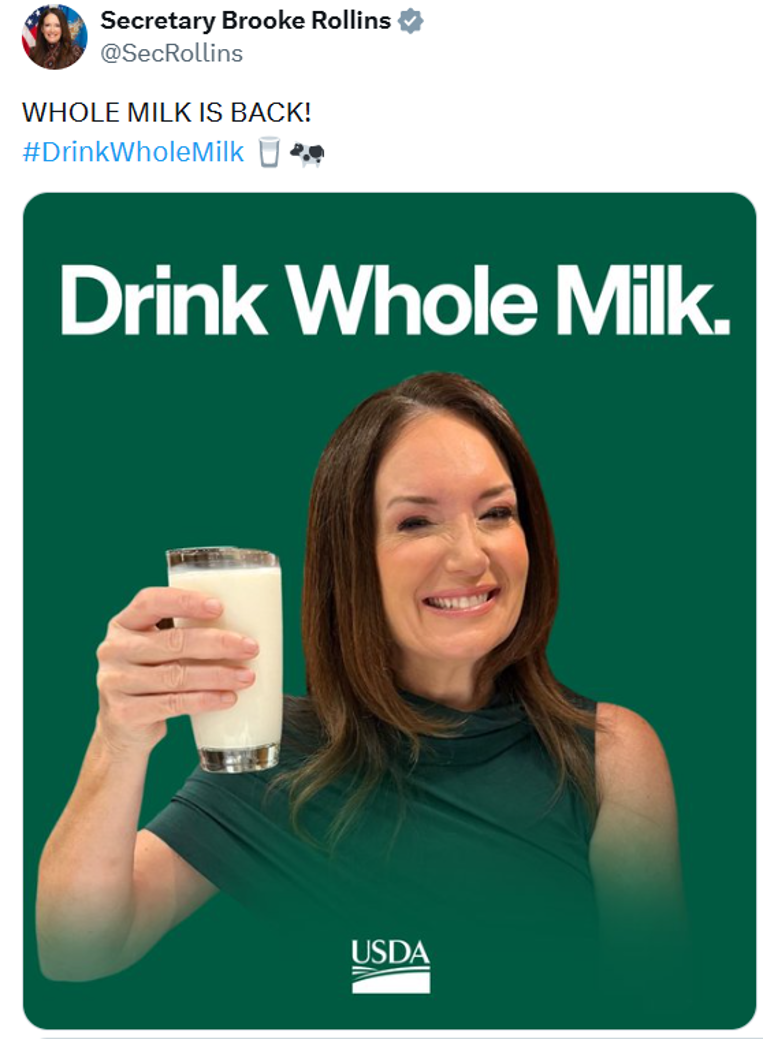
In a move that highlights the intersection of federal policy, industrial lobbying, and public health, the United States Department of Agriculture (USDA) has officially moved to implement the Whole Milk for Healthy Kids Act. Signed into law following a legislative push championed by the Trump administration, the act mandates a shift in federal nutrition standards for school meal programs. Specifically, the regulation permits schools to serve whole milk and, by extension, full-fat chocolate milk to students across the country.
While proponents argue that the policy is a victory for consumer choice and child nutrition, critics view it as a calculated intervention by the dairy industry to reverse years of declining milk consumption, achieved at the expense of established nutritional guidelines.
Main Facts: What the New Regulation Changes
The implementation of the Whole Milk for Healthy Kids Act marks a significant departure from the nutritional framework that has governed school lunches for over a decade. Under the previous guidelines, the USDA restricted milk offerings in schools to low-fat (1%) or fat-free varieties, citing concerns over caloric intake and saturated fat consumption.
The new federal rule effectively strikes these restrictions, providing school nutrition directors with the authority to reintroduce full-fat milk options into the cafeteria. The practical result is the return of high-fat, high-sugar chocolate milk—a product that has long been a subject of debate among pediatricians, nutritionists, and school administrators. The USDA has framed this as an "interim final rule," meaning it is currently enforceable, providing immediate certainty to milk processors and school districts that were previously constrained by federal regulation.
Chronology: The Road to the Reversal
The path to this legislation was neither short nor accidental. It is the culmination of a decade-long campaign by dairy interests to regain a foothold in the American school lunch program.
- 2009–2010: The debate over chocolate milk in schools reached a boiling point as public health advocates raised concerns about the high sugar content of flavored milk. Industry groups began a sophisticated lobbying effort to position milk as an "essential" nutrient, regardless of its fat or sugar content.
- 2010–2012: Federal regulations were tightened under the Healthy, Hunger-Free Kids Act, which imposed stricter limits on the caloric and fat content of school meals. This resulted in a steady decline in the volume of milk served in public schools.
- 2018–2022: As national milk sales continued to plummet due to the rise of plant-based alternatives and shifting consumer preferences, the International Dairy Foods Association (IDFA) and various dairy cooperatives intensified their lobbying efforts on Capitol Hill, arguing that the restrictive guidelines were preventing students from consuming the milk they "prefer."
- 2025–2026: With the passage of the Whole Milk for Healthy Kids Act in the 119th Congress, the legislative framework was solidified.
- May 2026: The USDA officially announced the implementation of the act, formally allowing schools to serve whole milk and full-fat flavored varieties, effectively overturning years of restrictive nutritional standards.
Supporting Data: A Nutritional Comparison
To understand the scope of the change, one must look at the data provided by the USDA’s own FoodData Central. The nutritional profile of milk is defined by its fat content, which directly correlates to caloric density.
When comparing a one-cup portion of skim milk, 1% milk, and whole milk, the differences are statistically significant for children on a restricted-calorie school lunch diet. Whole milk contains approximately 8 grams of fat, a substantial portion of which is saturated, compared to the near-zero fat content of skim milk. When that milk is processed into chocolate milk, the sugar content—often added in the form of high-fructose corn syrup or cane sugar—further complicates the nutritional picture.
Proponents of the act argue that the fat in whole milk provides satiety and essential vitamins. However, critics, including many public health experts, note that when schools offer "palatable" options like high-fat chocolate milk, children are more likely to consume empty calories rather than the fiber-rich fruits, vegetables, and legumes that should be the focus of a healthy school lunch.
Official Responses and Stakeholder Interests
The response to the implementation has been polarized, reflecting the divide between industry interests and public health advocates.
The International Dairy Foods Association (IDFA)
The IDFA has been the most vocal supporter of the new rule. In a statement following the USDA announcement, an IDFA spokesperson lauded the decision, stating: "IDFA applauds USDA for moving quickly to put the law into effect and provide school nutrition directors and school milk processors the certainty they need to offer students the nutritious milk options that best meet their nutrition needs."
The industry’s argument hinges on the concept of "student preference." They contend that for too long, federal regulations hindered schools from offering what students actually want to drink, leading to increased waste. By offering whole milk, they argue, schools will see an increase in consumption, thereby ensuring that children receive the calcium, Vitamin D, and potassium inherent in dairy.
Public Health Perspectives
Conversely, organizations focusing on childhood obesity and metabolic health have expressed significant concern. The core argument is that the government is essentially "subsidizing" the dairy industry’s marketing budget by forcing schools to serve a product that competes with healthier, whole-food options. Many nutritionists argue that if children are not drinking milk, the solution should be to address the quality of the milk or the variety of other healthy beverages available, not to increase the saturated fat and caloric density of the product.
Implications: Health vs. Industry Stability
The broader implications of this act are twofold: one related to the health of the nation’s youth, and the other to the economic survival of the domestic dairy industry.
The Myth of the "Healthy Kid" Focus
While the legislation is titled the Whole Milk for Healthy Kids Act, the primary beneficiary is arguably the dairy sector. Faced with failing sales and the existential threat of plant-based milks—such as almond, soy, and oat varieties—the dairy industry has leveraged its significant political influence to secure a captive market. Schools, which serve millions of meals daily, represent a reliable, high-volume consumer base. By ensuring whole milk remains a staple, the industry effectively secures its bottom line against changing consumer tastes.
The Reality of the School Lunch Environment
It is important to contextualize this policy within the current state of the American school system. Critics and supporters alike often point out that schools are currently plagued by systemic issues:
- Inadequate Funding: Many schools operate on razor-thin margins, making it difficult to source fresh, high-quality produce.
- Infrastructure Deficits: A lack of modern kitchen facilities means that many schools rely on pre-packaged, highly processed foods.
- Supply Chain Disruptions: The logistics of the school lunch program are frequently interrupted, leading to reliance on surplus commodities.
In this context, the addition of a few grams of saturated fat via whole milk may seem like a minor issue. However, the symbolic importance of the act is massive. It signals that in the hierarchy of federal priorities, the lobbying power of agricultural sectors often supersedes the evidence-based nutritional needs of children.
Conclusion
The implementation of the Whole Milk for Healthy Kids Act is a masterclass in modern political lobbying. By framing the reintroduction of whole milk as an issue of "choice" and "nutritional preference," the dairy industry has successfully influenced federal policy to suit its economic needs.
While the debate over the health impacts of whole milk continues, the most profound takeaway from this development is the revelation of what currently occupies the attention of the legislative branch. Rather than addressing the systemic lack of infrastructure, the high costs of healthy ingredients, or the broader crisis of childhood nutrition, Congress has chosen to focus on the fat content of milk. For the students in the cafeteria, the result is a change in the carton, but for the dairy industry, it is a significant victory in a long-standing effort to preserve a shrinking market. Ultimately, the act serves as a poignant reminder that in the arena of food politics, the needs of the industry often receive the lion’s share of the attention.