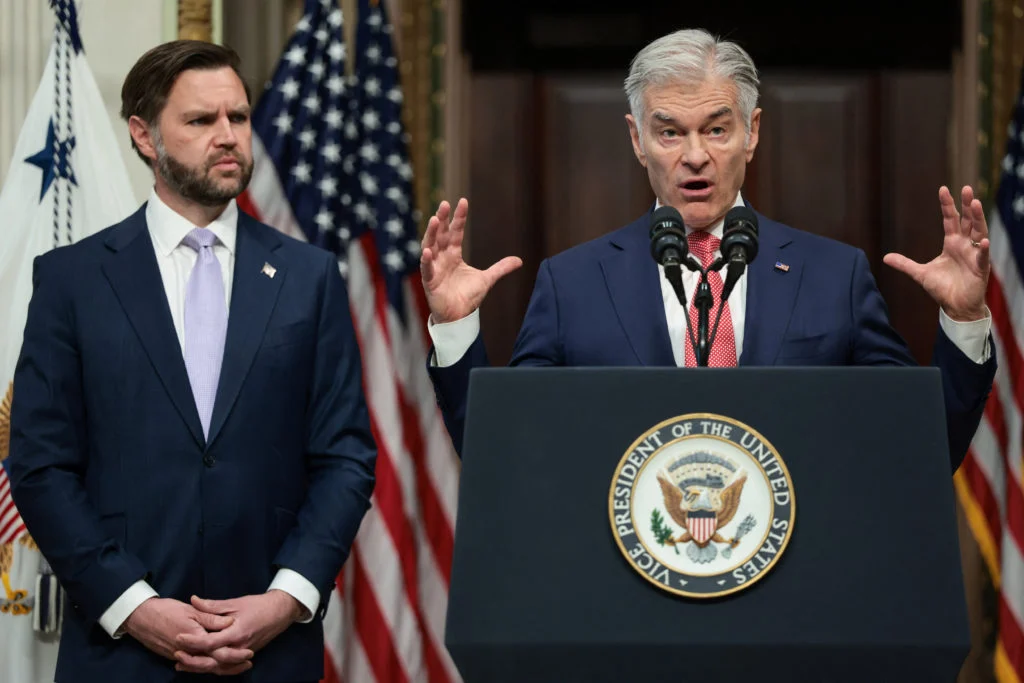
WASHINGTON — In a move signaling an aggressive escalation of the Trump administration’s efforts to overhaul the integrity of federal health programs, officials announced a sweeping, nationwide six-month moratorium on new Medicare enrollments for hospice and home health care providers on Wednesday. The directive, spearheaded by the Centers for Medicare and Medicaid Services (CMS), is the latest in a series of high-stakes interventions aimed at rooting out what the administration characterizes as systemic, multi-billion-dollar fraud schemes.
The initiative, which is closely linked to a task force led by Vice President JD Vance, marks a pivotal shift in federal oversight. By leveraging both punitive financial measures against states and strict administrative freezes, the White House is positioning its anti-fraud campaign as a centerpiece of its broader economic agenda ahead of the November elections.
The Scope of the New Moratorium
The primary mechanism announced Wednesday is a nationwide, six-month freeze on all new Medicare enrollments for providers in the hospice and home health care sectors. According to CMS Administrator Dr. Mehmet Oz, this “shutting of the door” is designed to stem the influx of fraudulent actors while the agency deploys advanced data analytics to purge bad actors currently operating within the system.
"We have witnessed systemic and deeply troubling fraud in the hospice and home health space, with bad actors exploiting some of our most vulnerable Medicare patients and stealing money from the American taxpayer," Dr. Oz said during a press conference. "Today, we are preventing new bad actors from entering the Medicare ecosystem while we aggressively identify, investigate, and remove those already exploiting the system."
Under the terms of the moratorium, existing, verified providers will continue to operate without interruption. However, the federal government intends to use this six-month window to conduct "targeted investigations" and "accelerate the removal" of agencies suspected of fraudulent billing practices.
While the scale of this move is significant, historical precedent exists. Tricia Neumann, a senior vice president at the health care research nonprofit KFF, noted that similar, albeit narrower, moratoriums were utilized during the Clinton administration. "A brief moratorium gives the administration time to crack down on true fraud and prevent new fraudulent entities from popping up," Neumann observed, adding that such pauses can be an effective tool if coupled with robust auditing.
Chronology of the Anti-Fraud Initiative
The current crackdown did not emerge in a vacuum; it is the culmination of a months-long strategy designed to assert federal authority over state-administered health programs.
- Early 2024: The administration signals a shift toward aggressive oversight, with Dr. Oz publicly calling for corrective action in states with high incidences of billing irregularities, including Maine.
- Spring 2024: CMS begins deploying "strike teams" to major metropolitan areas. In Los Angeles, the agency suspends payments to hundreds of hospice and home care agencies, citing immediate concerns of fraudulent billing.
- April 2024: The administration faces its first major public setback when it admits to using flawed data to justify a fraud probe in New York. The error serves as fodder for critics who argue the administration’s “shoot-first, ask-later” methodology risks destabilizing legitimate care networks.
- May 2024: CMS mandates that all 50 states submit formal plans to revalidate their Medicaid provider databases, signaling a move toward standardized federal oversight.
- June 2024: The current administration freezes $243 million in Medicaid funds earmarked for Minnesota, prompting a lawsuit from state officials who characterize the move as an unlawful overreach.
- Present Day: The nationwide hospice/home health freeze is announced, coinciding with heightened campaign rhetoric from Vice President Vance.
Supporting Data and Financial Implications
The administration’s rationale for these aggressive tactics rests on the argument that billions of taxpayer dollars are lost annually to phantom billings, identity theft, and fraudulent medical service claims.
However, the human and economic cost of these policies is a subject of intense debate. Critics point to the administration’s new work requirements for Medicaid as a compounding factor. Independent analysts project that these requirements will likely result in millions of enrollees losing their health coverage, effectively creating a "barrier to access" that, while intended to save money, may exacerbate long-term public health costs.
The financial pressure on states is also reaching a breaking point. By threatening to withhold federal funding from states that fail to meet stringent investigative benchmarks, the White House has effectively forced state attorneys general into a defensive posture. In Minnesota, the state government is currently suing the federal government, arguing that the withholding of $243 million in Medicaid funds is not only legally suspect but jeopardizes the health care of the state’s most vulnerable citizens.
Official Responses and Political Friction
The administration’s approach has polarized political leaders across the country. Supporters argue that the federal government has been too lenient for decades, allowing a "wild west" of billing to permeate the Medicare and Medicaid systems. Vice President Vance has become the face of this effort, using the task force as a platform to demonstrate "fiscal responsibility" while campaigning in states with critical upcoming elections.
Conversely, state-level officials—particularly those from the Democratic Party—have labeled the administration’s tactics as "political theater." When Dr. Oz targeted Maine’s health programs earlier this year, Governor Janet Mills publicly denounced the move as a "political attack," suggesting the federal government was weaponizing regulatory oversight to sway regional political sentiment.
Furthermore, industry groups representing hospice and home health providers have voiced concern. While these organizations largely support the elimination of fraud, they warn that broad, catchall moratoriums create a "guilt by association" climate. Small, independent providers, who lack the administrative overhead to challenge federal audits, fear they may be caught in the crossfire of a bureaucratic dragnet that prioritizes speed over precision.
Broader Implications: The Balance of Power
The long-term implications of this initiative extend far beyond the six-month moratorium. The administration’s actions represent a fundamental challenge to the traditional state-federal partnership that has governed Medicaid since its inception. By centralizing investigative power and bypassing traditional consultative channels with states, the Trump administration is effectively redrawing the lines of administrative authority.
Legal experts suggest that the coming months will likely see an uptick in litigation. As more states challenge the withholding of funds and the imposition of federal mandates on their internal health programs, the judiciary will be forced to determine the extent to which the federal government can use "fraud prevention" as a justification for overriding state sovereignty.
Moreover, the reliance on "advanced data analytics" to justify these freezes remains a point of contention. If the administration cannot demonstrate that these algorithms are accurate—as evidenced by the New York data error earlier this year—the political cost of this campaign could rise.
As the nation approaches the November elections, the debate over health care integrity is set to intensify. Whether the administration’s strategy successfully preserves taxpayer dollars or ultimately degrades the quality and availability of care remains to be seen. For now, thousands of providers, millions of patients, and dozens of state governments are forced to operate under the shadow of a federal apparatus that has clearly signaled its intention to prioritize oversight above all else.
The coming six months will serve as a critical stress test for the American health care system—one where the thin line between necessary fraud prevention and government overreach will be tested in every hospice, home health agency, and federal courtroom across the country.