








By Investigative Desk
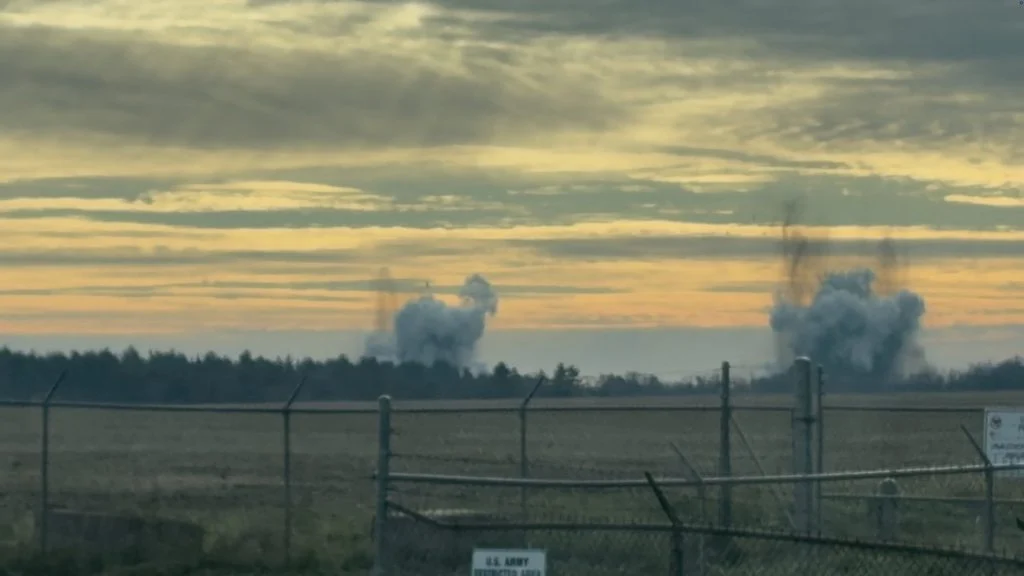
In a high-stakes operation that turned the quiet Iowa countryside into a focal point of national environmental concern, the U.S. Army successfully completed the controlled detonation of approximately 10,000 pounds of lead azide—a highly volatile, explosive chemical compound. The operation, which took place after a protracted legal battle and several weather-related delays, marked the total elimination of the nation’s entire stockpile of the material. While military officials have declared the mission a success, characterizing it as a triumph of precision engineering, the event has left a fractured community grappling with questions regarding transparency, long-term health risks, and the erosion of public trust in federal oversight.
The Nature of the Threat: Why the Detonation Was Necessary
Lead azide is not a conventional explosive, but rather a primary initiating explosive—a substance so sensitive to friction, heat, and impact that it is used to trigger larger, less volatile munitions. Over decades of storage, the stockpile in question had reached a state of hazardous degradation. As the chemicals aged, the crystals within the material grew, making them increasingly susceptible to spontaneous, accidental ignition.
The risk was particularly acute during the transition into colder, volatile weather patterns, which experts warned could exacerbate the instability of the stockpile. For the U.S. Army, the decision to destroy the material was not a matter of choice, but of urgent necessity. Leaving the five-ton cache in storage posed a catastrophic risk to personnel and the surrounding environment should an accidental detonation occur without the benefit of mitigation measures.
Chronology of the Operation: A Tense Path to Detonation
The path to the detonation was fraught with tension. For weeks, the plan faced intense scrutiny from environmental advocacy groups, which argued that the detonation would inevitably release toxic lead dust into the atmosphere, potentially contaminating the soil, water, and air across multiple states.
- October: Initial communications began between the Army and local residents in Middletown, Iowa, regarding the need for disposal.
- Late Autumn: As the technical plan was finalized, legal challenges were filed to halt the process, citing concerns over the adequacy of the Army’s environmental impact assessment.
- The Eleventh Hour: Federal courts granted the necessary legal clearance, but the operation was repeatedly delayed. The Army cited the requirement for perfect meteorological conditions—specifically, wind speeds and directions that would minimize the potential for a toxic plume to drift toward populated areas.
- The Day of Execution: On the day of the blast, the site was transformed into a fortress of engineering. Army EOD (Explosive Ordnance Disposal) units erected elaborate containment structures, including earthen mounds, heavy-duty spray foam, and massive water barriers designed to capture toxic particulates before they could enter the air.
Mitigation and Engineering: Did the Plan Work?
The primary concern for surrounding communities was the "plume"—a potential cloud of vaporized lead that, if inhaled, could cause significant neurological damage, particularly in children. To prevent this, the Army implemented a strategy of "downward force."
According to Robert Cekada, a lead specialist overseeing the EOD efforts, the blast was specifically engineered to drive the energy into the earth. "I absolutely can confirm that those mitigation efforts and the design plan laid out by the EOD personnel ensured that the blasts drove the explosion into the ground and followed a blast channel that was designed to go down the right path," Cekada stated.
Official monitoring reports provided by the Federal Emergency Management Agency (FEMA) following the blast suggested a "0.0 detection level" of lead in the immediate atmosphere. While this statistic served as the centerpiece of the Army’s success narrative, independent verification remains an ongoing process. Researchers from the University of Iowa and the University of Illinois are currently analyzing data from independent sensors, with results expected to provide a clearer picture of the environmental impact in the coming days.
The Community Response: A Tale of Two Realities
The perception of the blast on the ground in Iowa was starkly divided, largely dictated by proximity and familiarity with the local ammunition plant.
For the residents of Middletown, who live in the shadow of the facility, the event was treated with a pragmatic, almost weary familiarity. Many are accustomed to the routine tremors caused by plant operations. "It was a big deal. It ain’t now," said resident Daren Morris. For those living within the immediate five-mile radius, the disruption was minimal; while some chose to evacuate as a precaution, many stayed, reporting that the blast was far less thunderous than anticipated.
Conversely, for those further afield, the experience was one of anxiety and exclusion. Residents in Burlington and surrounding areas expressed profound frustration, noting that they felt excluded from the loop. While the Army conducted outreach, many residents reported feeling that the information provided—such as suggestions to simply "wipe down surfaces"—was dismissive of the potential severity of lead contamination.
"The ammunition plant spokesperson said, just hose everything down and it’ll go away," remarked Lucy Giehl, a resident of Burlington. "There was nothing said about PPE. So, yes, people are completely unprepared."
Implications for Public Trust and Environmental Oversight
The aftermath of the detonation has left a lingering question regarding the relationship between the military and the civilian population. The lack of a public question-and-answer session following the "success" announcement was viewed by many as a missed opportunity to rebuild confidence.
The Trust Deficit
The back-and-forth legal and technical uncertainty of the previous ten days significantly eroded the public’s faith in the Army and the EPA. Critics argue that when federal agencies operate with a "top-down" approach, they fail to account for the psychological and social impact on the communities they affect. The perception that the government was prioritizing the disposal of dangerous munitions over the immediate safety of the local population has created a "trust deficit" that may persist long after the lead dust has settled.
Future Policy Considerations
The Iowa event serves as a microcosm for the broader issue of aging military infrastructure. As the Department of Defense faces the reality of disposing of legacy munitions across the country, the Iowa experience provides several key lessons:
- Transparency is Mandatory: The military cannot rely on technical success alone; it must provide granular, accessible, and transparent communication to the public.
- Independent Verification: Moving forward, federal agencies should proactively involve local universities or independent environmental agencies in the monitoring process to ensure the public perceives the data as objective.
- Community-Specific Outreach: What works for a town adjacent to a military installation does not work for a town twenty miles away. Communication strategies must be tailored to the specific levels of risk and familiarity of the population.
Conclusion
The controlled detonation of 10,000 pounds of lead azide in Iowa was, from a purely mechanical perspective, a successful mission. The material is gone, the containment measures functioned as intended, and there are currently no reports of widespread atmospheric lead contamination. However, the event stands as a reminder that successful engineering does not always equate to a successful public outcome.
As independent studies from the University of Iowa and the University of Illinois begin to emerge, the focus will shift from the immediate mechanics of the blast to the long-term environmental footprint. For the people of Iowa, the event has concluded, but the dialogue regarding federal transparency, environmental health, and the responsibilities of the military toward the communities that host them is likely just beginning. The "silent thunder" of the blast may have faded, but the echoes of the community’s frustration remain, highlighting a critical need for a more inclusive approach to national security operations in the future.