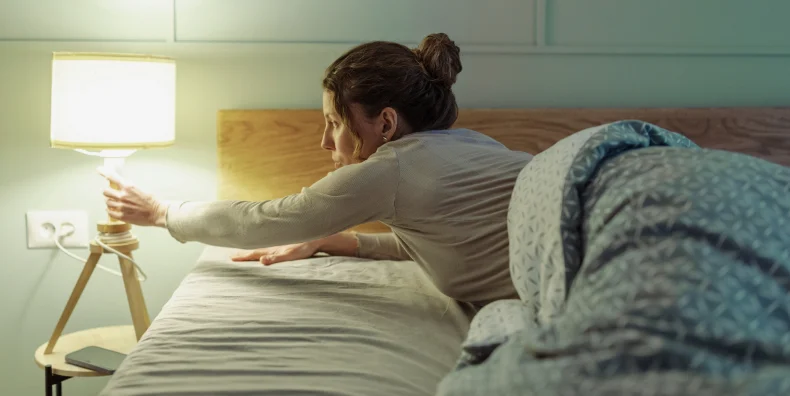
The relationship between sleep and bipolar disorder is not merely symptomatic; it is foundational. For decades, clinicians viewed sleep disturbances as a byproduct of mood shifts—a secondary effect of the racing mind in mania or the lethargy of depression. However, contemporary psychiatric research has flipped this script. Sleep is now understood as a primary driver of the illness, acting as both a "biological thermometer" that forecasts upcoming episodes and a physiological lever that can either stabilize or destabilize the brain’s delicate chemistry.
For the millions living with bipolar disorder, the quest for a "good night’s rest" is a high-stakes clinical necessity. Disruptions in the circadian rhythm—the body’s internal 24-hour clock—can trigger the onset of debilitating mood episodes, while the episodes themselves further erode the ability to rest, creating a self-perpetuating cycle of instability.
Main Facts: The Bidirectional Link Between Sleep and Mood
The core challenge of managing bipolar disorder lies in its bidirectional nature: sleep affects mood, and mood affects sleep. Research indicates that sleep problems are a core feature of the disorder, persisting even during periods of euthymia (clinical stability).
The Circadian Dysregulation Theory
At the heart of this connection is the circadian system. In individuals with bipolar disorder, the internal clock appears to be more "brittle" or sensitive to external disruptions than in the general population. This sensitivity means that minor changes—such as a late night, jet lag, or even the seasonal shift in daylight—can trigger a cascade of neurochemical changes.
Key Clinical Observations:
- The "Need" vs. "Ability" Distinction: In mania, patients often experience a decreased need for sleep, feeling fully energized after only two or three hours. In depression, they may suffer from insomnia (the inability to sleep despite wanting to) or hypersomnia (excessive sleeping that provides no refreshment).
- Cognitive Erosion: Persistent sleep issues are directly linked to cognitive deficits in memory, attention, and executive function, which can remain even when mood symptoms are well-controlled.
- The 1-in-5 Rule: Approximately 20% of individuals with bipolar disorder also suffer from obstructive sleep apnea (OSA), a condition that frequently goes undiagnosed because its symptoms of daytime fatigue are often mistaken for depressive lethargy.
Chronology: The Anatomy of a Mood Cycle Through Sleep
Understanding how sleep shifts across the bipolar spectrum requires a chronological look at the "mood weather" and how sleep patterns act as the first clouds on the horizon.
1. The Prodromal Phase (Early Warning)
Before a full-blown manic or depressive episode occurs, sleep is usually the first system to fail. For many, two or three nights of shortened sleep duration act as the "first domino." In this stage, the individual may not feel "tired," but the brain is already beginning to enter a state of hyper-arousal.
2. Mania and Hypomania: The Wired State
During mania, the brain’s reward system is overactive. The individual experiences a "reduced need for sleep." Unlike a person with insomnia who feels exhausted by their wakefulness, a manic individual feels "charged." However, this lack of sleep acts as fuel for the fire, worsening racing thoughts, impulsivity, and grandiosity.
3. Bipolar Depression: The Heavy Fog
As the cycle swings toward depression, the sleep architecture changes again. According to a systematic review in Sleep Medicine Reviews, roughly 63% of people in a bipolar depressive state experience insomnia. Conversely, others experience hypersomnia, sleeping 10 or more hours a day. This "heavy sleep" is often non-restorative, leaving the individual in a state of "sleep drunkenness" or grogginess that exacerbates the lack of motivation characteristic of depression.
4. Euthymia: The Persistent Struggle
The most significant discovery in recent sleep science is that sleep does not automatically normalize when the mood stabilizes. Studies show that 52% of people in stable states still report poor sleep quality. This suggests that for those with bipolar disorder, the "circadian pacemaker" requires active, lifelong maintenance rather than passive observation.
Supporting Data: Quantifying the Impact of Rest
The clinical importance of sleep is backed by large-scale longitudinal data. The Systematic Treatment Enhancement Program for Bipolar Disorder (STEP-BD), which followed over 2,000 participants, provided the most concrete evidence for what constitutes "healthy" sleep in this population.
The "Stability Sweet Spot"
The STEP-BD study found that patients who maintained between 6.5 and 8.5 hours of sleep per night experienced the highest levels of mood stability. Deviating from this window—either by sleeping too little or too much—was a statistically significant predictor of a recurrence of symptoms.
Prevalence of Comorbid Sleep Disorders
A study published in the Journal of Clinical Psychiatry highlights the prevalence of secondary sleep conditions that complicate bipolar management:
- Insomnia: Affects over half of the bipolar population at any given time.
- Delayed Sleep Phase Disorder (DSPD): A common "night owl" pattern where the individual cannot fall asleep until the early morning hours, which is highly correlated with more severe bipolar symptoms.
- Sleep Apnea: Found in 20% of patients, often exacerbated by weight gain associated with certain mood-stabilizing medications.
The Cost of Sleep Deprivation on the Brain
Research in the journal Sleep Health indicates that chronic sleep disruption in bipolar patients leads to measurable declines in:
- Working Memory: The ability to hold and manipulate information.
- Verbal Learning: The capacity to acquire new linguistic information.
- Executive Function: The "CEO of the brain" responsible for planning and emotional regulation.
Official Responses: Therapeutic and Medical Frameworks
Medical professionals and global health organizations like the Cleveland Clinic and the Mayo Clinic emphasize a multi-pronged approach to treating the sleep-bipolar connection. This involves a combination of pharmacological management, behavioral therapy, and environmental control.
Pharmacological Adjustments
Psychiatrists often have to perform a delicate balancing act with medication.
- The SSRI Risk: Antidepressants (SSRIs) can improve sleep in some, but in bipolar patients, they carry a risk of "switching" the patient into mania if not balanced with a mood stabilizer.
- The Lithium Advantage: A study in the World Journal of Psychiatry found that lithium may have a more positive effect on sleep architecture than other stabilizers like valproic acid, particularly in helping patients maintain a consistent rhythm during stable periods.
- Sedative Caution: While benzodiazepines can provide short-term relief for insomnia, they are generally discouraged for long-term use due to the risk of dependency and their potential to mask underlying mood shifts.
Cognitive Behavioral Therapy for Insomnia (CBT-I)
CBT-I is now considered the "gold standard" for treating chronic sleep issues. For bipolar patients, this therapy is adapted to ensure that "sleep restriction" (a common CBT-I technique) does not accidentally trigger a manic episode. The focus is on changing the thoughts that lead to nighttime anxiety and establishing a rigid "wind-down" ritual.
Interpersonal and Social Rhythm Therapy (IPSRT)
One of the most effective official responses to bipolar sleep issues is IPSRT. This therapy focuses on "social zeitgebers"—external cues that train the body clock.
- Consistency is Key: Patients are encouraged to set strict times for waking, eating, exercising, and taking medication.
- The 2026 Findings: A recent study in the Journal of Clinical Medicine (published in 2026) confirmed that after 12 weeks of IPSRT, participants showed significantly improved social functioning and more robust circadian rhythms.
Implications: A New Paradigm for Long-Term Stability
The implications of this research are clear: sleep management must be elevated from a "lifestyle tip" to a primary clinical intervention. For the individual living with bipolar disorder, this requires a shift in how they view their daily routine.
The Role of "Dark Therapy" and Technology
As our understanding of blue light’s impact on melatonin grows, "Dark Therapy" has emerged as a low-cost, high-impact intervention. By using blue-light-blocking glasses or reducing screen exposure two hours before bed, patients can manually signal to their brain that the day has ended, helping to prevent the "wired" state that precedes hypomania.
Exercise as a Double-Edged Sword
While exercise is generally praised, its timing is crucial for those with bipolar disorder. High-intensity workouts late in the evening can overstimulate the nervous system. Conversely, low-intensity movement like yoga or walking, especially in morning sunlight, can help "anchor" the circadian rhythm.
The Path Forward: Sleep as a Vital Sign
Moving forward, the psychiatric community is increasingly advocating for the use of wearable technology and sleep journals as standard diagnostic tools. By tracking sleep as a "vital sign," much like blood pressure, patients and doctors can intervene days or weeks before a mood episode reaches a crisis point.
In conclusion, while bipolar disorder remains a complex and challenging condition, the science of sleep offers a tangible path to empowerment. By stabilizing the sleep-wake cycle, individuals can build a physiological "buffer" against the volatility of the disorder, turning a source of vulnerability into a pillar of long-term health and stability.