



For decades, the name Linus Pauling was synonymous with scientific brilliance. As one of the most decorated researchers of the 20th century, Pauling’s legacy was anchored in his groundbreaking work on chemical bonding and the molecular structure of proteins. Yet, his reputation suffered a seismic shift late in his career when he pivoted toward a controversial, unconventional crusade: the assertion that megadoses of vitamin C could serve as a potent weapon against cancer.
For years, the medical establishment dismissed Pauling’s claims as pseudoscience, often citing his late-career fixation as a textbook example of the "halo effect"—the cognitive bias where a genius in one domain erroneously assumes authority in another. However, half a century later, the scientific community is revisiting this narrative. Modern research suggests that while Pauling’s methods were flawed and his claims exaggerated, he may have caught a glimpse of a biological reality that we are only now beginning to fully decode.
The Chronology: From Lab Bench to Clinical Fringe
The saga began in the early 1970s, when Pauling entered a collaborative partnership with Scottish surgeon Ewan Cameron. Together, they conducted observational studies on patients with advanced, terminal cancers, administering massive amounts of vitamin C. Their protocol involved an initial infusion directly into the bloodstream, followed by high-dose oral supplementation.
The results reported by Pauling and Cameron were striking. They observed that patients receiving the vitamin regimen lived significantly longer and reported a better quality of life compared to those who did not. To some, these findings suggested that vitamin C could be a transformative, life-extending therapy.
However, the medical community remained skeptical. In response to these claims, the Mayo Clinic, a bastion of evidence-based oncology, conducted two rigorous, large-scale, randomized, double-blind trials. The results were categorical: vitamin C provided no therapeutic benefit to cancer patients. The oncology establishment moved to file the topic under "alternative medicine," and for many, Pauling’s reputation as a scientist was permanently tarnished.
The "Absorption Gap": Why Early Trials Failed
The failure of the Mayo Clinic trials to replicate Pauling’s results became the primary point of contention for decades. Critics and supporters alike overlooked a crucial distinction in administration methods. Pauling and Cameron utilized intravenous (IV) infusions, whereas the Mayo Clinic relied exclusively on oral tablets.
The human body is remarkably efficient at regulating nutrient levels through the gut. Once a specific threshold is reached, the intestines cease absorption, and the excess is excreted via the kidneys. Consequently, no matter how many vitamin C tablets a patient swallows, the concentration in the bloodstream hits a "ceiling."
In contrast, intravenous administration bypasses the digestive system entirely, allowing for serum concentrations that are tens or even hundreds of times higher than what could ever be achieved through oral intake. Only recently have researchers realized that at these supraphysiological levels, vitamin C ceases to act as a simple nutrient and begins to behave more like a pharmacological agent.
Supporting Data: The Dual Personality of Ascorbic Acid
To understand the current scientific interest, one must differentiate between the roles vitamin C plays at different concentrations. At standard physiological levels, vitamin C functions as an antioxidant, diligently neutralizing free radicals and protecting cellular DNA from oxidative damage.
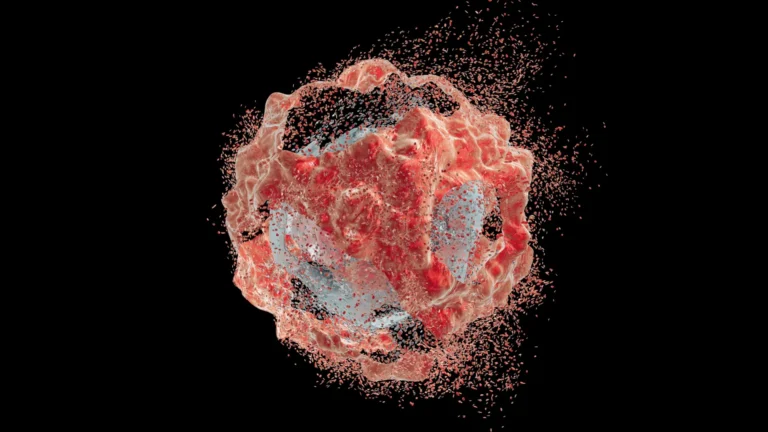
However, at the extreme concentrations achievable through IV infusion, the molecule undergoes a functional flip. In the microenvironment of a tumor, high-dose vitamin C promotes the generation of hydrogen peroxide. Cancer cells are often characterized by high metabolic stress, poor blood supply, and an overburdened "cleanup" system. When suddenly inundated with a high-dose pulse of reactive oxygen species, these cancer cells—already pushed to their biological limits—often succumb to oxidative damage, triggering programmed cell death.
Crucially, healthy cells, which possess more robust defense mechanisms, are largely spared. This discovery has shifted the perspective of many oncologists: high-dose vitamin C is no longer viewed as a "vitamin supplement" but as a potential—albeit mild—selective chemotherapy drug.
Emerging Evidence and Clinical Realities
While laboratory models are compelling, the clinical data in humans remains a mosaic of early-phase trials. Recent studies focusing on ovarian, pancreatic, and glioblastoma cancers have begun to map out the safety and efficacy of these infusions.
Key Findings:
- Quality of Life: The most consistent signal across multiple studies is not necessarily tumor shrinkage, but patient well-being. Patients receiving IV vitamin C alongside standard chemotherapy frequently report reduced fatigue, diminished pain, and lower rates of nausea.
- Synergy with Chemotherapy: There is growing evidence that vitamin C may sensitize cancer cells to traditional treatments, potentially enhancing the efficacy of standard regimens.
- Safety Profiles: While high-dose infusions are generally well-tolerated, they are not risk-free. Patients with renal insufficiency or certain inherited metabolic conditions are at significant risk. Consequently, the medical community maintains that these infusions should never be marketed as "wellness drips" or "immune boosters" in non-clinical settings.
Official Responses and Scientific Caution
Despite the intrigue, the oncology establishment remains measured. Large-scale, definitive randomized controlled trials—the gold standard of medical proof—are still lacking. Without these, high-dose vitamin C cannot be considered a standard-of-care treatment.
Major medical organizations, including Cancer Research UK and the American Society of Clinical Oncology, emphasize that while the story of vitamin C is evolving, it must not supersede proven treatments. The danger, experts warn, is that patients may forgo effective chemotherapy in favor of "alternative" infusions, which could prove fatal. The current consensus is clear: vitamin C is a promising subject for research, but it remains strictly experimental.
Implications: A New Chapter in Cancer Therapy
The story of Linus Pauling and vitamin C offers a profound lesson on the non-linear nature of scientific progress. It serves as a reminder that a bold idea, even when initially presented with flawed methodology or excessive zeal, can contain a kernel of truth that requires decades of technological and biological advancement to uncover.
The implications of this research extend beyond vitamin C itself. It highlights the importance of re-examining "dismissed" hypotheses through the lens of modern pharmacology. We now understand that the route of administration, the specific molecular concentration, and the metabolic state of the tumor are all variables that can dictate whether a substance acts as a benign nutrient or a potent weapon.
While Pauling was clearly wrong to promote tablets as a universal cancer cure, he was arguably ahead of his time in suspecting that the body’s internal chemistry could be manipulated through high-dose intravenous therapy. His legacy is no longer one of simple, misguided failure, but rather a complex, cautionary tale about the intersection of intuition, scientific rigor, and the patience required for genuine discovery.
As researchers continue to probe the interaction between metabolism and oncology, the "vitamin C story" will likely continue to evolve. For now, it remains a testament to the fact that in science, there are no final chapters—only ongoing dialogues, where even the most controversial ideas can, with time and scrutiny, be refined into meaningful medical advancements. For those battling cancer today, the path forward remains one of careful, evidence-based clinical trials, far removed from the hype and closer to the nuanced reality of human biology.