






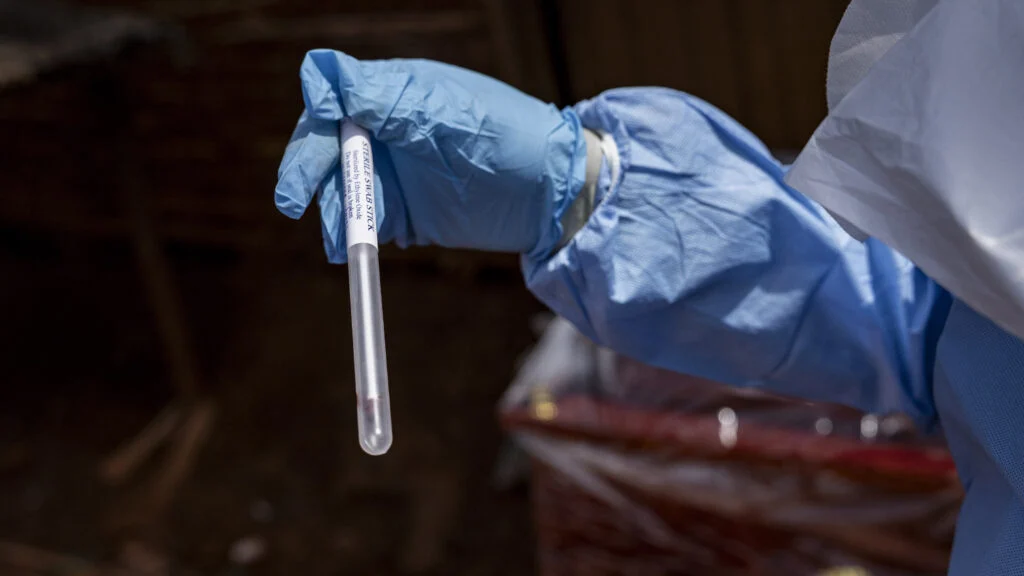
The U.S. Department of Health and Human Services (HHS) confirmed this Thursday that it has authorized the use of an experimental antibody treatment, MBP-134, for Americans identified as having high-risk exposures to the ongoing Ebola outbreak in Central Africa. While the drug has demonstrated significant efficacy in animal models, it remains clinically unproven in human subjects, placing the U.S. government in a complex position of balancing urgent humanitarian intervention with the scientific uncertainty inherent in experimental medicine.
The Science of MBP-134: A Potential Pan-Ebola Solution
Developed by San Diego-based Mapp Biopharmaceuticals with substantial backing from the Biomedical Advanced Research and Development Authority (BARDA), MBP-134 is a monoclonal antibody therapy designed to neutralize various strains of the Ebola virus. Unlike previous treatments that were specific to certain species, MBP-134 is classified as a "pan-Ebola" therapeutic. Preliminary data from primate studies suggest the drug is effective against the Bundibugyo ebolavirus—the strain currently fueling the outbreak in the northeastern Democratic Republic of the Congo and Uganda—as well as the more commonly cited Zaire and Sudan strains.
The World Health Organization (WHO) has officially prioritized MBP-134 for evaluation. In a recent technical advisory, the WHO noted, "MBP-134 represents a promising option for treatment at a single dose." This single-dose delivery method is particularly attractive in the rugged, logistically challenging environments of Central Africa, where multi-dose intravenous regimens can be difficult to administer.
Despite the optimism, the supply of MBP-134 remains shrouded in secrecy. When pressed by media outlets regarding the total number of doses currently in the federal stockpile, Mapp Biopharmaceuticals deferred all comment to BARDA, citing federal ownership of the product. HHS officials have remained equally tight-lipped, confirming only that a shipment is being coordinated for "potential use in high-risk Americans" under the Food and Drug Administration’s "investigational use" protocols.
A Chronology of the Crisis and Response
The urgency surrounding this deployment stems from recent events involving American medical personnel in the region.
- Last Month: A physician serving with a Christian missionary group in the outbreak zone contracted Ebola. He was promptly evacuated to Germany for high-containment care. His wife and four children were also relocated to Germany to undergo a 21-day quarantine. Reports indicate the physician is currently recovering.
- Ongoing: A second doctor from the same missionary group, deemed a high-risk contact, is currently under quarantine in the Czech Republic. Officials confirm he remains healthy, and there are no other known American exposures at this time.
- May 29 (Scheduled): The U.S. government intended to open a 50-bed quarantine facility in Kenya to house exposed American citizens. This plan faced immediate legal and social hurdles.
- Present: The construction of the facility in Kenya remains in a state of suspended animation following a court injunction in Nairobi and significant civil unrest, as local populations protest the establishment of an Ebola containment center within their borders.
Diplomatic Friction and the Kenya Containment Camp
The Trump administration’s decision to build a containment camp in Kenya has become a flashpoint for international criticism. Public health experts, local Kenyan activists, and regional officials have argued that the facility reflects a "fortress" mentality that prioritizes the comfort of Western nationals over the stability of the host nation.
The administration, however, maintains that its strategy is a necessary logistical compromise. Mehmet Oz, administrator of the Centers for Medicare and Medicaid Services (CMS), stated earlier this week that the government is working to "work out something with Kenya," signaling a firm intent to proceed with the camp despite the violent protests and legal roadblocks.
The administration’s policy explicitly bars individuals with confirmed Ebola or those at high risk of infection from entering the United States until they have either cleared the 21-day incubation period or have been successfully treated. Officials argue that flying sick patients to specialized facilities in Europe is a faster, more efficient path to care than a trans-Atlantic flight to the United States. This stance has puzzled many, given that the U.S. invested millions of dollars in a network of high-containment units following the 2014-2016 West African outbreak—a network that successfully repatriated and cured seven out of eight patients.
The Path to Clinical Trials
While the U.S. government is focusing on the protection of its own citizens, the global scientific community is focused on the broader goal of eradicating the outbreak. For Mapp Biopharmaceuticals, the current crisis represents a rare opportunity to gather human data on MBP-134.
"The partners’ protocol is in front of the Congolese regulatory authorities," said Dr. Armand Sprecher, an emergency physician and veteran of Doctors Without Borders. "They’ve got their ethical review done. The folks from the Institute of Tropical Medicine in Antwerp are poking around in Ituri doing site evaluations. All the machinery is in motion."
However, the U.S. government has yet to commit to providing the necessary supply of MBP-134 for a formal, large-scale clinical trial. At a press conference, a federal representative remained non-committal, stating, "We are working to assess the availability and to best identify how to distribute and utilize the courses that we have."
This hesitation highlights the core tension between the government’s duty to its citizens and its role as a global public health stakeholder. While the U.S. is prioritizing the availability of the drug for Americans, public health advocates warn that hoarding experimental treatments—especially when they have not yet been proven effective—hinders the global effort to end the outbreak.
Implications for Global Health Policy
The current situation raises several long-term questions regarding how the international community handles infectious disease threats:
- Sovereignty vs. Safety: The standoff in Kenya illustrates the difficulties of imposing Western-led quarantine infrastructure on sovereign nations. The backlash from the Kenyan public serves as a warning that public health initiatives must be built on local consensus, not top-down mandates.
- The "Experimental" Dilemma: The use of MBP-134 under investigational protocols is a double-edged sword. It provides a potential lifeline to exposed individuals, but it also complicates the scientific process. If the drug is used sporadically on a handful of patients, the data collected may be insufficient to prove whether it truly works, potentially delaying its approval for broader use.
- Resource Allocation: The reliance on European hospitals for the treatment of U.S. citizens raises questions about the long-term utility of domestic high-containment infrastructure. If the U.S. government deems its own facilities inaccessible or undesirable for active Ebola patients, it calls into question the justification for the substantial taxpayer investment in these domestic resources.
As the situation in the Democratic Republic of the Congo continues to evolve, the international community remains in a state of watchful waiting. For the American personnel on the ground, MBP-134 represents the best hope in a high-stakes gamble against a lethal pathogen. For the rest of the world, the hope remains that the drug can be brought into the formal, rigorous testing phase before the outbreak reaches a scale that renders such interventions less effective.
Ultimately, the effectiveness of the U.S. response will be measured not just by the health of its citizens, but by its ability to integrate its medical resources into a global framework that respects international partners and prioritizes transparent, evidence-based science. Until the U.S. government clarifies its position on the clinical trial supply, the true potential of MBP-134 will remain a tantalizing—but unconfirmed—prospect in the fight against Ebola.