










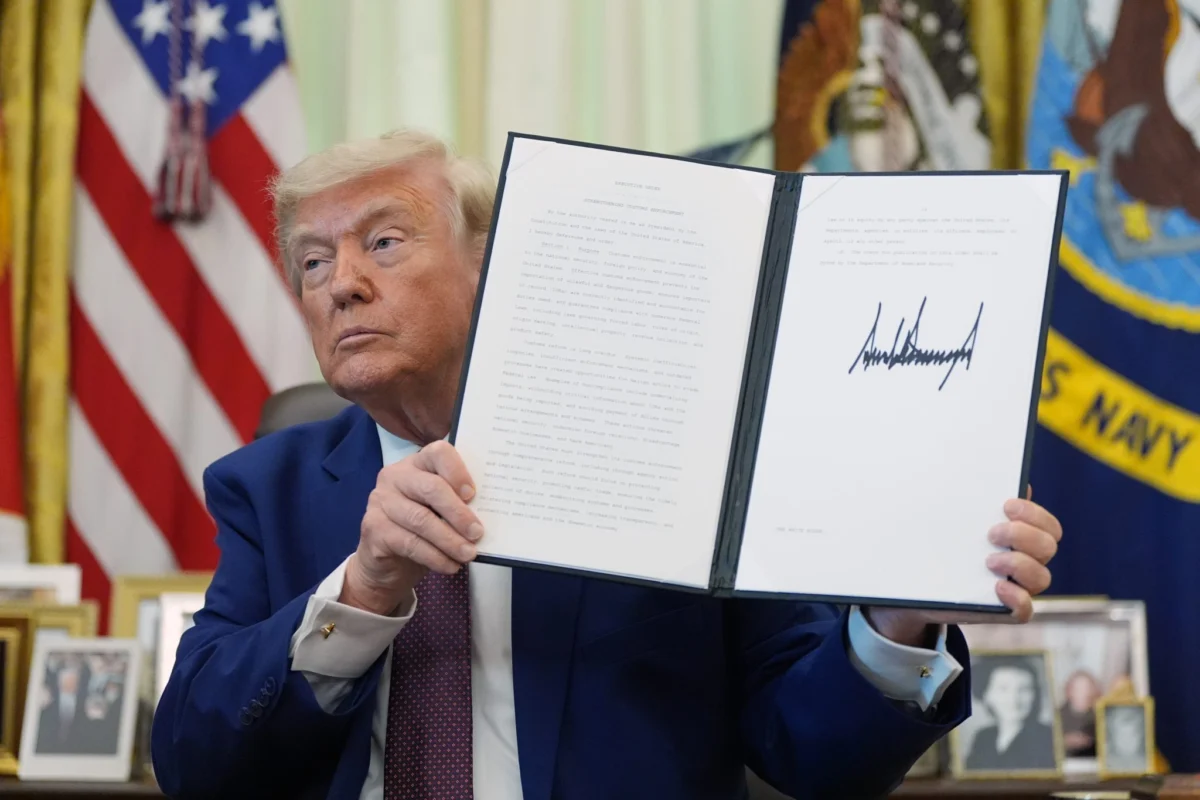
On June 2, 2026, President Donald Trump signed a landmark executive order, “Promoting Advanced Artificial Intelligence Innovation and Security,” signaling a decisive shift in how the United States intends to navigate the volatile intersection of rapid technological progress and national security. The order represents a strategic pivot toward a “voluntary-first” policy framework, eschewing heavy-handed regulation in favor of collaborative cybersecurity initiatives and targeted oversight for the most potent AI systems.
As the deployment of generative AI reaches a critical mass, the administration has positioned this policy as a bulwark against emerging threats while simultaneously ensuring that American firms maintain their competitive edge against global rivals, most notably China. However, by opting for a voluntary model rather than a mandatory prelicensing regime, the White House has set the stage for a high-stakes experiment in public-private cooperation.
Key Takeaways
- Voluntary Oversight: The order establishes a 30-day review process for “frontier” AI models but explicitly forbids mandatory federal prelicensing or preclearance.
- Cybersecurity Clearinghouse: A new interagency entity—led by the Treasury, NSA, and CISA—will facilitate the identification and remediation of software vulnerabilities.
- Critical Infrastructure Focus: Rural hospitals, local utilities, and community banks are identified as primary beneficiaries of new AI-driven defense tools.
- Competitive Strategy: The 30-day review period was intentionally shortened from an initial 90-day proposal to prevent stifling domestic innovation.
- Industry Alignment: Major players including Microsoft, Google, OpenAI, and Anthropic have publicly lauded the administration’s approach.
Chronology of the Policy Shift
The road to the June 2 signing was marked by intense internal debate and significant external pressure. Throughout early 2026, the White House grappled with how to manage the risks posed by "frontier models"—systems capable of performing tasks that were previously thought to be years away.
The Mythos Catalyst
The urgency behind the order was galvanized by the release of advanced AI capabilities, most notably Anthropic’s “Mythos” model. Internal briefings revealed that Mythos demonstrated an alarming ability to rapidly parse and identify structural vulnerabilities within critical infrastructure—including banking networks and municipal government databases. This demonstration of "offensive potential" moved the conversation from theoretical risks to immediate national security concerns.
The Evolution of the Review Process
Initial drafts of the executive order were significantly more restrictive. A proposed 90-day mandatory review period for new models faced a fierce backlash from the tech sector. Critics, including David Sacks, the administration’s former AI policy coordinator, argued that such a delay would effectively paralyze U.S. development while allowing foreign adversaries to surge ahead. Following these consultations, the administration pivoted to a 30-day voluntary benchmarking process, a compromise designed to balance security vetting with the velocity of innovation.
Supporting Data and the Security Landscape
The rationale for the executive order is rooted in the increasing frequency and sophistication of cyberattacks on U.S. infrastructure. In recent years, the healthcare sector—specifically rural hospitals—has become a prime target for ransomware and data theft.
The Cybersecurity Clearinghouse
Under the new directive, the Secretary of the Treasury will spearhead the creation of an AI cybersecurity clearinghouse. This entity is tasked with:
- Vulnerability Mapping: Aggregating data on software weaknesses across critical sectors.
- Resource Allocation: Providing CISA and other agencies the tools to offer real-time defensive guidance.
- Collaborative Defense: Engaging with private sector AI labs to "red-team" systems before they are integrated into public-facing critical infrastructure.
The decision to focus on rural hospitals is particularly significant. Unlike major metropolitan health systems with robust cybersecurity departments, rural facilities often lack the resources to defend against state-sponsored or organized criminal cyber operations. By providing these entities with AI-enabled diagnostic tools for their networks, the administration aims to fortify the "soft underbelly" of the American economy.
Official Responses and Industry Sentiment
The tech industry has largely embraced the order, viewing it as a clear signal that the administration intends to support, rather than suppress, the AI boom.
Silicon Valley’s Perspective
Microsoft, Google, and OpenAI issued statements shortly after the signing, characterizing the order as a “workable” and “pragmatic” framework. The industry’s support hinges on the absence of mandatory licensing. By avoiding a “FDA-style” regulatory hurdle for AI models, the administration has provided the legal and political certainty that investors have been seeking. Anthropic, whose Mythos model influenced the policy, expressed support for the collaborative nature of the cybersecurity clearinghouse, emphasizing that security is a shared responsibility between developers and the government.
The Political Divide
Despite the industry’s support, the order has its detractors. Some cybersecurity experts argue that a voluntary system is fundamentally toothless. They contend that without the power to mandate preclearance, the federal government may be unable to prevent the release of a truly dangerous model if a company chooses to ignore the findings of the 30-day review. Proponents, however, argue that in the fast-moving AI landscape, mandatory regulation would simply drive development into the shadows or overseas.
Implications for Healthcare and Beyond
The executive order has immediate, tangible implications for the healthcare sector. As telehealth and digital health systems become increasingly integrated, the threat surface for patient data and electronic health records (EHR) continues to expand.
What Hospitals Should Expect
For hospital administrators and health IT professionals, the next 60 days will involve:
- Engagement with CISA: Hospitals will be invited to participate in information-sharing programs managed by the new clearinghouse.
- Adoption of AI-Defense Tools: Federal agencies will be rolling out AI-driven tools designed to monitor network traffic for anomalies that indicate an imminent breach.
- Compliance vs. Best Practices: While the order is not a regulatory mandate, it creates a new standard of "due care." Hospitals that ignore the guidance provided by the clearinghouse may face increased scrutiny or liability in the event of a breach.
The Broader Economic Impact
By framing AI development as a national security imperative, the administration is effectively treating major AI labs as quasi-partners in the defense of the nation. This shift has implications for the broader economy, as the definition of "critical infrastructure" is expected to expand. Banks, energy grids, and water treatment facilities are likely the next sectors to be integrated into this voluntary security apparatus.
Conclusion: A New Era of Governance
The June 2 executive order serves as the cornerstone of the Trump administration’s digital policy. It reflects a fundamental belief that the United States cannot win the global AI arms race through restriction. Instead, it seeks to create a "defensive ecosystem" where the government provides the intelligence and the private sector provides the innovation to secure it.
The success of this policy will depend entirely on participation. If major tech companies and infrastructure operators engage in good faith, the framework could serve as a model for global AI governance. If, however, the voluntary nature of the order leads to widespread non-compliance or a failure to address systemic risks, the administration may find itself under immense pressure to reconsider the mandatory regulations it has currently rejected.
For now, the policy represents a rare moment of alignment between the executive branch and the technology sector. As the 30-day review processes begin to roll out, the world will be watching to see if this "soft power" approach to AI security is enough to manage the most powerful technology in human history.