







By Editorial Staff
August 5, 2026
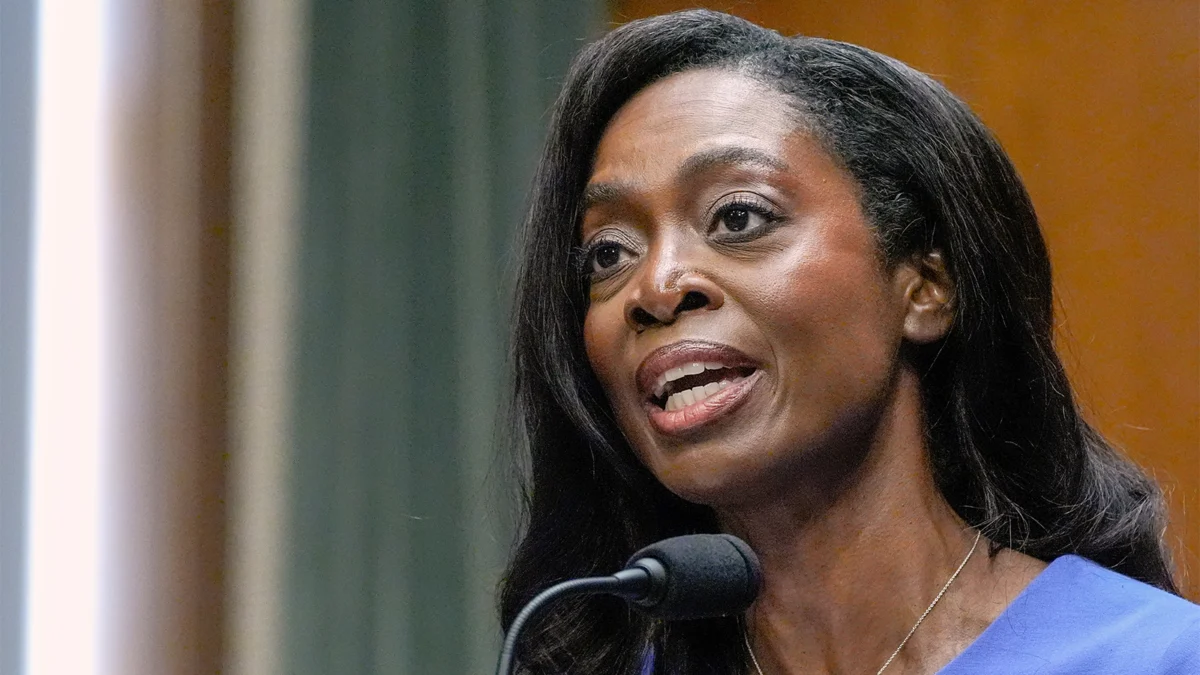
In a pivotal development for the nation’s public health infrastructure, the U.S. Senate voted 51-44 on Wednesday to confirm Dr. Erica Schwartz as the director of the Centers for Disease Control and Prevention (CDC). The confirmation marks the end of a chaotic, year-long leadership vacuum at the Atlanta-based agency, which has been reeling from intense political pressure, a massive exodus of veteran staff, and a series of short-lived, interim appointments.
Dr. Schwartz, 54, steps into one of the most challenging roles in the federal government. With an extensive background holding both medical and law degrees, as well as high-level experience as a former deputy surgeon general and a leadership veteran of the U.S. Coast Guard, she arrives at a moment when the CDC’s credibility and operational capacity are under unprecedented strain.
The State of the Agency: A Year of Turmoil
To understand the magnitude of Dr. Schwartz’s appointment, one must look at the state of the CDC since President Donald Trump returned to office in 2025. The agency, historically viewed as the "gold standard" for global disease prevention, has undergone a radical transformation—one that many public health experts describe as a dismantling from within.
The data paints a sobering picture: since early 2025, the CDC has lost more than 3,000 employees. This exodus represents more than one-quarter of the agency’s total workforce. The loss of such a significant percentage of personnel—comprising seasoned epidemiologists, researchers, and administrators—has left the agency hollowed out.
The vacuum created by these departures was often filled by political appointees who, according to internal reports, lacked formal training in medicine or public health. This shift in staffing has contributed to a sharp decline in internal morale, as career scientists found themselves increasingly sidelined by ideological directives. The arrival of Dr. Schwartz is intended to provide a steady hand, yet many observers question whether any single director can reverse the institutional erosion that has taken place over the last 18 months.
A Chronology of Instability
The path to Dr. Schwartz’s confirmation was anything but straightforward. Her ascent is the culmination of a frantic series of nominations and reversals that have left the public health community in a state of whiplash.
The Failed Nominations:
- March 2025: The White House initially put forward Dr. David Weldon, a former Florida congressman. The nomination collapsed abruptly when his Senate confirmation hearing was canceled just an hour before its scheduled start. Reports indicated that the administration realized it lacked the necessary votes to move him forward.
- Spring 2025: The administration then turned to Dr. Susan Monarez, who had been serving as the acting director. While she managed to secure Senate confirmation, her tenure was remarkably brief. Less than a month after taking the helm, she was terminated by the Trump administration, with officials citing a lack of alignment with the president’s broader policy agenda.
Following the departure of Dr. Monarez, the CDC drifted through a carousel of acting directors—mostly HHS officials with limited experience in the intricacies of the CDC’s day-to-day operations. This instability hindered long-term planning and allowed political influence to permeate decision-making processes that were once shielded by scientific independence.
The Confirmation Hearing: Skepticism and Reassurance
Dr. Schwartz’s nomination was initially met with significant skepticism during her July hearing before the Senate Health, Education, Labor and Pensions (HELP) Committee. The committee chairman, Sen. Bill Cassidy, MD (R-La.), led a rigorous line of questioning centered on a singular, critical theme: the independence of the CDC.
The primary concern among senators was whether Dr. Schwartz would act as a bulwark against potential overreach by the Secretary of Health and Human Services (HHS), Robert F. Kennedy Jr. Given Kennedy’s well-documented skepticism toward traditional public health practices and his history as a prominent voice in the anti-vaccine movement, senators were wary of whether the CDC director would be forced to implement directives unsupported by scientific consensus.
However, in the weeks following the hearing, the tone shifted. Senator Cassidy, in a notable reversal, stated that he had engaged in private, substantive discussions with Dr. Schwartz. He noted that after speaking with her and soliciting feedback from professional colleagues who have worked alongside her, he had gained the necessary confidence in her commitment to scientific integrity. This shift in the chairman’s position was likely the deciding factor in her narrow 51-44 confirmation vote.
Implications for Public Health
The appointment of Dr. Schwartz is viewed by many in the public health sphere with "cautious optimism." Her supporters point to her dual credentials in law and medicine, suggesting she possesses the unique skillset required to navigate the bureaucratic minefield of Washington while maintaining a commitment to medical efficacy.
Crucially, experts have noted that Dr. Schwartz was the specific choice of the White House, rather than a candidate hand-picked by Robert F. Kennedy Jr. This distinction is viewed by some as a potential buffer, suggesting that she may have a degree of direct access to the president that her predecessors lacked.
Key Challenges Facing the New Director:
- Restoring Credibility: The CDC must regain the public’s trust. After months of politically charged messaging, the agency’s guidance on everything from vaccine efficacy to epidemic response has been treated with skepticism by large swaths of the American public.
- Addressing the "Brain Drain": Replacing 3,000 employees is a multi-year project. Dr. Schwartz must find a way to make the CDC an attractive workplace for the next generation of scientists, who are currently wary of the agency’s political climate.
- Navigating the Kennedy Doctrine: Even if Dr. Schwartz is a "White House choice," she still reports to an HHS Secretary whose public statements on health policy often diverge from the CDC’s standard operating procedures. The tension between political policy and scientific evidence will likely be the defining challenge of her tenure.
Official Responses and Political Reaction
The confirmation has sparked a wide range of reactions across the political spectrum. Proponents of the administration argue that Dr. Schwartz is exactly the type of "disruptor" needed to modernize an agency they believe had become too insular and disconnected from the current administration’s vision.
Conversely, public health advocates and some Democratic lawmakers remain wary. Senatorial opponents of her confirmation expressed concerns that the 51-44 vote signifies a deeply divided Senate and that the agency remains vulnerable to being used as a tool for partisan ends rather than a repository of objective scientific data.
In a brief statement following the vote, a spokesperson for the HHS welcomed the confirmation, noting that "Dr. Schwartz brings a wealth of experience that will be instrumental as we move forward with the President’s health agenda."
Looking Ahead: The Long Road to Recovery
As Dr. Schwartz settles into her office in Atlanta, she faces a landscape that has changed dramatically since the agency’s inception. The CDC is no longer just a scientific body; it has become a focal point of the American "culture war."
For the staff remaining at the agency, the appointment of a permanent director is a welcome, if modest, step toward normalcy. The absence of a confirmed leader for nearly a year created a sense of rudderless drift that paralyzed decision-making and morale. With a director now at the helm, the agency can begin to focus on structural recovery.
Whether Dr. Schwartz can successfully navigate the conflicting demands of scientific rigor and political loyalty remains to be seen. Her tenure will be defined by the first major public health crisis she encounters. In that moment, the nation will see whether the CDC remains a bastion of objective science, or if it has been irrevocably altered by the political realities of the current era.
For now, the agency remains in a state of transition. The 22nd director of the CDC has been confirmed, but the work of proving that the agency can still serve as an independent protector of the American public is only just beginning. Dr. Schwartz’s ability to recruit top-tier talent, protect her scientists from undue interference, and communicate clearly with a skeptical public will determine not only the future of the CDC, but the resilience of the nation’s entire public health system.