









In the glitzy, high-stakes world of Silicon Valley longevity, one name has become synonymous with the aggressive pursuit of immortality: Bryan Johnson. The tech entrepreneur, famously the subject of the Netflix documentary Don’t Die, has captured the public imagination by attempting to hack his own biology. Johnson claims to have lowered his "biological age" by over five years, a feat he attributes to a rigorous, multi-million-dollar annual regimen involving dozens of daily supplements, hyperbaric oxygen therapy, and controversial plasma infusions.
But as Johnson’s "don’t die" crusade gains momentum, a critical question emerges: Are these high-tech tests the key to a longer life, or are we witnessing the commodification of anxiety?
The Science of the "Internal Clock"
Biological age—or "bio age"—is a measurement of how your cells and organs are functioning, independent of the number of candles on your birthday cake. While chronological age is a fixed constant, biological age is fluid.
Consider two 50-year-olds: "Chang," who lives in a polluted urban center, eats processed foods, and maintains a sedentary lifestyle, and "Jabari," who resides in a mountain environment, follows a nutrient-dense diet, and practices consistent physical training. Genetically, they may start at the same line, but their internal cellular environments will diverge significantly over time. Bio age testing aims to quantify this divergence by measuring biomarkers—molecular indicators of cellular health.
Chronology of the Longevity Boom
The obsession with bio age did not appear in a vacuum. It is the culmination of decades of research into cellular senescence and metabolic health.
- The Early Research Phase (1990s–2000s): Scientists began focusing on telomeres—the protective caps on chromosomes. Research suggested that as telomeres shortened, cellular aging accelerated.
- The Genomic Revolution (2010s): The discovery of "epigenetic clocks," such as the Horvath Clock, allowed researchers to track DNA methylation—a process where chemical tags on DNA change as we age. This provided the first semi-reliable "clock" for the human body.
- The Commercial Explosion (2020–Present): With the rise of podcasts hosted by figures like Peter Attia, Joe Rogan, and Andrew Huberman, the language of longevity trickled into the mainstream. Today, a quick Google search reveals a marketplace flooded with mail-order blood and urine kits promising to reveal one’s "pace of aging."
Supporting Data: What Are We Really Measuring?
To determine whether an intervention is working, commercial tests rely on specific markers. However, the accuracy of these tests remains a point of contention.
1. DNA Methylation and Epigenetic Clocks
Tests like those based on the DunedinPACE algorithm measure how quickly your body is aging. While these are excellent research tools for population studies, they were never designed to provide individual medical diagnoses. A "bio age" score derived from a blood sample may tell you about your immune system’s state, but it may not reflect the aging rate of your brain or liver.
2. Telomere Analysis
While popular in the commercial sphere, the "qPCR" telomere tests sold to the public often lack the rigor of the "flow-FISH" tests used in clinical settings. They offer a snapshot, but scientists warn against basing major health decisions on a single telomere measurement.
3. VO2 Max: The Gold Standard of Fitness
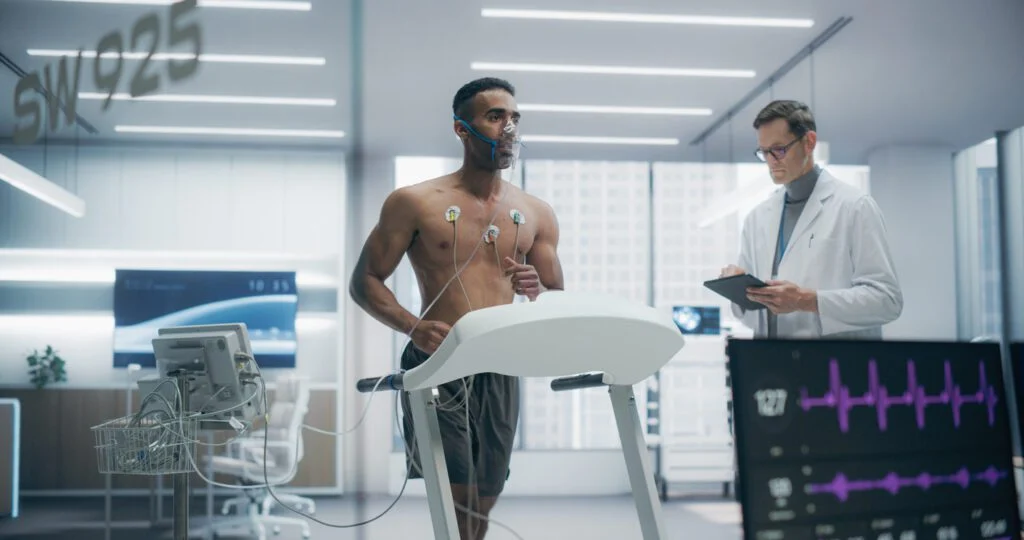
Perhaps the most reliable metric is VO2 Max—the maximum amount of oxygen your body can utilize during intense exercise. Research consistently shows that VO2 Max is a better predictor of all-cause mortality than cholesterol or blood pressure. Unlike expensive mail-order kits, VO2 Max provides a functional, actionable metric of how well your heart, lungs, and muscles are working together.
Free, Science-Backed Biomarkers
You don’t need a venture capitalist’s budget to gauge your longevity. Researchers have long utilized "proxy" tests that are simple, free, and highly indicative of your long-term health trajectory.
The Sitting-Rising Test (SRT)
This test evaluates balance, coordination, and muscle strength. To perform it, you lower yourself to the floor and stand back up without using your hands or knees for support. Scoring below 8 points on this test has been associated with a significantly higher risk of cardiovascular mortality.
Grip Strength
Often dismissed as a simple gym metric, grip strength is a profound indicator of systemic health. Weak grip strength in mid-life is a precursor to future frailty, inability to perform daily tasks, and even cognitive decline.
Balance and Stability
The ability to stand on one leg for a set duration (e.g., 40+ seconds for a 50-year-old) is a critical indicator of neurological and musculoskeletal health. Falls are a leading cause of injury-related death in the elderly; those who cannot balance well are statistically more vulnerable.
The Pittsburgh Fatigability Scale
Longevity isn’t just about avoiding disease; it’s about maintaining vitality. This scale measures how "worn out" you feel after daily tasks. High scores on this scale are often early warnings of developing health issues, such as anemia, thyroid dysfunction, or latent metabolic disease.
Official Responses and Skepticism
The medical establishment remains cautious. A New York Times investigation into Bryan Johnson’s methods highlighted a massive discrepancy: while Johnson claimed to be reversing his age, some data suggested his biological markers had actually accelerated in certain areas.
Medical experts emphasize that data without action is useless. If a test reveals you are "aging faster," but you ignore the "boring" basics—sleep, nutrition, resistance training, and stress management—the test has provided nothing more than a vanity metric. Furthermore, many commercial companies use test results to upsell proprietary, unproven supplement stacks, creating a conflict of interest that should trigger skepticism.
The Implications: Moving from Testing to Action
If you or your clients are considering bio age testing, it is essential to treat the results as a compass, not a destination.
1. The "Big Rock" Strategy
The most significant gains in longevity do not come from a $500 blood test; they come from consistent adherence to foundational health practices.
- Strength Training: Preserves bone density and metabolic health.
- Protein Intake: Vital for muscle maintenance as we age.
- Cardiovascular Conditioning: Essential for maintaining VO2 Max.
- Sleep Hygiene: The body’s primary mechanism for cellular repair.
2. Turning Data into Behavior
If you choose to test your biomarkers, use them to track the efficacy of lifestyle changes. For example, if your fasting glucose or lipid profile is sub-optimal, implement a specific exercise or dietary change, wait 12 weeks, and re-test. If the numbers improve, you have validated the intervention. If not, pivot.
3. The Professional Perspective
For health and fitness professionals, the key is helping clients filter the noise. When clients are overwhelmed by "bio-hacking" trends, the professional’s role is to refocus them on the "evergreen" strategies. Chronic stress and exhaustion are the true killers of longevity. By utilizing tools like the Level 1 Sleep, Stress Management, and Recovery (SSR) Coaching Certification, professionals can move beyond simple fitness programming and address the systemic issues that truly define a client’s "biological age."
Conclusion
The quest for a younger biological age is a powerful motivator, but it is easy to lose the forest for the trees. While tracking biomarkers can provide a useful, quantitative roadmap, it should never replace the fundamental pillars of human health. Whether you are a billionaire or a weekend warrior, the path to "not dying" remains remarkably consistent: move often, eat well, manage your stress, and prioritize the boring, daily habits that build a foundation for a long, vibrant life. Your bio age isn’t determined by a test result; it is built, day by day, through the choices you make.