










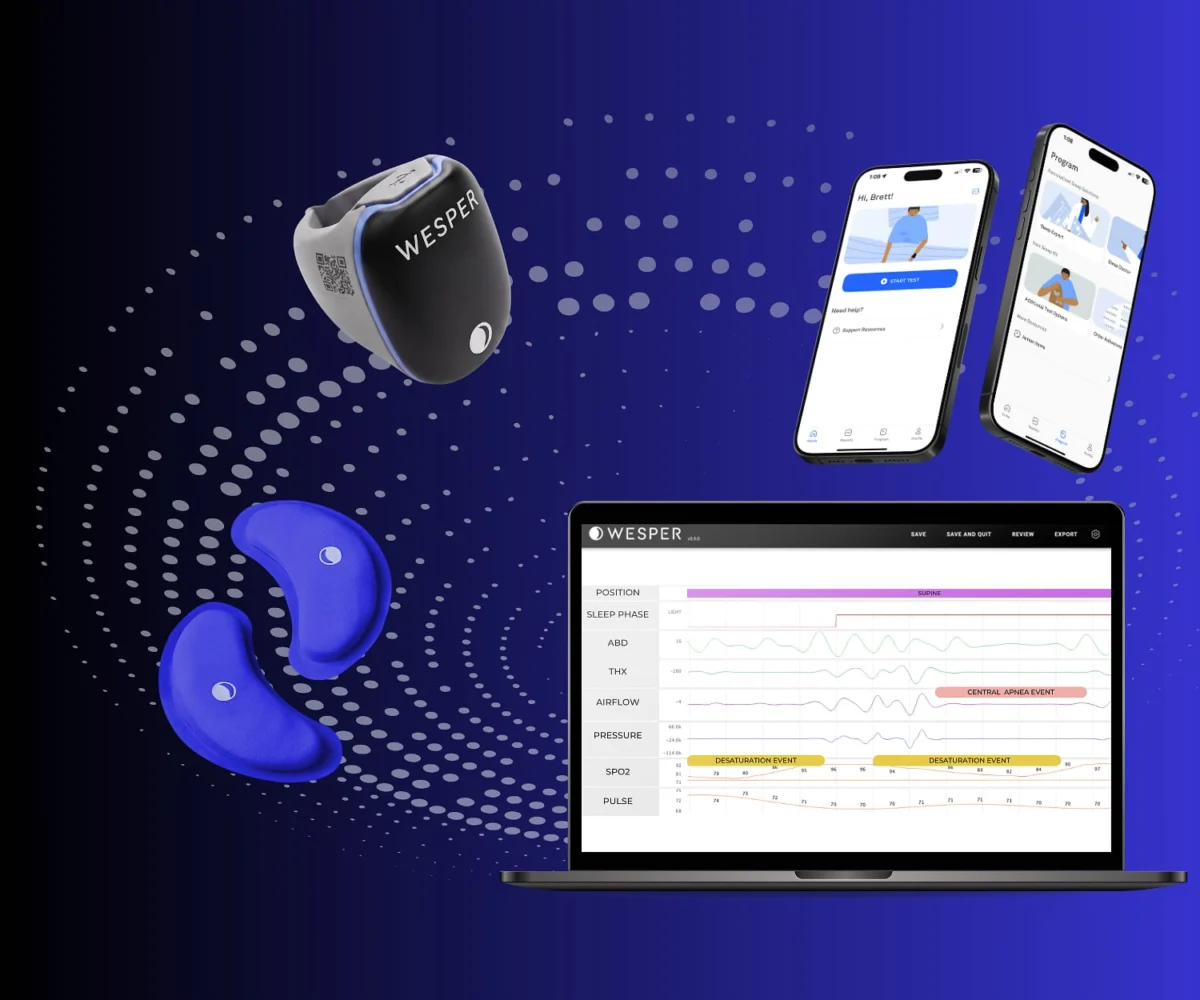
At the SLEEP 2026 conference, a pivotal moment in sleep medicine has emerged as Wesper, a leader in digital health diagnostics, unveiled its new integrated ecosystem. By merging its high-fidelity "Wesper Lab" and its high-volume "Wesper Lite" testing tiers into a single, unified platform, the company is aiming to solve one of the most persistent bottlenecks in sleep clinics: the fragmentation of diagnostic pathways.
This development marks a shift away from the traditional, rigid "one-size-fits-all" testing models, promising clinicians the ability to provide personalized, tiered care through a single patient record and a streamlined interpretation pipeline.
The Core Innovation: A Unified Diagnostic Ecosystem
For years, sleep clinics have struggled with a logistical divide. High-fidelity, multi-night studies were often siloed from general screening tools, leading to disjointed patient records and inefficient workflows. Wesper’s new ecosystem eliminates this friction by consolidating two distinct testing tiers into one cohesive architecture.
Wesper Lab vs. Wesper Lite: A Tiered Approach
The power of the new platform lies in its flexibility. Physicians can now select the diagnostic intensity required for a specific patient’s clinical presentation without needing to integrate third-party software or pivot to different platforms:
- Wesper Lab: This is the company’s flagship, high-fidelity diagnostic tool. Designed for deep clinical analysis, it provides detailed respiratory data, including cannula-free airflow, comprehensive positional analysis, and robust central apnea detection. It is intended for patients who require granular data for complex diagnosis or long-term management.
- Wesper Lite: Utilizing optical sensor-based photoplethysmography (PPG), this tier is optimized for high-volume screening and remote patient monitoring. It offers a low-barrier-to-entry diagnostic solution that is ideal for initial assessments or routine follow-up checks.
The true breakthrough, however, is the "Escalation Capability." Because both tiers operate on the same proprietary signal analysis engine, a study initiated on Wesper Lite can be seamlessly upgraded to a Wesper Lab study. This means that if a patient’s initial screening indicates a more complex condition than anticipated, the physician can transition them to a high-fidelity study without requiring the patient to undergo a new onboarding process or learn new technology.
Chronology of Development: From Concept to Clinical Standard
The release at SLEEP 2026 is the culmination of years of iterative development aimed at addressing the inefficiencies of traditional polysomnography (PSG) and home sleep testing (HST).
- Early Development: Wesper first gained traction with its wireless patch technology, which challenged the discomfort and clinical limitations of traditional bulky HST devices. The focus was on patient comfort to ensure better compliance and more accurate "real-world" data.
- Expansion of Capability: Recognizing that not every patient requires the same level of diagnostic intensity, the company began developing the "Lite" tier, understanding that cost-effective, high-volume screening is essential for addressing the global sleep apnea epidemic.
- The Integration Phase: Over the past 18 months, the company focused on the backend infrastructure. The challenge was creating a single "interpretation pipeline" that could handle both high-fidelity respiratory data and optical PPG data, normalizing these disparate inputs into a single, readable format for clinicians.
- Validation and SLEEP 2026: Leading up to the conference, the company conducted several validation studies to ensure that the transition between "Lite" and "Lab" did not result in data loss or diagnostic inconsistency. This culminated in the three key research posters presented this week.
Supporting Data: The Science Behind the Platform
The move toward this unified platform is not merely a logistical convenience; it is backed by clinical data that underscores the importance of longitudinal, multi-night respiratory monitoring.
1. AI-Driven Central Sleep Apnea (CSA) Detection
One of the key research posters at SLEEP 2026 demonstrates the accuracy of Wesper’s AI algorithms in detecting CSA. When validated against traditional in-lab PSG, the Wesper system showed significant reliability in identifying the subtle physiological markers of central apnea. This is a critical development, as central apnea is often misdiagnosed or missed entirely in standard, one-night home sleep tests.
2. Provider-Tuned Autoscoring
Autoscoring in sleep medicine is often viewed with skepticism due to the potential for errors. Wesper’s new data highlights a "provider-tuned" approach, where the AI provides an initial interpretation that clinicians can adjust and verify. The study suggests that this human-in-the-loop AI model significantly reduces the time spent on scoring while maintaining the gold-standard accuracy that specialists demand.
3. The Obese Patient Phenotype
A third study presented by the company sheds light on an underrecognized phenotype of obstructive sleep apnea (OSA) specifically in obese patients. By leveraging multi-night data, the study revealed that these patients often exhibit positional patterns that are missed by single-night tests. This reinforces the value of Wesper’s ecosystem: because the platform is easy for patients to use at home for multiple nights, it captures these transient, positional events that a "one-night-only" test would likely ignore.
Official Perspectives: The Philosophy of Personalized Care
Amir Reuveny, PhD, CEO and founder of Wesper, addressed the clinical community at SLEEP 2026 with a clear message: the future of sleep medicine must be as dynamic as the patients it serves.
"Sleep apnea is a complicated condition that presents uniquely in every patient, but existing sleep testing has often been approached as one-size-fits-all," said Reuveny. He emphasized that the platform was designed to bridge the gap between "screening" and "treatment management."
By keeping a patient on a single record throughout the entire cycle of care, the ecosystem facilitates a transition from episodic testing to continuous management. "When a physician can follow a patient through diagnosis, treatment, and ongoing monitoring on a single record, that is what personalized care looks like," Reuveny added.
Implications for Sleep Clinics and Patient Outcomes
The launch of the integrated Wesper ecosystem carries significant implications for the business and clinical practice of sleep medicine.
1. Increased Clinic Efficiency
For sleep clinics, the administrative burden of juggling multiple diagnostic vendors and platforms is a major source of overhead. By consolidating into one ecosystem, clinics can reduce training time for staff, unify their data management systems, and accelerate the speed at which a patient moves from initial inquiry to prescribed therapy.
2. Improved Diagnostic Yield
The "escalation" model is expected to improve diagnostic yield. Many patients currently fall through the cracks—either they are over-tested with expensive equipment they don’t need, or they are under-tested with simple screens that miss the complexity of their condition. By allowing physicians to "right-size" the test, clinics can ensure that resources are allocated appropriately, potentially identifying more cases of sleep-disordered breathing that would have otherwise remained undiagnosed.
3. Shift Toward Longitudinal Care
The most profound implication is the shift from a "snapshot" view of sleep to a longitudinal view. Sleep is highly variable from night to night. By making high-fidelity testing more accessible and less invasive, the Wesper ecosystem encourages longer-term monitoring. This allows clinicians to see how a patient’s sleep changes in response to treatment, weight loss, or other interventions, effectively turning the diagnostic process into a continuous loop of care.
4. Competitive Landscape
Wesper’s move forces other diagnostic companies to rethink their product silos. As the industry moves toward value-based care, the winners will likely be those who can provide the most comprehensive data set at the lowest administrative cost. Wesper’s strategy of building a "total ecosystem" rather than just a "testing device" positions them as a formidable player in the evolving digital health market.
Conclusion: The Path Forward
As the SLEEP 2026 conference progresses, the conversation surrounding Wesper’s new ecosystem centers on one theme: utility. By focusing on the integration of existing high-fidelity technology with agile screening tools, Wesper has provided a roadmap for how clinics can modernize their workflows without sacrificing clinical depth.
The future of sleep medicine is clearly trending toward diagnostic systems that are as unobtrusive as possible, capable of multi-night data collection, and deeply integrated into the patient’s long-term health record. With the launch of this platform, Wesper is not just introducing new hardware; they are proposing a new standard of care—one that prioritizes the patient’s journey from the first night of screening to the final success of long-term therapy.
For clinicians and sleep center directors attending the conference at booth #1007, the demonstration of this ecosystem serves as a preview of what a more efficient, accurate, and personalized future for sleep medicine looks like.