By Editorial Staff
The milestones of childhood are often etched into the parental psyche with the permanence of stone. For Kari McBride, a mother navigating the complexities of raising a child while managing the weight of chronic health conditions, those early memories—the first steps, the tentative, wobbly strides of an 18-month-old—serve as a touchstone for a life defined by resilience.
However, as the years have progressed, the landscape of McBride’s life has shifted. It is no longer defined solely by the milestones of physical development, but by the daily, often grueling reality of chronic pain. In a recent reflection, McBride explores a poignant paradox: how, in a life interrupted by constant discomfort, one finds the capacity to "savor" the fleeting, quiet moments that act as an antidote to the uncertainty of illness.
The Chronology of Resilience: From First Steps to New Perspectives
To understand the weight of McBride’s current perspective, one must look at the trajectory of her journey. The narrative of her daughter’s early life was marked by a rigorous schedule: 18 months of medical appointments, specialized hospital stays, and intensive therapy sessions. These were not merely the typical rigors of parenting; they were the logistical and emotional burdens of a family facing early health challenges.
When her daughter finally took those first steps, the moment was not just a developmental milestone—it was a hard-won victory. The "swagger and sway" of a toddler navigating the hallway represented a culmination of struggle.
As the child transitioned into adolescence, the nature of the challenges evolved. Chronic pain, a condition that now affects both mother and daughter, has fundamentally altered the family’s daily rhythm. The "to-do list," once filled with developmental therapy appointments, is now frequently dominated by symptom management, medical advocacy, and the physical limitations imposed by persistent pain.
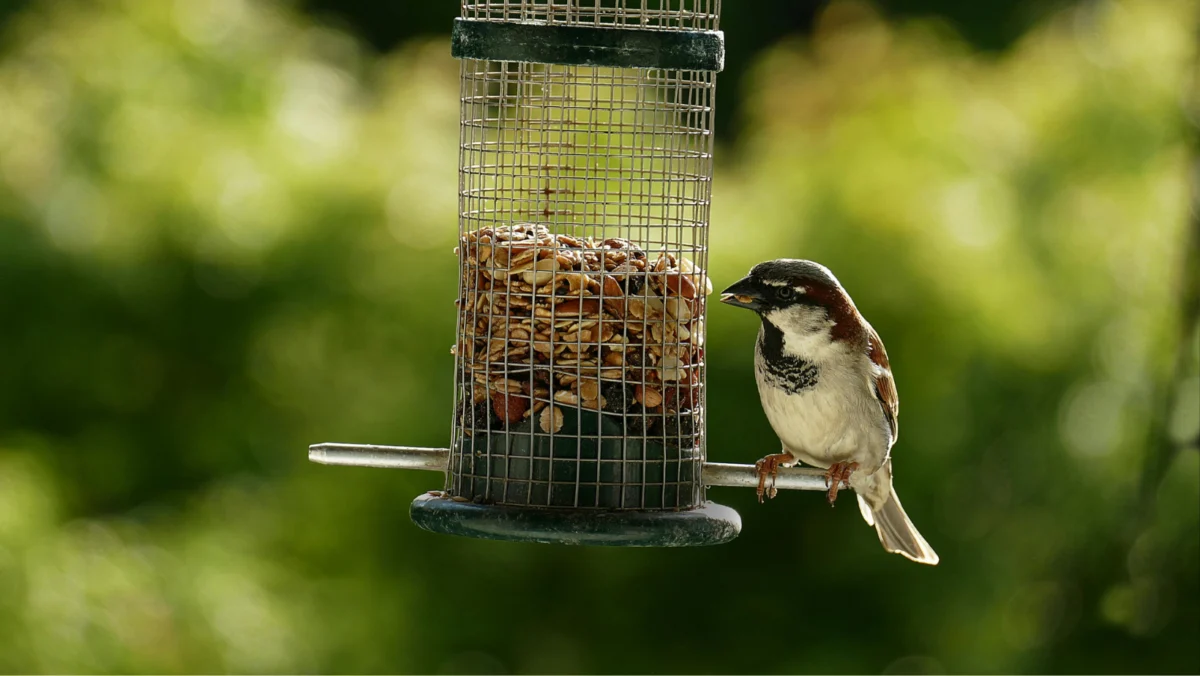
Yet, it was in this climate of modern, adolescent-led domesticity that a new ritual emerged. A simple request for a bird feeder—a project that initially seemed like a burdensome chore—has transformed into a vital source of therapeutic stillness.
The Science of Stillness: Supporting Data on Mindfulness and Chronic Pain
While McBride’s experience is deeply personal, it aligns with a growing body of research regarding the psychological and physiological benefits of mindfulness and "nature-based interventions" for those living with chronic pain.
The Role of Mindfulness in Pain Management
According to the Journal of Pain, mindfulness-based stress reduction (MBSR) can significantly alter the way the brain processes pain signals. Chronic pain often triggers a cycle of "catastrophizing," where the brain becomes hyper-focused on the sensation of pain, thereby increasing its intensity.
By shifting focus to external stimuli—such as the rhythmic movement of birds or the observation of nature—patients can create a "cognitive buffer." This does not eliminate the physical sensation of pain, but it lowers the emotional distress associated with it.
Nature and the Autonomic Nervous System
Studies conducted by the International Journal of Environmental Research and Public Health suggest that even brief exposure to nature—or simply observing wildlife—can lower cortisol levels and activate the parasympathetic nervous system. This "rest and digest" state is the direct physiological opposite of the "fight or flight" response often triggered by the stress of chronic health battles.
McBride’s observation of the "mockingbird hopping along the edge" is more than a hobby; it is a subconscious attempt to regulate her nervous system. When she notes that the pain and uncertainty "start to loosen their grip," she is describing a clinically recognized phenomenon where the brain’s attention is diverted away from internal pain receptors.
Official Perspectives: Navigating the Invisible Burden
Health professionals who work with families dealing with chronic illness often emphasize that the "big moments" are not the only ones that matter. The American Chronic Pain Association (ACPA) highlights that for patients dealing with long-term conditions, the ability to find "micro-joy" is a critical skill for preventing burnout.
Dr. Elena Vance, a specialist in pediatric chronic pain management, notes: "Families often fall into the trap of waiting for the ‘big win’—the remission, the successful treatment, the milestone. But in chronic conditions, the journey is not linear. Helping patients shift their focus to the ‘small reprieves’—what we might call ‘pacing through beauty’—is essential for mental health."
McBride’s reflection echoes this professional sentiment. She observes that while she used to believe "savoring the moment" meant clinging to the milestones of childhood, she now understands that it means acknowledging the existence of quiet, peaceful instances amidst the noise of medical necessity.
Implications: A New Definition of "Savoring"
The implications of McBride’s shift in perspective are significant for the broader community of individuals living with invisible disabilities or chronic pain.
1. Reframing the "To-Do List"
Often, those in pain feel immense guilt for being unable to complete tasks. By reclassifying the act of watching birds from a "chore" to a "therapeutic necessity," McBride effectively gives herself permission to rest. This is a vital step in self-advocacy.
2. The Transience of Joy
McBride acknowledges that these moments are fleeting—the birds fly away, and reality returns. Her realization that "the pain may not go away, but this brief reprieve gives me something to hold onto" is a profound lesson in acceptance. It moves away from the toxic positivity that suggests pain can be "thought away" and moves toward a more realistic model of coexistence with illness.
3. Strengthening Intergenerational Resilience
By engaging in this bird-watching ritual with her daughter, McBride is modeling a healthy coping mechanism for the next generation. As her daughter also manages chronic pain, the act of shared observation creates a bond that is not based on medical trauma, but on the shared appreciation of the natural world.
Conclusion: The Quiet Revolution
The story of Kari McBride is a testament to the power of deliberate observation. In a society that rewards constant productivity and milestone-chasing, she invites us to consider the value of the "in-between."
The birds in the backyard are not the cure for her pain, nor are they a replacement for the joy of her daughter’s first steps. Instead, they represent a conscious choice: to stop, to breathe, and to notice.
As she writes, "Maybe this is what it means to savor a moment." It is not about the monumental nature of an event, but the quality of attention we bring to it. For those walking the long, often painful road of chronic health challenges, this ability to find stillness is perhaps the most important milestone of all. It is a quiet revolution—a way to reclaim moments from the grip of illness, one bird, one breath, and one observation at a time.
In the final analysis, the significance of our lives is not solely measured by the heights we climb, but by the depth of our capacity to notice the world as it unfolds around us, even when our own bodies feel the weight of the climb.