










By Alex Hogan
Senior Multimedia Producer
June 12, 2026
The annual scientific sessions of the American Diabetes Association (ADA) in New Orleans are typically defined by the quiet hum of innovation—the unveiling of new clinical trials, the debate over insulin delivery mechanisms, and the quiet networking of the world’s leading endocrinologists. This week, however, the atmosphere was defined by something else entirely: security personnel, police threats, and the heavy-handed expulsion of five prominent researchers.
The incident, which saw respected medical professionals threatened with arrest for the "crime" of distributing printed copies of an editorial, has sent shockwaves through the biomedical research community. While the ADA issued a formal apology on Wednesday following days of intense public backlash, the incident has raised uncomfortable questions about academic freedom, the policing of intellectual discourse, and the evolving climate of scientific gatherings in the current political landscape.
The Chronology of a Crisis: From Handouts to Expulsion
The conflict began on the floor of the convention center, where a group of researchers sought to circulate an editorial addressing critical gaps in current diabetes policy. The document, which criticized certain industry-aligned research practices, was intended to stimulate discussion among attendees.
According to witnesses, the interaction escalated rapidly. Rather than engaging in a debate on the merits of the editorial, ADA security and event organizers framed the distribution as a violation of conference solicitation policies. Despite the researchers’ arguments that they were simply facilitating scientific discourse, the situation quickly moved from a verbal disagreement to a physical standoff.
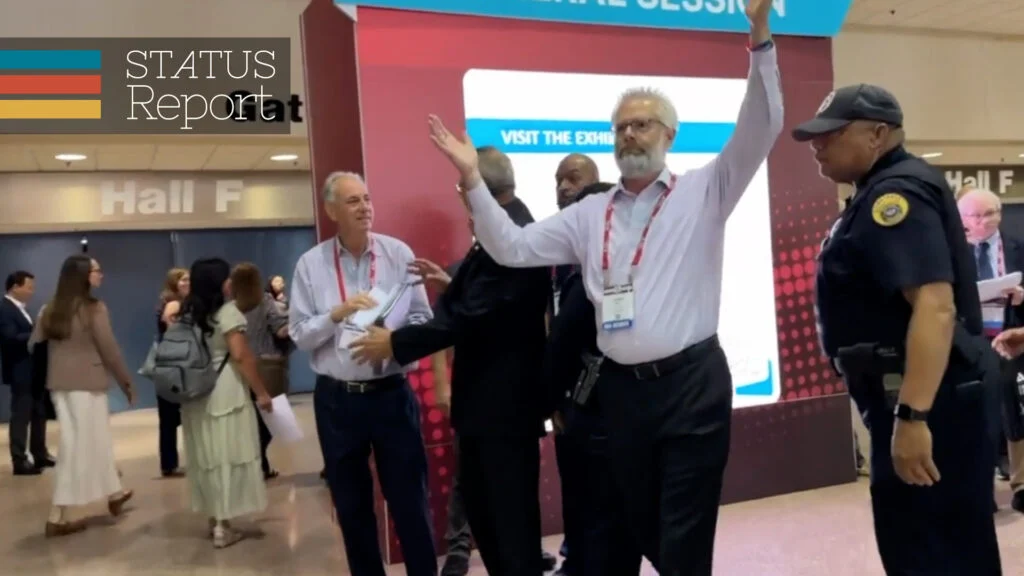
Security personnel informed the group that they were in breach of the association’s code of conduct. When the researchers stood their ground, asserting their right to share information, the ADA escalated the situation by involving local law enforcement. For many of the scientists present, the sight of colleagues—some of whom have dedicated decades to life-saving diabetes research—being threatened with handcuffs and arrest for distributing papers was a surreal departure from the professional norms of a medical conference.
By Monday evening, word had spread across social media, with attendees documenting the scene through photos and video snippets. The "New Orleans Incident" became a rallying cry for those who felt the ADA had abandoned its role as a champion of scientific inquiry in favor of rigid, corporate-style enforcement.
The Reaction on the Ground: A Community in Shock
In this week’s STATus Report, I sat down with STAT cardiovascular disease reporter Elizabeth Cooney, who was on the ground in New Orleans throughout the conference. Her account provides a chilling look at the mood inside the convention center.
"The disbelief was palpable," Cooney noted. "You have researchers who are used to intense, rigorous debate—that is the nature of the field. But to see that debate silenced by security guards? It signaled a profound shift in how the ADA perceives its own members."
According to Cooney, the sentiment among attendees was not just one of sympathy for the expelled, but of genuine fear. If five leading experts could be removed for a minor infraction, what does that mean for the next generation of researchers? Does it create a "chilling effect" where controversial or critical data is suppressed to avoid the scrutiny of conference organizers?
The reaction was immediate and vocal. Throughout Tuesday, prominent voices in the diabetes community took to X (formerly Twitter) and professional listservs to condemn the ADA’s actions. Many called for a boycott of future sessions, while others demanded the resignation of those responsible for ordering the expulsion.
Official Responses: A Mea Culpa or Damage Control?
For 48 hours, the ADA remained largely silent, offering only vague statements about "adhering to established protocols." This stonewalling served only to intensify the fire. It wasn’t until Wednesday morning that the organization released a formal apology.
"The American Diabetes Association deeply regrets the events that took place in New Orleans," the statement read in part. "We recognize that our response was disproportionate and that we failed to uphold the values of open scientific exchange that this organization was built upon. We are currently reviewing our policies regarding literature distribution and security protocols to ensure this never happens again."

However, for many in the research community, the apology feels like a hollow gesture—a calculated move to mitigate reputational damage rather than an earnest reflection on a fundamental failure of leadership. Critics argue that the ADA failed to address the why—why did they feel it was appropriate to call police on doctors? Why was the distribution of an editorial treated as a security threat?
The lack of personal accountability—no specific leadership figures have stepped down or been publicly reprimanded—suggests that the organization may be looking to move past the incident without addressing the underlying culture that allowed it to happen.
The Broader Context: Biomedical Research in the Second Trump Administration
The New Orleans incident cannot be viewed in a vacuum. It is occurring against the backdrop of a highly charged political environment during the second Trump administration. Over the past year, we have seen a noticeable trend toward the politicization of scientific bodies.
Funding agencies, medical associations, and research institutions are all navigating a climate where "neutrality" is increasingly defined by those in power. Many researchers report a growing pressure to align their public statements with prevailing political winds, leading to a climate of self-censorship.
The ADA’s overreaction might be symptomatic of this broader anxiety. In an era where scientific institutions are constantly under attack—from accusations of "woke science" to challenges regarding institutional funding—there is a heightened, perhaps panicked, desire to project an image of total control and order. By clamping down on "unauthorized" materials, the ADA may have been attempting to project a sanitized version of the conference to avoid any external political backlash. Instead, they created the very spectacle they sought to avoid.
Implications: Where Does the ADA Go From Here?
The fallout from this week will be felt for years. The trust between the ADA and its members is, at least for now, fractured. When researchers feel that their own organization is the primary obstacle to the free flow of information, the mission of the organization itself is compromised.
1. The Erosion of Intellectual Freedom
If medical conferences become spaces where only "sanctioned" information can be shared, they lose their primary purpose. Science thrives on friction. If the ADA continues to prioritize order over inquiry, they risk driving the most innovative minds toward smaller, more agile, and less restrictive platforms.
2. A Call for Governance Reform
There is already a growing movement calling for a complete overhaul of the ADA’s board and administrative policies. Members are demanding transparency regarding how security decisions are made and a clear policy shift that guarantees the right of researchers to share peer-reviewed or editorialized content within the conference venue.
3. The Future of Scientific Meetings
The New Orleans incident serves as a cautionary tale for other medical societies. The American Heart Association, the American Society of Clinical Oncology, and others will be watching closely. They must now decide how to balance the need for logistical organization with the essential requirement for intellectual freedom. If they lean too far into the former, they risk the same public relations disaster that has now engulfed the ADA.
Conclusion: A Turning Point for Scientific Discourse
As the dust settles in New Orleans, the ADA finds itself at a crossroads. They can either continue to defend their actions as a procedural necessity, or they can use this crisis as a catalyst for genuine, uncomfortable change.
The researchers who were expelled—who stood their ground for the sake of an editorial—have unintentionally highlighted the most important issue facing our scientific institutions today: Who owns the conversation? Is it the administrators, the sponsors, and the security firms, or is it the researchers themselves?
For now, the ADA has apologized, but the questions remain. The scientific community is watching, and for the thousands of researchers who dedicate their lives to curing diabetes, an apology is only the first step. True restoration of trust will require more than a press release—it will require a fundamental recommitment to the messy, sometimes inconvenient, and always vital process of free scientific inquiry.
In the coming months, we will see if the ADA is capable of such a transformation. Until then, the memory of the "New Orleans Five" will serve as a stark reminder of what happens when the spirit of science is silenced by the heavy hand of bureaucracy.