











For decades, the fitness industry has fixated on the "six-pack" aesthetic, emphasizing repetitive crunches and sit-ups as the gold standard of abdominal health. However, as we cross the threshold into our mid-sixties, the paradigm of fitness must shift from vanity to vitality. For those over 65, the core is not merely a visual feature—it is the central nervous system of human movement.
As a professional trainer with 15 years of experience, I have observed that true core strength is rarely about the number of repetitions you can perform. Instead, it is about endurance, stabilization, and the ability to maintain structural integrity under pressure. Whether you are navigating an uneven sidewalk, hoisting groceries from the trunk of your car, or catching yourself after a momentary stumble, your abdominal and back muscles are the primary stabilizers keeping you upright and injury-free.
The Science of Stability: Why the Plank Reigns Supreme
The traditional crunch is a dynamic movement that targets specific muscles through a limited range of motion. In contrast, the plank is an isometric exercise—meaning it requires your muscles to generate force while staying still. This distinction is critical for older adults.
A properly performed plank engages the entire "core canister": the rectus abdominis, the obliques, the transverse abdominis, the erector spinae (lower back), and the glutes. It forces these groups to work in a coordinated, synchronized effort to resist gravity. When you hold a plank, you are training your body to maintain a neutral spine and a stable pelvis, which is the exact biomechanical requirement for fall prevention and efficient locomotion.
The challenge of the plank does not come from explosive power or heavy resistance; it comes from the quiet, persistent buildup of fatigue. By testing your ability to maintain form as your muscles tire, you gain a diagnostic look at your functional stability—a metric that carries far more weight for daily living than any number of crunches ever could.
The Plank Test: A Benchmark for Functional Independence
Before engaging in any new fitness routine, it is essential to approach the plank with a "quality-first" mindset. If you have a history of chronic lower back pain, shoulder impingement, or wrist instability, please consult with a medical professional or a certified trainer before attempting this test.
How to Execute the Assessment
- Setup: Place a high-quality exercise mat on a flat, non-slip surface.
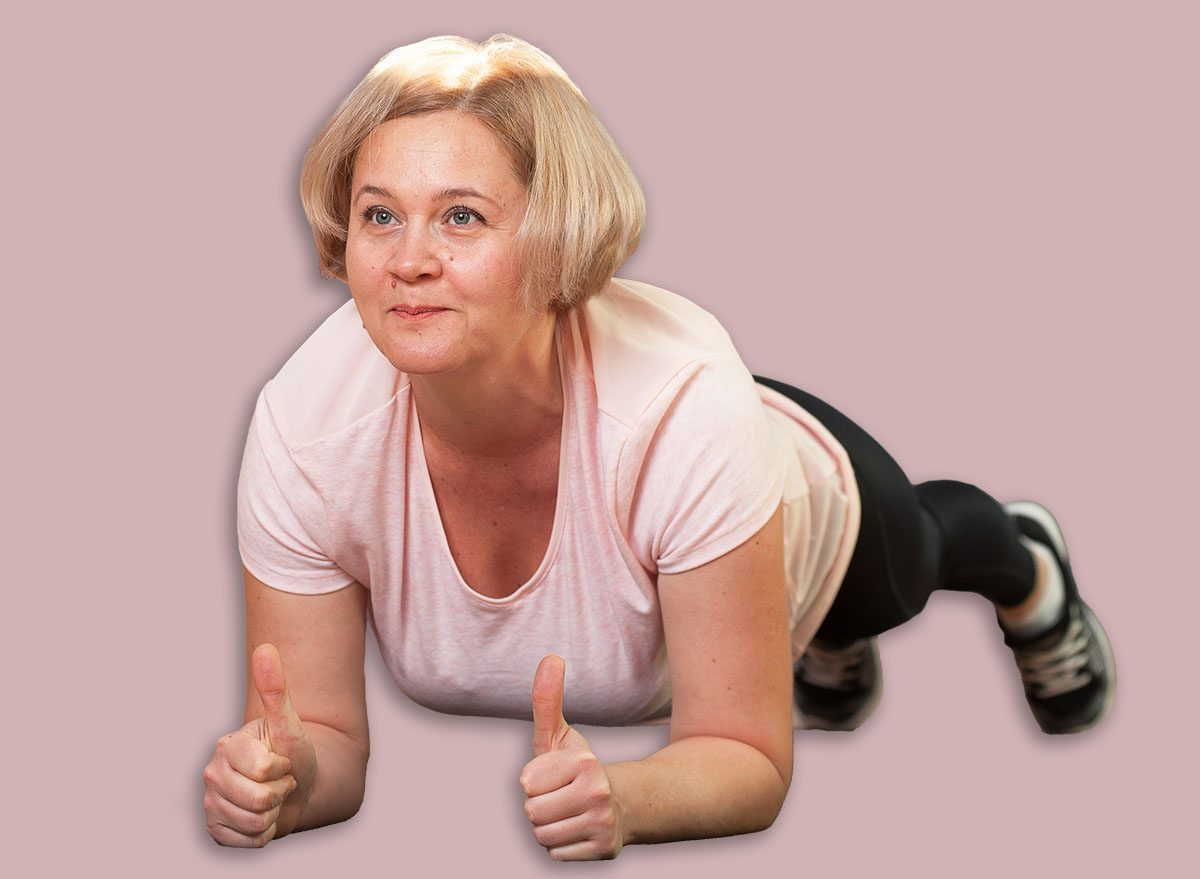
- Position: Assume a forearm plank position. Your elbows should be directly beneath your shoulders, forearms parallel, and your toes tucked.
- Engagement: Squeeze your glutes, engage your quads, and draw your navel toward your spine. Ensure your body forms a straight line from your head to your heels.
- The Clock: Start your timer the moment you lift your hips off the floor.
- The Termination Point: The test ends the moment your form breaks. This includes sagging hips, an arched lower back, or "turtling" (shrugging your shoulders toward your ears). Do not push through pain; the moment you cannot maintain a straight line, the test is over.
Interpreting Your Results: Where Do You Stand?
The goal of this test is not to set a world record; it is to establish a baseline. Your time is a snapshot of your current muscular endurance and serves as a roadmap for your training.
- Under 20 Seconds: If your form wavers early, do not view this as a failure. You have identified a specific area of opportunity. At this level, your focus should be on building a foundational habit rather than hitting a high number.
- 20–45 Seconds: You have successfully built a base of support. You are currently in the "maintenance and improvement" phase. Focus on refining your breathing—if you are holding your breath, you are not truly stabilizing.
- 45–60 Seconds: This represents solid core endurance for the over-65 demographic. Maintaining this for a full minute indicates that your deep stabilizers are firing correctly.
- 60–90 Seconds: You are performing at an elite level for your age group. Achieving this duration with perfect, non-strained form suggests your body is well-equipped to handle the physical stressors of daily life.
- 90+ Seconds: You possess exceptional core stability. At this level, your body has developed high-tier muscular endurance, allowing you to remain stable even when fatigue sets in.
Chronology of Progress: Building Your Strength
If your initial test result was under 30 seconds, there is no need for discouragement. The core is an incredibly adaptive system. By following a structured approach, you can see significant improvements in as little as four to six weeks.
Phase 1: The Accumulation Period (Weeks 1-2)
Do not attempt to hold one long, failing plank. Instead, break your work into manageable sets. Try performing three sets of 15-second planks with 45 seconds of rest in between. This teaches your muscles how to "fire" correctly without allowing your form to deteriorate due to exhaustion.
Phase 2: The Progressive Overload (Weeks 3-4)
Once you can perform your sets with perfect form, begin adding five seconds to each hold. If you find the floor too challenging, start with an elevated plank. Place your forearms on a sturdy kitchen counter or a stable weight bench. An elevated plank reduces the gravitational load while still requiring the same core activation.
Phase 3: The Integration Period (Week 5 and Beyond)
To build a truly functional core, you must train in multiple planes of motion. Supplement your plank practice with "The Big Four" of functional core training:
- Dead Bugs: Excellent for teaching the spine to stay neutral while the limbs move.
- Bird Dogs: Crucial for cross-body coordination and lower back health.
- Glute Bridges: Your glutes are the anchor for your core; if they are weak, your back will compensate.
- Controlled Sit-to-Stands: A functional movement that translates directly to the ease with which you get in and out of chairs or vehicles.
Implications for Long-Term Health
Why does this matter? For the aging population, the loss of core strength is a leading contributor to "frailty syndrome." When the core is weak, the body loses its ability to transfer force efficiently. This results in an over-reliance on the lumbar spine for movements like bending over to pick up a package, which significantly increases the risk of herniated discs and muscle strains.

Furthermore, a strong core acts as a stabilizer for your center of gravity. When you trip on an uneven surface, a strong core allows you to make micro-adjustments in your posture, effectively turning a potential fall into a simple stumble. By prioritizing the plank, you are investing in your long-term independence.
Professional Perspective: Consistency Over Intensity
As a trainer, I often remind my clients that the most dangerous approach to fitness is "weekend warrior" syndrome—trying to do too much, too quickly, after a long period of inactivity. Your core stability is a lifelong project.
If you can reach the one-minute mark with clean technique, you have achieved a level of stability that will pay dividends in every facet of your life. You will stand taller, walk with more confidence, and move through the world with a reduced fear of injury.
Final Advice
Do not rush the process. If your form breaks, stop, rest, and reset. The goal is not to "survive" the exercise; the goal is to master your body’s ability to remain rigid under load. By dedicating just five to ten minutes a day to these movements, you are not just exercising—you are fortifying your body against the inevitable challenges of aging.
Your core is the bridge between your upper and lower body. Keep that bridge strong, and you will continue to lead an active, vibrant, and independent life for years to come.