







KINSHASA, Congo — The Democratic Republic of the Congo is currently grappling with a severe public health crisis as the confirmed case count for the latest Ebola outbreak climbs to 782, with 181 fatalities reported by the Ministry of Health. This surge, announced via social media on Sunday, highlights the compounding difficulties of managing a lethal viral hemorrhagic fever in one of the world’s most volatile and geographically challenging regions.
The outbreak, which involves the rare Bundibugyo strain of the Ebola virus, presents a distinct challenge to international health organizations and local authorities alike. Unlike the more common Zaire strain, which has been the catalyst for the majority of the nation’s previous 16 outbreaks, the Bundibugyo variant lacks an approved, widely available vaccine or specific antiviral treatment, forcing responders to rely on supportive care and aggressive containment strategies.
The Core Facts: A Growing Public Health Emergency
As of the latest update from the Congolese Ministry of Health, the outbreak has resulted in a 23% fatality rate. While 56 patients have successfully recovered, the disparity between confirmed cases and the suspected reality on the ground remains a profound concern for epidemiologists.
The crisis is heavily concentrated in the eastern province of Ituri, which accounts for more than 90% of all reported cases. Smaller clusters have been identified in the North and South Kivu provinces, and the virus has successfully crossed international borders, with confirmed cases recorded in neighboring Uganda.
Health officials have expressed alarm over the erosion of contact tracing efforts. The current coverage rate stands at just 56%, a sharp decline from the previous week. This metric is the "gold standard" for measuring how effectively the medical community can identify, isolate, and monitor individuals who have been exposed to the virus. When this percentage drops, the window for containing the virus narrows significantly, increasing the probability of exponential spread.
A Chronological Perspective: From Detection to Disruption
The current outbreak was officially confirmed on May 15. However, retrospective epidemiological analysis suggests the virus was circulating in remote communities for weeks prior to its identification. This "hidden window" allowed the virus to gain a foothold in densely populated, highly mobile communities.
- Mid-May: Initial clusters identified in Ituri; health authorities announce the outbreak.
- Late May: The virus begins to move through artisanal mining networks, complicating movement patterns and making identification of contacts nearly impossible.
- June: Cross-border transmission is confirmed in Uganda, escalating the crisis from a national emergency to a regional security threat.
- July: Contact tracing efficiency drops to 56% as security concerns and logistical barriers reach a breaking point.
- Current Status: The government continues to battle misinformation and conflict while attempting to stabilize the quarantine protocols.
Supporting Data: The Geography of Risk
The challenges in Congo are not merely clinical; they are deeply tied to the environment and the socio-political climate.
The Ituri Factor
Ituri is a province defined by dense, impenetrable rainforests, poor infrastructure, and a lack of reliable road networks. In many cases, reaching a remote village to investigate a suspected infection can take several days of travel. When medical teams do arrive, they are often met with a transient population.
The Mobile Workforce
The region is home to thousands of artisanal miners—individuals who move frequently between remote, informal work sites. These miners, often working in precarious conditions, operate outside of formal registration systems, making them "invisible" to public health officials. By the time a miner displays symptoms, they may have already traveled hundreds of kilometers, potentially spreading the virus to transit hubs and urban centers.
Displacement and Conflict
According to the United Nations humanitarian office, nearly one million people have been displaced in Ituri due to ongoing armed conflict. This mass movement of people is the primary driver of the current lack of contact tracing efficacy. Families fleeing violence do not prioritize health screenings, and their constant migration makes it impossible for the Ministry of Health to maintain a consistent follow-up schedule.
Official Responses and Tactical Hurdles
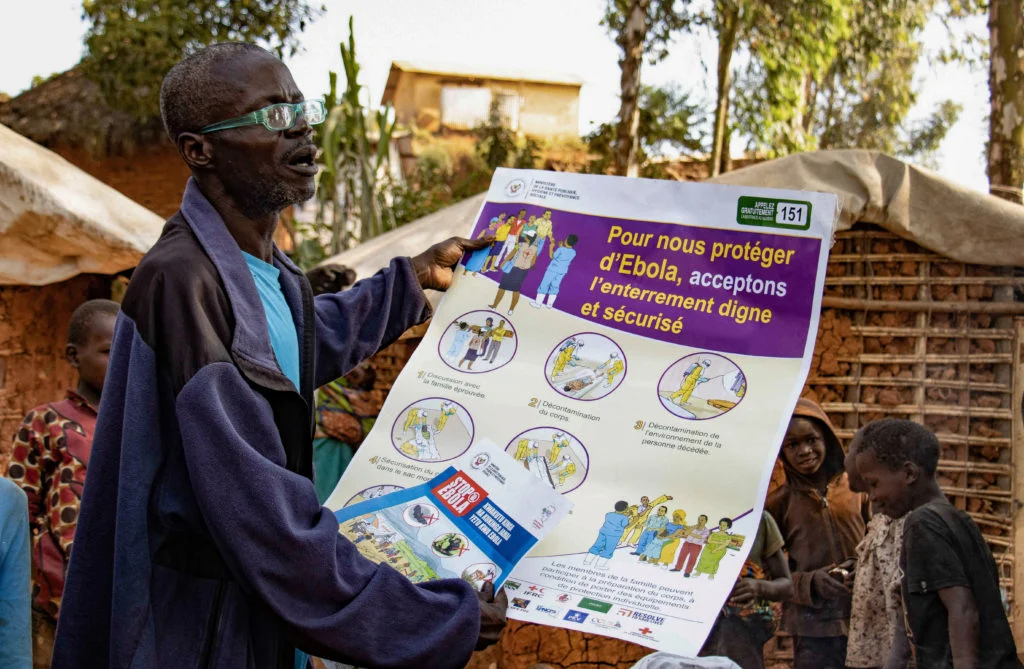
The Ministry of Health’s efforts are being hampered by a "perfect storm" of resistance. Local skepticism toward health workers—stemming from a lack of historical investment in these communities—has occasionally manifested in violent attacks on medical personnel. These attacks, often fueled by misinformation, have forced teams to pause operations in several high-risk areas.
The International Dimension
The global community has been watching with concern. Last month, U.S. officials outlined a contingency plan for American citizens exposed to the virus while working in the region. The proposal to utilize the Laikipia Air Base in Kenya for a 50-bed quarantine facility was met with fierce backlash from local communities, leading to protests and a subsequent injunction by the Kenyan courts that halted construction.
This controversy underscores a growing theme in global health: the friction between the need for high-security containment facilities and the rights and anxieties of local populations. The diplomatic and logistical fallout of this failed initiative has left a void in the evacuation plans for international aid workers, further complicating the recruitment of necessary medical staff.
Implications: The High Cost of the Bundibugyo Strain
The Bundibugyo virus, first identified in 2007 in the Bundibugyo District of Uganda, is known for its high mortality rate, which in some previous outbreaks has climbed as high as 40%. Because there is no vaccine, the medical response relies entirely on early intervention, rehydration, and the management of symptoms.
Clinical Challenges
Without a prophylactic vaccine, the burden falls on the "ring vaccination" and isolation protocols. However, these protocols are rendered ineffective when health workers cannot access the "rings" of contacts. The current 23% mortality rate is considered unstable; should the healthcare system in Ituri become completely overwhelmed by the volume of cases, that percentage is expected to climb.
Economic and Humanitarian Consequences
The economic impact on the region is profound. The closure of markets, the restriction of movement for miners, and the fear associated with the outbreak have crippled local trade. Moreover, the focus on Ebola has diverted resources away from other critical health services, such as malaria prevention and maternal care, leading to a "secondary mortality" surge that often goes uncounted in official Ebola statistics.
The Path Forward
To turn the tide, the Congolese government, supported by the World Health Organization and other international NGOs, must navigate a path of diplomacy. The success of the intervention depends on:
- Community Engagement: Replacing distrust with collaboration by hiring local leaders and community members to lead the response.
- Infrastructure Investment: Improving the mobile laboratory capacity to reduce the time between testing and diagnosis.
- Conflict Mediation: Securing humanitarian corridors in active combat zones to allow health workers to reach the most vulnerable populations.
The situation remains fluid. As the number of cases continues to tick upward, the international community faces a difficult question: how to effectively manage a deadly, rare pathogen in a region where the social contract has been fractured by years of conflict and instability. The coming weeks will be decisive in determining whether this outbreak can be contained within the eastern provinces or if it will continue its march across the borders of Central Africa.