









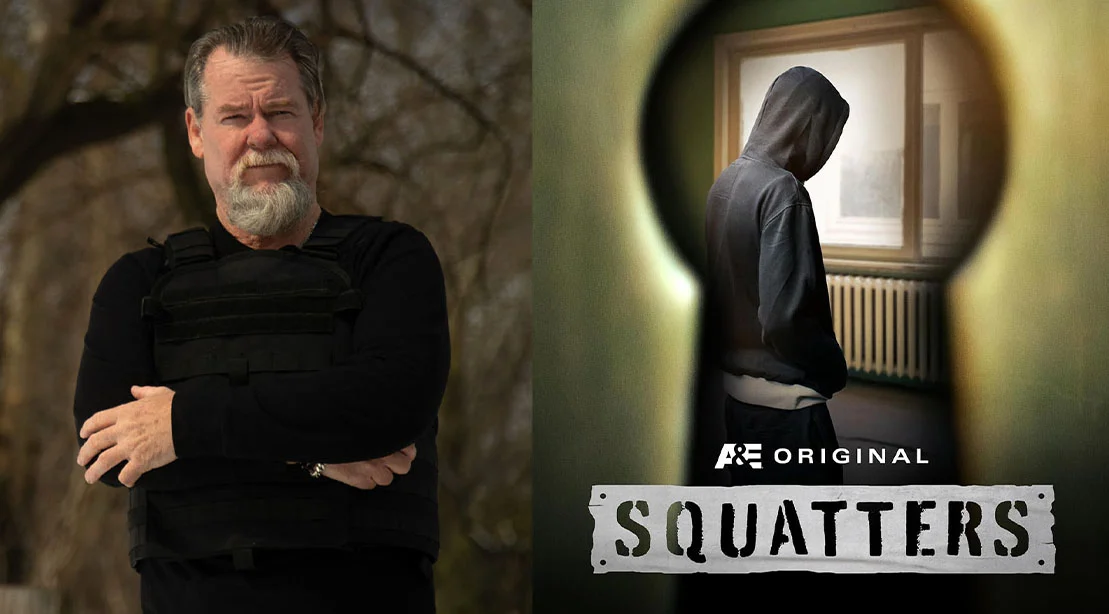
In the landscape of modern American property rights, a new, unconventional figure has emerged: Flash Shelton. Known to millions as the star of A&E’s hit reality docuseries Squatters, Shelton has carved out a unique niche as a private advocate for homeowners trapped in the bureaucratic nightmare of illegal occupancy. While his imposing physical stature and background in combat sports suggest a man prone to confrontation, Shelton insists his most effective weapon is not a fist, but a strategic, de-escalated approach to reclaiming what is rightfully his clients’.
The Origin Story: From Personal Trauma to Public Crusader
The phenomenon of the "Squatter Hunter" did not begin with a desire for fame or a calculated business plan; it was born from personal desperation. In 2019, following the death of his father, Shelton was tasked with preparing his mother’s home for sale. The plan was simple, but the reality turned chaotic when a group of more than half-a-dozen squatters moved into the property, effectively seizing control.
When Shelton turned to local law enforcement for help, he hit a wall familiar to thousands of homeowners across the United States. Because of the complex nature of tenant-landlord laws, police often classify squatter situations as "civil matters" rather than criminal trespass, leaving property owners in a state of legal gridlock.
Realizing that the system was not built to provide immediate relief, Shelton took a proactive approach. He meticulously researched the law, identified legal loopholes, and waited for the opportune moment. When the occupants left the premises, Shelton entered with a legally signed rental agreement from his mother, effectively reclaiming possession of the property. He then informed the squatters that their presence was no longer legal and that they faced imminent prosecution. The tactic worked, and the squatters vacated. This ordeal served as the catalyst for his transformation into a professional property liberator, a role that has since turned into a mission to advocate for legislative reform.
A Background in Combat and De-escalation
Shelton’s effectiveness in high-stakes environments is deeply rooted in his professional history. His resume reads like the script of an action film: he spent years as a nightclub bouncer, a profession that requires a mastery of reading people and controlling chaos. He later transitioned into competitive boxing and mastered Wing Chun Kung Fu, a Southern Chinese martial art that emphasizes close-range efficiency and structural stability.
However, Shelton is quick to dispel the "tough guy" myth. He argues that violence is the antithesis of a successful eviction. "I always say that I’m the original Roadhouse," Shelton jokes, referencing the cult-classic film about a bouncer, but he is quick to pivot to his modern-day philosophy. "If my physical body is already escalated when we have our first confrontation, I’m going to have a very difficult time."
To prepare for the unpredictable, Shelton has sought formal certification in de-escalation techniques. Before approaching a property, he engages in meditation to lower his heart rate, ensuring he enters the environment with a cool head. He views his physical strength as a secondary tool—something to be used strictly for defense or to protect his team, which includes his son, Michael, and colleague, Cameron.
The Psychological Tactics of Reclaiming Property
Shelton’s methods are rarely standard. In his work, he often employs "psychological warfare" to make the property an undesirable environment for trespassers. In one memorable instance from his series, he utilized a fear of snakes, placing reptiles around the property to create an environment that the squatters found untenable.
He often adopts the persona of a "nightmare roommate," moving into the property and making life so uncomfortable for the unauthorized occupants that they choose to leave on their own accord. By turning the tables, Shelton forces the squatters to deal with the same loss of control that they inflicted on the homeowner.
The Legal Landscape and Policy Implications
The rise of the "Squatter Hunter" highlights a profound systemic failure in current real estate and criminal law. In many jurisdictions, once a person establishes "residency"—even through illegal means—they are granted certain due process rights that prevent a homeowner from simply changing the locks.
Shelton believes these laws, while intended to protect legitimate tenants, are being weaponized by individuals who move from house to house. "There was a problem, and it’s a worldwide problem," Shelton notes. "I felt like I needed to work to change laws. I was getting a lot of attention, and I wanted to put that toward something good."
Supporting Data: The Rising Tide of Illegal Occupancy
While exact national statistics are difficult to quantify due to the way police departments categorize these incidents, reports of squatter activity have seen an uptick in major metropolitan areas post-2020. The combination of post-pandemic housing shortages and the normalization of "tenant rights" rhetoric has led to an environment where property owners are increasingly vulnerable.
Legal experts point to the "adverse possession" laws and various state-specific statutes that allow squatters to claim "color of title," which can drag out the eviction process for months or even years. For many homeowners, the cost of litigation—often exceeding tens of thousands of dollars in legal fees—makes them effectively lose their property even if they technically own the deed.
Proactive Defense: Advice from the Hunter
Shelton is adamant that the best way to deal with a squatter is to never allow them to gain a foothold in the first place. His primary piece of advice to homeowners is the installation of high-quality, motion-activated surveillance cameras.
"If I had a camera on my mom’s house originally, I wouldn’t be the Squatter Hunter today," he asserts. Surveillance footage provides objective evidence of the entry, which is the "golden ticket" for law enforcement to distinguish between a civil tenancy dispute and criminal trespassing. By proving that an individual entered a property illegally and without permission, a homeowner can often bypass the months-long eviction court process and secure an immediate police response.
Conclusion: A Controversial Necessity?
Flash Shelton’s work occupies a polarizing space in public discourse. Critics argue that taking the law into one’s own hands is dangerous and potentially illegal, cautioning against the risks of physical altercation. Supporters, however, see him as a necessary interventionist in a broken legal system that favors the predator over the property owner.
As Squatters continues to air on A&E, Shelton remains a figure of intense public interest. Whether one views him as a modern-day vigilante or a necessary advocate, his impact on the conversation surrounding property rights is undeniable. He has successfully highlighted the need for clearer statutes, better enforcement, and, most importantly, the proactive protection of one’s home.
For those looking to learn more about the legal and physical realities of property security, Shelton’s journey serves as both a cautionary tale and a blueprint for action. In an era where the definition of "home" can be challenged by an opportunistic stranger, Shelton stands as a reminder that the responsibility for protection often falls back on the individual.
Viewing Information:
Squatters airs Tuesdays at 10:00 PM and 10:30 PM ET/PT on A&E. Episodes are available for streaming on the A&E App and On Demand the day following the broadcast. For updates, behind-the-scenes content, and further insights into his methodology, follow Flash Shelton on his official Instagram account.