





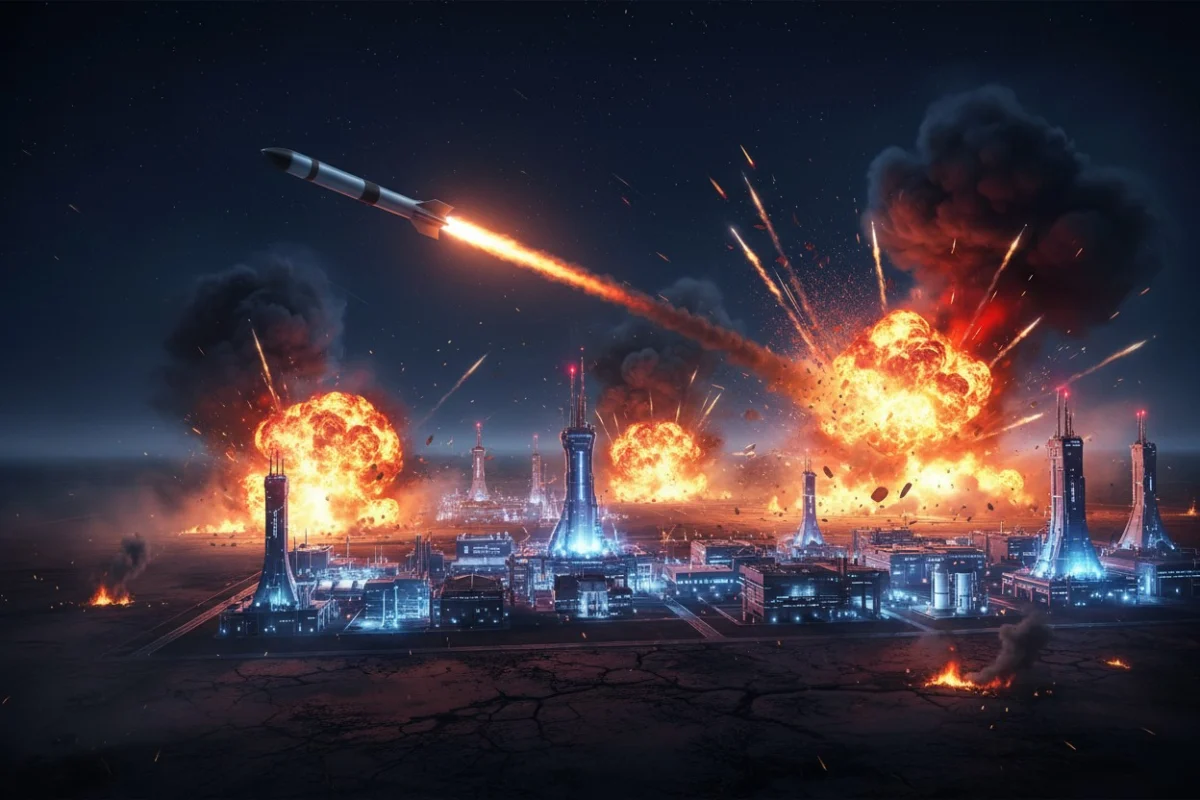
The ongoing conflict between Russia and Ukraine has entered a volatile new phase characterized by a relentless cycle of long-range aerial retaliation. Overnight from Monday into Tuesday, the two nations engaged in one of the largest drone exchanges of the war, signaling a strategic shift toward sustained, high-intensity strikes against critical industrial and logistical infrastructure. As Ukrainian President Volodymyr Zelensky attends the G7 summit in France to secure further international support, the skies above both nations have become the primary theater for a grueling war of attrition.
A Night of Reciprocal Strikes: The Tactical Landscape
The escalation reached a fever pitch overnight, with both Moscow and Kyiv reporting massive aerial salvos. Russian air defense systems, stretched across the breadth of the federation, reportedly intercepted 172 Ukrainian drones, including a significant swarm of 60 targeting the capital, Moscow. Simultaneously, Ukraine faced a grueling barrage of 132 Russian-launched munitions—a combination of drones and missiles.
Despite the high interception rates claimed by both ministries of defense, the sheer volume of incoming fire ensured that multiple projectiles bypassed air defenses. Ukraine’s Air Force confirmed that while 114 Russian drones were neutralized, the remaining 16 drones and two missiles successfully impacted nine distinct locations. This exchange highlights a grim reality: regardless of the sophistication of modern air defense networks, the sheer saturation of cheap, mass-produced drones is increasingly capable of overcoming even the most heavily fortified defensive perimeters.
Chronology of Escalation: Nine Days Over Moscow
For nine consecutive days, Moscow has been the primary target of a sustained drone campaign, marking the most significant period of aerial vulnerability for the Russian capital since the onset of the full-scale invasion. Mayor Sergey Sobyanin confirmed that Tuesday’s attack was the most intense since May 17, when authorities reported 81 drones downed.
The tactical focus of these strikes has shifted toward strategic energy infrastructure. The most notable hit during this recent surge involved the Moscow Oil Refinery in the Kapotnya District. Owned by energy giant Gazprom, the facility is a cornerstone of the capital’s economy, responsible for supplying approximately 40% of Moscow’s gasoline. The damage to such a critical asset illustrates a clear Ukrainian objective: to degrade the Kremlin’s domestic war machine by striking the very heart of its energy logistics.
Regional Governor Andrei Vorobyov reported that 86 drones were intercepted over the broader Moscow region alone, with six injuries confirmed. The impact was felt far beyond the military sphere; the regional aviation authorities were forced to impose sweeping flight restrictions at all four of Moscow’s major international airports—Domodedovo, Vnukovo, Zhukovsky, and Sheremetyevo. These disruptions cascaded across the country, affecting over a dozen airports from the Black Sea resort of Sochi to the industrial hub of Nizhnekamsk, located 750 miles from the Ukrainian border.
Supporting Data: The Exponential Rise of the Drone War
The statistics from 2026 paint a stark picture of how rapidly the drone war has evolved. According to reports from Mayor Sobyanin, Russian forces have already intercepted 1,134 Ukrainian drones over Moscow this year. For context, the total number of intercepts for the entirety of 2025 was 734. This 54% increase in just six months underscores the rapid industrial scaling of Ukraine’s "long-range sanctions" campaign.
Ukrainian officials, including Andriy Kovalenko of the Counter-Disinformation Center, have framed this campaign as a necessary response to Russia’s overwhelming military presence. By deploying drones to strike deep into the Russian interior, Ukraine aims to force Moscow to stretch its air defense assets, which are currently concentrated around the capital, thereby creating vulnerabilities elsewhere. However, the data suggests that even the deployment of Russia’s most advanced missile and air defense systems around Moscow has not been enough to achieve a "zero-penetration" defense.
Official Responses and the Diplomatic Front
The response from the Kremlin has been one of punitive retaliation. The Russian Defense Ministry stated that its overnight barrage—which saw debris ignite an oil storage facility in the village of Poltavskaya and damage residential structures in Elektrostal—was a direct response to Ukrainian strikes on Russian strategic air bases. The Ministry maintained that all "designated facilities" were hit, framing the civilian and industrial collateral damage as a necessary byproduct of a defensive posture.
In contrast, President Zelensky used his platform at the G7 summit in Evian-les-Bains to emphasize the legitimacy of the strikes. Sharing a video on Telegram of the burning Moscow refinery, Zelensky asserted, "Russia must be compelled to end the war against our people, and Ukrainian long-range weapons are one of the important components of such coercion."
Zelensky’s presence at the G7, where he held meetings with Western leaders including U.S. President Donald Trump, served as a pivot point for his diplomatic efforts. His message to the G7 was clear: Western support must be coupled with the permission and the means to strike deep into Russian territory. By linking the burning refinery to the necessity of Western weaponry, Zelensky is attempting to shift the diplomatic narrative from one of "defense" to one of "strategic coercion."
Implications: A Fundamental Shift in Warfare
The current drone war represents a tectonic shift in the nature of modern conflict. Much like the strategic bombing campaigns of the 1940s, both sides are now prioritizing the destruction of industrial and refining capacity to cripple the enemy’s long-term warfighting capability. However, the use of drones—which are relatively inexpensive, expendable, and difficult to track—marks a departure from the high-cost, high-risk manned sorties of the past.
Psychological Warfare
Beyond the physical destruction of oil refineries and the disruption of air traffic, the nine-day assault on Moscow carries profound psychological weight. For millions of Russians, the war was previously a distant reality experienced through state-controlled media. Now, the roar of drones over Moscow, the closure of airports, and the smoke rising from local refineries have brought the conflict into the daily lives of the urban population. This psychological pressure is a central pillar of Ukraine’s long-range strategy, aimed at eroding the domestic consensus that sustains the Kremlin’s war effort.
The War of Attrition
As the war enters its fourth year, the prospect of a diplomatic resolution remains increasingly elusive. Russia’s ability to sustain its missile and drone production, despite international sanctions, suggests that Moscow is prepared for a long-term conflict. Conversely, the growth of Ukraine’s domestic drone industry indicates that Kyiv has successfully decentralized its military production, making it more resilient to Russian strikes.
The reciprocal nature of these attacks creates a dangerous feedback loop. Every Ukrainian strike on Russian energy infrastructure is met with a Russian strike on Ukrainian logistics or residential centers. As the G7 leaders deliberate on the future of aid, the reality on the ground remains brutal: a grinding, high-tech war of attrition where the primary objective is to outlast the opponent’s industrial capacity and political will.
Conclusion: No Clear Exit
The events of the past week demonstrate that neither side possesses the current military strength to achieve a decisive breakthrough on the front lines. Instead, both are relying on the "long-range war" to weaken the opponent’s rear. As long as Russia maintains its bombardment of Ukraine and Ukraine continues to expand its reach into the Russian heartland, the human and economic cost will continue to climb.
With no diplomatic breakthrough in sight at the G7 and the battlefield reaching a stalemate of attrition, the conflict has transitioned into a race of industrial endurance. The question that remains for global observers is whether the increasing frequency of these strikes will eventually force a shift in policy, or whether the skies above Europe will remain a permanent, burning theater of an escalating drone war.
Sources for further reading: