








The American political landscape regarding reproductive rights has undergone a tectonic shift since the Supreme Court’s 2022 decision in Dobbs v. Jackson Women’s Health Organization, which overturned Roe v. Wade. While the Republican Party remains largely unified in its opposition to abortion, the broader electorate is experiencing a profound transformation. Increasingly, Democrats and independents are coalescing around the view that abortion should be a protected legal right, and in a striking development, even some traditional conservatives are beginning to question their long-held views as the reality of state-level bans hits home.
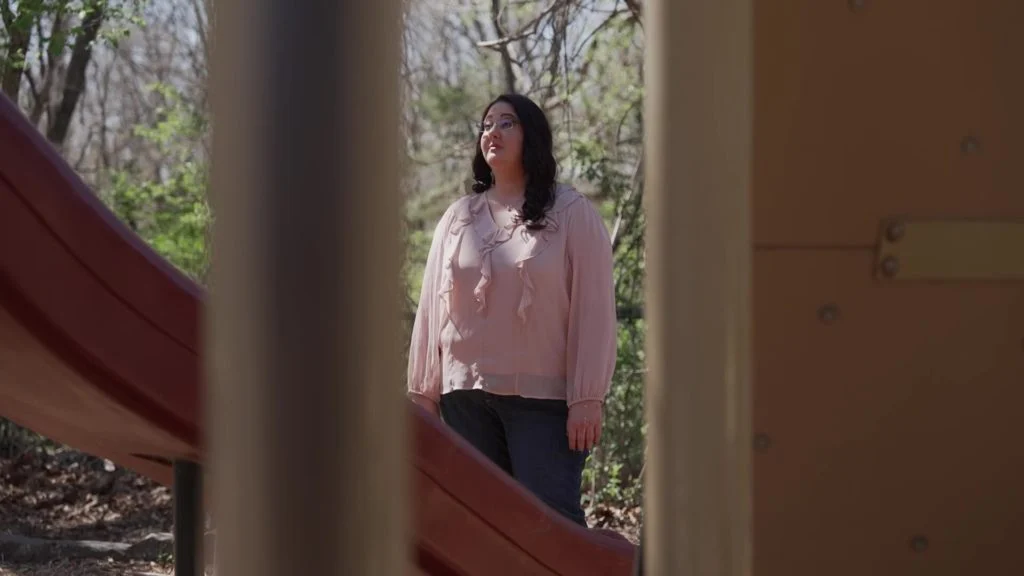
At the center of this shift is not just abstract political theory, but the lived, often traumatic experiences of individuals caught in the crosshairs of restrictive legislation. Among them is Chelsea Stovall, an Arkansas mother whose journey from a conservative evangelical upbringing to becoming a plaintiff in a lawsuit challenging state abortion bans illustrates the human cost of current reproductive health policies.
The Evolution of Belief: A Personal Chronology
Chelsea Stovall, 35, of Fayetteville, Arkansas, grew up in a household where faith was the primary compass for daily life. Raised in an evangelical Christian home, she recalls a childhood defined by constant church attendance, volunteer work, and a profound silence regarding abortion.
"Abortion was something that I knew better than to talk about," Stovall says. "It was not talked about; it was a taboo subject. My family didn’t talk about it. My friends’ families didn’t talk about it. It was not seen as health care. It was something bad."
This perspective was shared by her then-husband, Thomas Stovall, who grew up in Mississippi and was raised in a strict Southern Baptist environment. "It was very fire and brimstone," Thomas recalls. "It was our way or the highway. The very first time I heard the word ‘abortion,’ it was from a preacher. He said, ‘It’s wrong. It’s a sin.’ And that was the end of it."
The couple’s worldview remained largely unchallenged through the births of their two children. However, the trajectory of their lives changed in 2022 when Chelsea became pregnant with their third child. They were overjoyed; the pregnancy was planned and, for the first few months, appeared perfectly healthy.
The Turning Point
The couple’s reality shattered shortly after the Supreme Court issued its Dobbs ruling. During a routine anatomy scan, a technician noticed abnormalities. Doctors confirmed that the fetus had a congenital diaphragmatic hernia—a condition where a hole in the diaphragm allows abdominal organs to move into the chest cavity, preventing the heart and lungs from developing.
The prognosis was catastrophic: the fetus had a less than 1 percent chance of survival. "I was devastated," Stovall says. "This life that I thought that I was going to have was no longer a possibility."
The tragedy was compounded by the legal environment in Arkansas. Because the state’s near-total abortion ban was now in effect, the medical care she needed was criminalized. A neonatal specialist informed the couple that, had the diagnosis occurred just four weeks earlier, a legal abortion could have been performed in her home state. Instead, they were forced into a harrowing, logistically complex, and emotionally draining ordeal.
The Logistics of Despair: Seeking Care Outside State Lines
With local options closed, the Stovalls were forced to navigate a fragmented, out-of-state medical system. Stovall eventually secured an appointment at a clinic in Illinois—a six-hour drive away. The process was not merely medical; it was a logistical nightmare.
"I had to call the clinic and make sure that I could get an appointment, because they were very, very busy," she explains. "I had to figure out childcare for my kids. It was this process of: OK, what do I need to take care of? How much is it going to cost? It took all of my savings."
The isolation of the experience was profound. Due to security protocols at the clinic, Stovall had to go inside alone. Her OB-GYN, who had delivered her previous children, was legally barred from providing the care she needed. Outside, Thomas waited in the car, where he was harassed by protesters.
"I remember one of them called me a murderer," Thomas says. "I just looked at him and said, ‘You have no idea who I am, what I’m going through.’"
The trauma of the medical loss, combined with the indignity of the travel and the societal judgment they faced, pushed the couple to a breaking point. Thomas struggled with his mental health, and the marriage was placed under immense strain. Today, they are working toward reconciliation, but the experience has fundamentally altered their spiritual and political identities.
Supporting Data: A Shifting Public Opinion
Stovall’s story is not an isolated anecdote but a representative narrative for a growing segment of the American population. Recent polling data from organizations like Pew Research Center and Gallup highlights a discernible trend:
- Democratic and Independent Alignment: Since 2019, the percentage of Democrats and independents who believe abortion should be legal in all or most cases has risen significantly.
- Moral Acceptability: A growing number of Americans now view abortion as a matter of personal healthcare rather than a moral failure, a shift most pronounced among those who have seen the impact of restrictive laws on their own communities.
- The "Conservative Pivot": While Republican leadership continues to advocate for stricter bans, internal polling and focus groups suggest that a subset of Republican voters—particularly women and those in states with extreme bans—are expressing discomfort with policies that contain no exceptions for the life or health of the mother, or for fatal fetal anomalies.
Implications: The Legal and Social Battlefield
The political implications of this shift are profound. As more voters like Chelsea Stovall go public with their stories, the narrative surrounding abortion is moving away from the abstract "pro-life vs. pro-choice" binary toward a more nuanced debate about bodily autonomy, medical ethics, and the role of government in private lives.
The Challenge to State Bans
Stovall is currently part of a collective of Arkansans suing the state over its abortion law. These legal challenges are testing the limits of state authority and highlighting the tension between religious-based legislation and the secular realities of medical practice.
Critics of these bans argue that they create "medical deserts" where doctors are forced to prioritize legal survival over patient health. Proponents of the bans, however, maintain that they are upholding the sanctity of life and that the legal hurdles are a necessary byproduct of enforcing moral standards.
The Role of Faith in Policy
One of the most significant themes in this evolving debate is the role of religious institutions in shaping public policy. Stovall, who still considers herself a person of faith, draws a sharp distinction between her personal spirituality and the legislative influence of religious organizations.
"I don’t have problems with Christianity itself," Stovall notes. "But I do take issue with people passing laws and making policies in the name of the church."
Conclusion: A New Frontier in the Debate
The case of Chelsea Stovall underscores a fundamental truth about the current American landscape: when abstract laws intersect with the realities of human suffering, the status quo rarely holds. As the legal battles continue, the debate is increasingly characterized by those who, like Stovall, once held conservative views but now argue that abortion is a vital medical procedure that has been stripped of its nuance by politics.
"If more people knew my story, I think that they would understand that abortion is a medical procedure," Stovall concludes. "It is used in a multitude of situations. It’s not just used as birth control, which I think a lot of people see it as. I think that’s how I used to see it when I was younger growing up in the church. I carried that view until I needed one."
As the nation looks toward future election cycles, the voices of those caught between their past beliefs and their present reality will likely become a decisive factor in the trajectory of reproductive rights in the United States. The question remains whether the American political system will find a way to reconcile these divergent experiences, or if the country will remain deeply divided by the very laws designed to regulate the most intimate aspects of life.