Originally published in the September-October 2003 issue of Yoga Journal, this archival feature explores the enduring legacy of Surya Namaskar.
In the lexicon of global spiritual traditions, light has perpetually served as the ultimate metaphor for consciousness and self-illumination. As the Jungian analyst Erich Neumann eloquently posited in The Origins and History of Consciousness (1995), "The world begins with the coming of light. Opposition between light and darkness has informed the spiritual world of all peoples and molded it into shape."
While our modern world often reduces the sun to a mere celestial body—a yellow sphere in the sky—for thousands of years, the Vedic and Hindu traditions have revered Surya as the literal and metaphorical heart of existence. Surya is not merely a star; it is the loka chakshus, or the "eye of the world," a divine pathway that unites all individual selves into a singular consciousness. To honor this source of life, yogis developed the dynamic, rhythmic sequence known as Surya Namaskar, or the Sun Salutation.
The Philosophical Foundations of Surya Namaskar
The term Namaskar is derived from the Sanskrit root namas, meaning "to bow" or "to adore," a linguistic cousin to the ubiquitous closing salutation Namaste—where te translates to "you." In its physical form, the Sun Salutation is a movement prayer. Each cycle begins and ends with the hands joined at the heart in a gesture known as Anjali Mudra or Hridaya Mudra (the Heart Seal).

This placement is intentional. Ancient yogic philosophy posits that the heart is the seat of jnana (higher wisdom) and the residence of the jivatman, or the embodied self. While contemporary Western thought often equates the brain with the seat of intellect, the yogis viewed the brain as a mirror—a lunar organ that reflects light but lacks its own luminosity. The heart, by contrast, is the "inner sun," the site of authentic intuition and truth. By practicing Surya Namaskar, the student is not merely exercising; they are aligning their inner, subtle heart with the outer source of universal vitality.
A Chronological Perspective: History and Origins
The historical origins of Sun Salutation are a subject of spirited academic and traditional debate.
The Vedic View
Traditionalists argue that the roots of the sequence extend back at least 2,500 years, if not deeper into the Vedic era. In this historical framework, the practice originated as a ritualistic prostration to the dawn, incorporating complex mantras, floral offerings, and water libations. It was a liturgical act, meant to synchronize the human circadian rhythm with the cosmic cycle of the sun.
The Modernist Perspective
Conversely, historical skeptics—often drawing upon research into 20th-century Indian physical culture—suggest that the standardized sequence recognized globally today was codified by the Raja of Aundh in the early 1900s. According to this narrative, the sequence was popularized as a form of "physical education" to improve the health of the Indian populace before being disseminated to the West during the 1920s and 1930s.
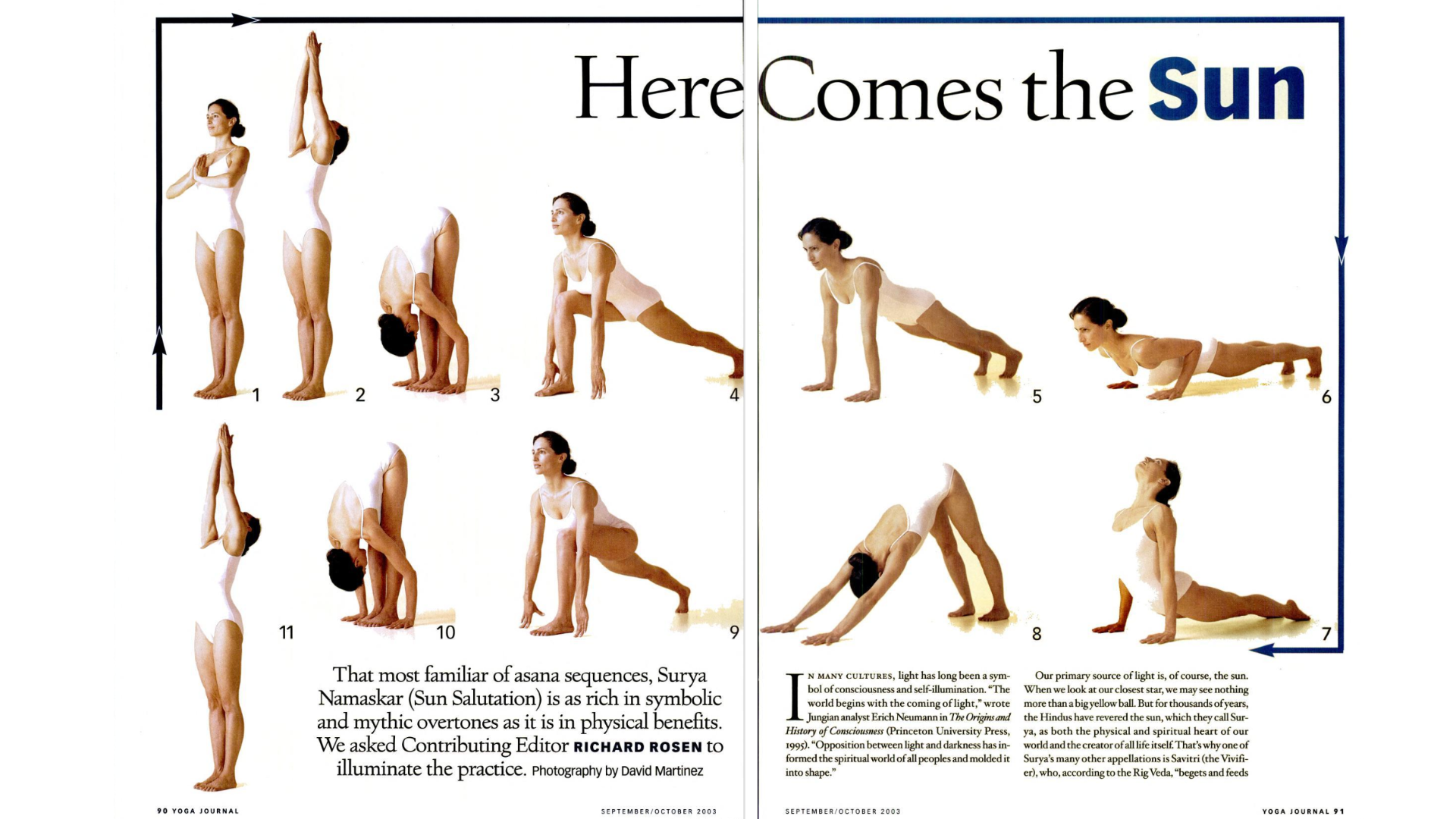
Regardless of its precise historical genesis, the evolution of the sequence is undeniable. In Sun Yoga: The Book of Surya Namaskar (2001), author Janita Stenhouse documents dozens of variations. While the specific posture count may shift between lineages, the core 12-station sequence remains the standard vehicle for this practice.
The Mechanics of Practice: An Eight-Posture Sequence
The standard Surya Namaskar consists of eight distinct postures performed in 12 "stations," creating a fluid, breath-synchronized flow. The sequence moves from Tadasana (Mountain Pose) into Urdhva Hastasana (Upward Salute), folding into Uttanasana (Standing Forward Bend), transitioning into a Lunge, moving through Plank and Chaturanga Dandasana (Four-Limbed Staff Pose), rising into Urdhva Mukha Svanasana (Upward-Facing Dog), and grounding into Adho Mukha Svanasana (Downward-Facing Dog), before reversing the order to return to the mountain.
The Critical Role of Breath
The transition between these stations is entirely dependent on the breath—the bridge between the physical and the subtle body. Nasal breathing is mandatory. By breathing through the nose, the practitioner warms and filters the air, creating an internal friction that slows the respiratory rate. This, in turn, prevents hyperventilation and induces the meditative state required to transform a physical exercise into a spiritual inquiry.
Deepening the Practice: Technical Challenges
Even seasoned practitioners often encounter two primary obstacles: the integrity of Chaturanga Dandasana and the transition from Downward-Facing Dog to the Lunge.
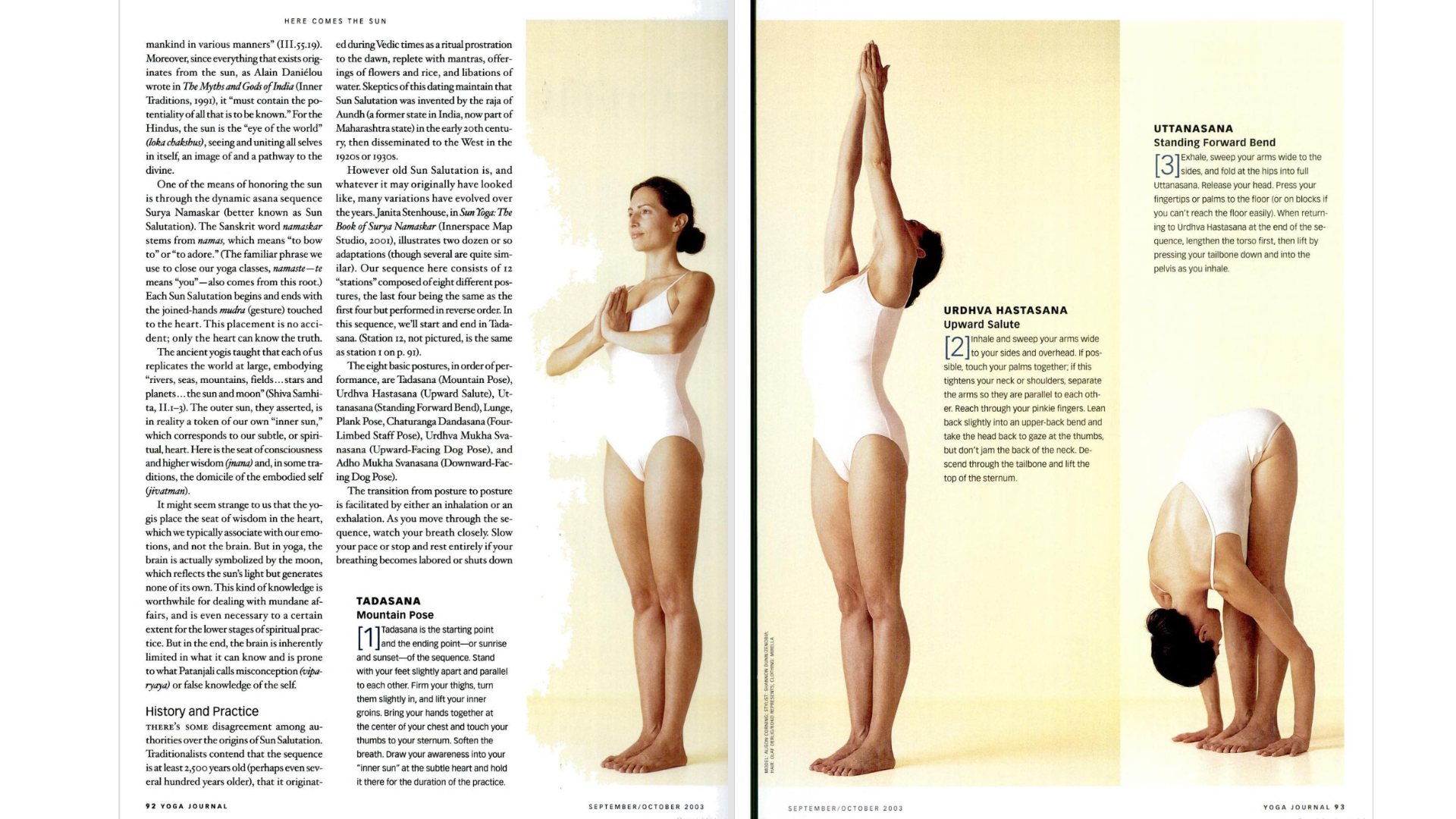
- Chaturanga Dandasana: Weakness in the arms and core often leads to a collapse toward the floor. The recommended modification is to place the knees on the floor immediately after leaving the Plank position, lowering the chest and chin while keeping the abdominal muscles engaged.
- The "Step-Through": The common struggle to bring the foot forward from Downward-Facing Dog is frequently solved by lowering the knees first, allowing the practitioner to place the foot between the hands with intention rather than brute force.
Consistency is the ultimate determinant of progress. While a daily practice is the gold standard, a commitment of four times per week is often sufficient to maintain the physiological and energetic benefits of the sequence.
Implications for Health and Vitality
Beyond the philosophical, the physiological implications of a regular Sun Salutation practice are vast. According to Swami Satyananda Saraswati’s seminal work, Surya Namaskar: A Technique of Solar Vitalization, the sequence offers a holistic benefit profile:
- Cardiovascular Conditioning: The rhythmic nature of the practice improves heart rate and circulation.
- Musculoskeletal Strength: It tones the major muscle groups, particularly the shoulders, arms, and core.
- Endocrine Regulation: By stimulating the solar plexus and various energy centers, it is believed to balance metabolic and hormonal functions.
- Mental Clarity: The meditative, breath-focused flow reduces the impact of the "monkey mind," mitigating stress and anxiety.
Contraindications and Cautions
Despite its universal appeal, Sun Salutation is not a one-size-fits-all practice. Individuals suffering from high blood pressure, spinal disc herniations, sciatica, or inguinal hernias should approach the sequence with extreme caution. Pregnancy also necessitates significant modifications. In these cases, it is imperative to consult with an experienced instructor to adapt the sequence, ensuring that the practice serves the body rather than straining it.
The Modern Application: From Outdoors to the Mat
Traditionally, Surya Namaskar was performed outdoors, facing the rising sun, to fully harness the symbolism of the "dawn of consciousness." While this remains the ideal for practitioners in warmer climates, the modern reality often necessitates an indoor practice.
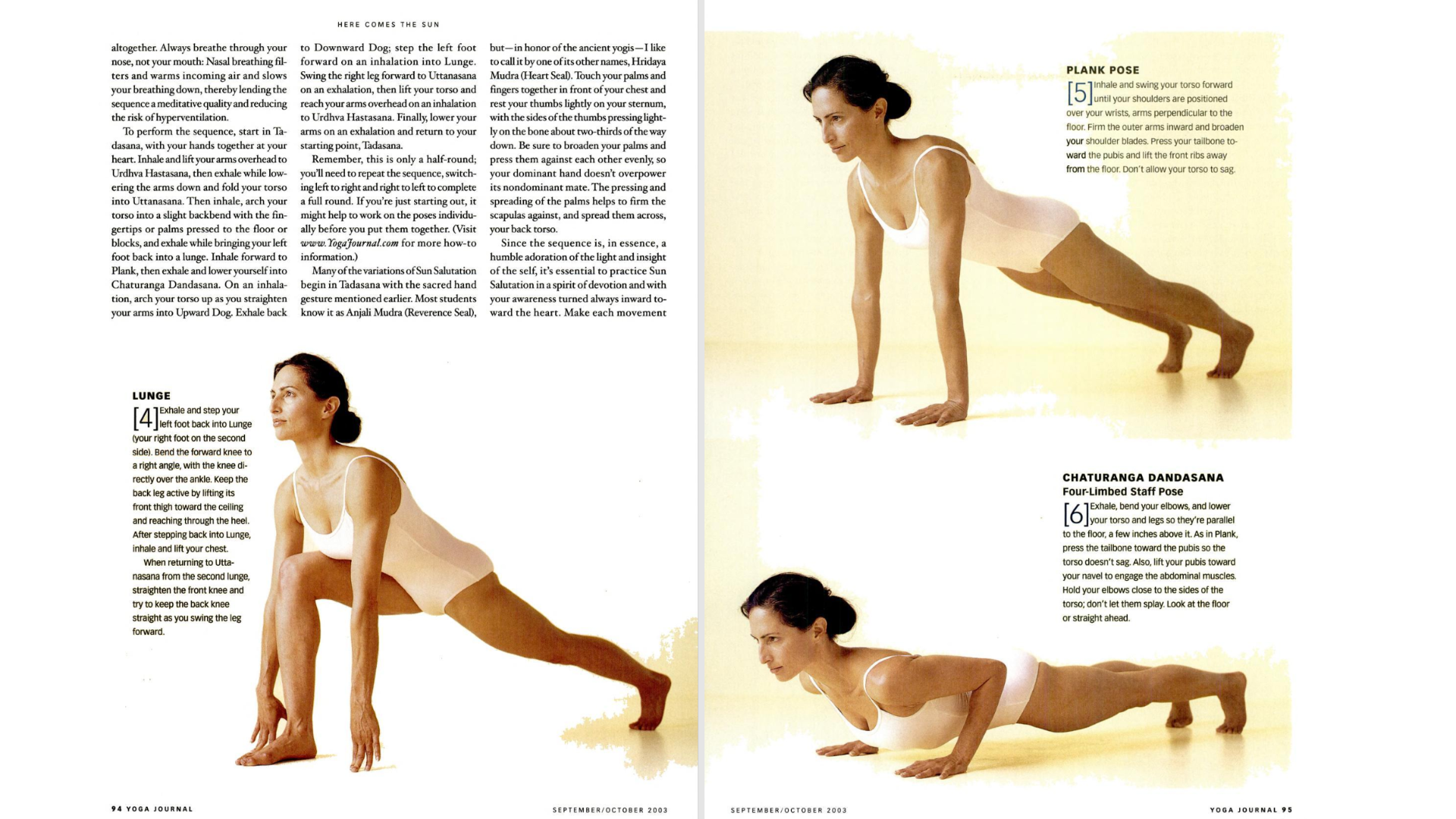
Today, the Sun Salutation serves as the quintessential warm-up for asana sessions. Whether performing 10 rounds as a dedicated morning ritual or using a shortened version as a precursor to a deeper, 90-minute yoga practice, the goal remains the same: to generate heat and focus. For those with limited time, a 10-minute sequence followed by five minutes of Savasana (Corpse Pose) provides a complete, efficient practice for the busy professional.
Conclusion: An Invitation to Inwardness
Whether you are a novice attempting your first full round or a seasoned practitioner aiming for the traditional 108 rounds, the essence of the Sun Salutation remains unchanged. It is a humble adoration of the light—both the celestial light that warms the planet and the inner light that fuels our consciousness.
As you move through the postures, remember that precision and mindfulness are the keys. When fatigue sets in during the later rounds, resist the urge to rush. Instead, return your awareness to the heart, maintain the integrity of your breath, and honor the cycle of the sun as a reflection of your own unfolding potential. The practice is not about reaching the end of the sequence; it is about finding the light in every step along the way.