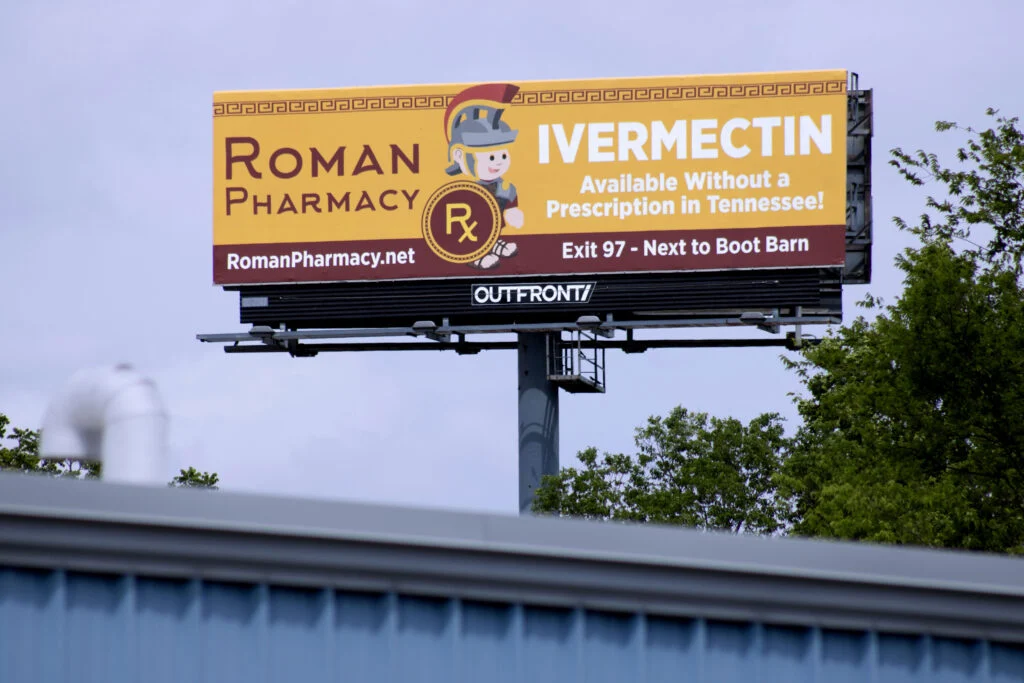
NASHVILLE, Tenn. — Four years ago, Tennessee fundamentally altered the landscape of pharmacy regulation, becoming the first state in the nation to bypass the traditional doctor-patient relationship for the acquisition of ivermectin. Today, the state serves as an unregulated laboratory for the distribution of the antiparasitic drug, where roadside billboards and strip-mall pharmacies market high-potency pills to a public increasingly turning away from conventional medicine.
While ivermectin is a Nobel Prize-winning medication with a proven, narrow track record for treating specific parasitic diseases in humans, its current status in Tennessee is defined by its role as an "ideological flag." No longer just a dewormer for livestock or a treatment for tropical parasites, the drug has been rebranded by anti-vaccine activists and fringe medical influencers as a panacea for everything from Covid-19 to cancer—despite a lack of clinical evidence supporting these off-label applications.
The Genesis of a Regulatory Shift
The legislative journey began in 2022, when a Republican supermajority in the Tennessee General Assembly pushed through a bill that effectively deregulated access to ivermectin. The law allows pharmacies to operate under a "collaborative pharmacy practice agreement" with a physician. In practice, this serves as a blanket, pre-written prescription that allows any adult walking into a pharmacy to purchase the drug without ever having to consult a primary care provider.
This legislative victory blindsided state health officials and caught the medical community off guard. By shielding pharmacists from civil lawsuits and professional sanctions related to the drug, the state created a protective bubble that has allowed a robust, cash-based, and largely opaque market to flourish.
A Chronology of the "Wonder Drug" Narrative
- Pre-2020: Ivermectin is widely recognized as a safe, FDA-approved medication for parasitic conditions, requiring only a single, low-dose regimen.
- 2020–2021: As the Covid-19 pandemic ravages the globe, fringe medical groups begin promoting ivermectin as an effective treatment for the virus. Despite numerous clinical trials—including rigorous studies—confirming that the drug offers no meaningful benefit against Covid-19, the narrative gains traction among vaccine-skeptical movements.
- March 2022: Tennessee lawmakers hold hearings where Dr. Denise Sibley, a central figure in the state’s ivermectin movement, testifies alongside proponents like Paul Marik. They argue that legalizing widespread access will prevent patients from resorting to animal-grade, low-quality livestock versions of the drug.
- May 2022: The first legal sale of ivermectin under the new law occurs in Johnson City, Tennessee, with activist Bernadette Pajer as the inaugural customer.
- 2025: The "Joe Rogan Experience" airs an episode featuring actor Mel Gibson, who claims the drug cured stage 4 cancer in three of his friends. This, coupled with the rising influence of the "Make America Healthy Again" movement, leads to a significant spike in prescribing rates across the South.
Supporting Data: The Hidden Market
Quantifying the scale of this market remains nearly impossible. Because ivermectin is frequently sold through compounding pharmacies—which create customized drug formulations—it is rarely captured by insurance billing or traditional federal pharmacy data.
An investigation by KFF Health News revealed that the Tennessee Department of Health has been unable to produce foundational documentation for the pharmacies operating under these collaborative agreements. While the law mandates that pharmacies notify the state when such agreements are signed, the agency could only provide records for 12 pharmacies, despite dozens operating in the state.

Pharmacist Paul Hughey, who operates Mt. Juliet Pharmacy and Compound Rx, estimated that during peak demand, his locations were moving significant quantities of the drug to dozens of people per week. Some of these pharmacies now offer pills at 10 to 20 times the potency of a standard, FDA-approved human dose.
The financial incentive is clear. With no requirement for a diagnosis or a patient-specific visit, these pharmacies have tapped into a national market. Dr. Denise Sibley, who has inked agreements with at least 10 pharmacies, noted in a podcast interview that she receives paperwork for customers from across the United States and abroad.
The Cost of "Quack Science"
The medical establishment has watched the rise of this market with mounting alarm. Dr. John Mafi, an internal medicine physician at UCLA, describes the current trend as a return to "19th-century quack science."
"It is alarming that I’m seeing this really unproven therapy being touted to so many potentially vulnerable Americans," Mafi said. He warns that the primary danger is not just the drug’s toxicity in high doses, but the opportunity cost: patients may forgo proven, life-saving cancer treatments in favor of a "miracle" pill that has no efficacy against malignant tumors.
Evidence of the danger is already manifesting. The Tennessee Poison Center reported more than 60 calls for potential ivermectin poisoning in 2025—the highest count since the pandemic. Callers reported symptoms such as severe vomiting, blurred vision, neurological distress, and ataxia (difficulty walking).
"People are taking this because they just feel unwell. It’s almost like a panacea now," said Rebecca Bruccoleri, the center’s medical director.

Official Responses and Internal Conflicts
The legal reality in Tennessee has forced the hands of the state’s medical boards. In several recorded meetings, members of the Board of Medical Examiners and the Board of Osteopathic Examination expressed frustration at being sidelined.
"We’re talking about an unproven, potentially unsafe drug," noted Dr. Shant Garabedian during a 2022 board meeting. "It’s already law. Somehow it passes without our sort of input."
Yet, when the board has had the opportunity to discipline physicians for improper prescribing habits—such as the case of Dr. Ricky Lee Jackson—they have actively scrubbed mentions of ivermectin from the public record to avoid further controversy. "This board has been in enough trouble with ivermectin," member Keith Anderson remarked. "Maybe we ought to just leave that out."
Implications: A National Precedent
Tennessee’s experiment is not an isolated anomaly; it is a blueprint. At least 24 other states have introduced or debated legislation modeled after Tennessee’s, seeking to codify access to ivermectin without the intervention of a primary care physician.
The political nature of this shift is underscored by the involvement of figures like Robert F. Kennedy Jr. and organizations such as Children’s Health Defense. By framing the medical establishment as a corrupt entity that suppresses "truth" for profit, these movements have successfully turned a pharmacological issue into a cornerstone of cultural identity.
State Sen. Richard Briggs, a surgeon and the only Republican to vote against the 2022 legislation, remains one of the few voices of dissent within the statehouse. He warns that the legislature has prioritized political convenience over scientific integrity.

"We don’t base a lot of things that we do on science, data, or facts," Briggs said. "To a lot of folks in the legislature, the facts are just an inconvenience."
As the state prepares for the 2027 legislative session, the debate over whether to tighten regulations on ivermectin distribution looms. However, given the entrenched support for the drug among conservative bases and the success of the current, loosely regulated market, the road to restoring traditional medical oversight appears fraught with political obstacles.
For now, the billboards along Interstate 65 remain, a permanent fixture of a landscape where the boundary between public health and political ideology has all but vanished.