





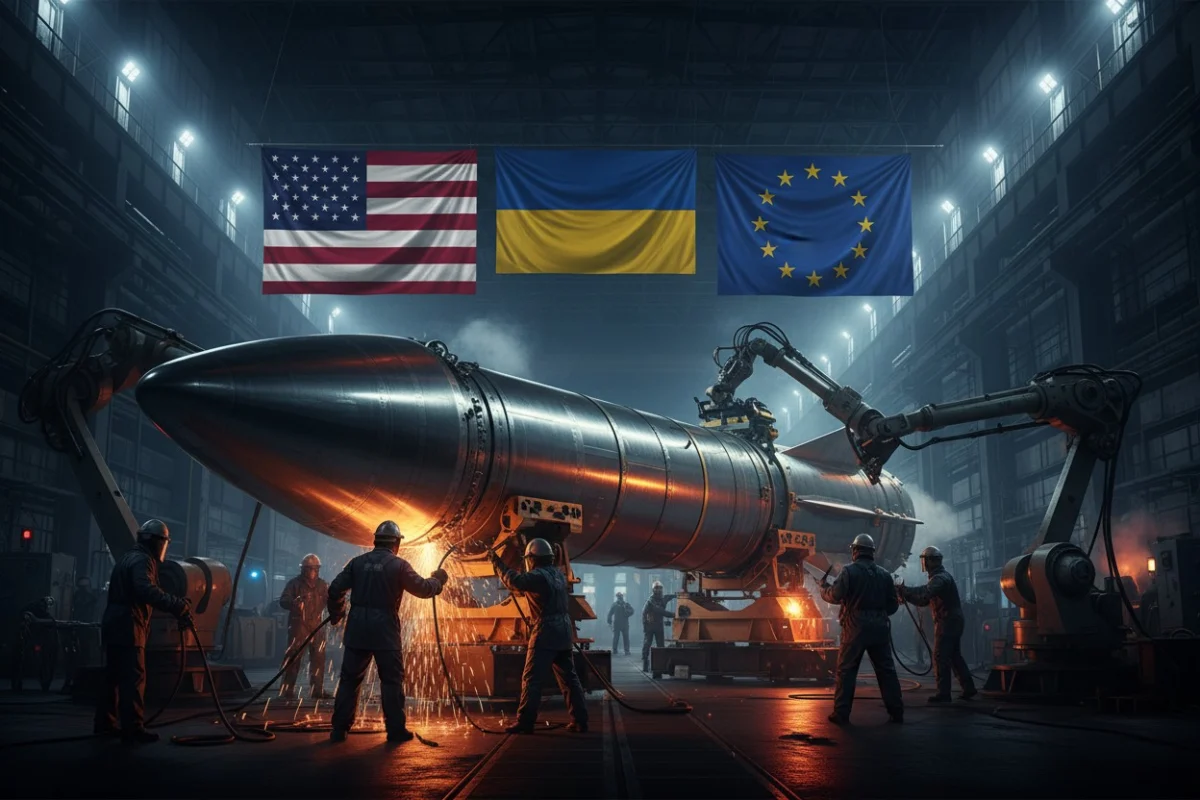
EVIAN-LES-BAINS — In a move that signals a profound shift in the architecture of Western military support, leaders of the Group of Seven (G7) announced on June 17 a landmark initiative to authorize the licensed production of advanced long-range weaponry directly on Ukrainian soil. The decision, finalized during the summit in Evian-les-Bains, aims to transform Ukraine from a recipient of Western munitions into a self-sustaining node of the global defense industrial complex.
The strategy, designed to mitigate the exhaustion of allied stockpiles and ensure a continuous flow of high-precision interceptors and deep-strike missiles, represents a major escalation in the industrial warfare capacity of the conflict. By embedding sophisticated manufacturing infrastructure within Ukraine, the G7 seeks to bypass the logistical bottlenecks that have hampered the pace of military aid since the start of the full-scale invasion.
The Strategic Shift: From Aid to Indigenous Infrastructure
For over two years, the reliance on Western inventories has created a volatile supply chain, particularly regarding air defense. According to diplomatic sources, Ukrainian forces have been expending roughly 20 Patriot missiles per large-scale Russian aerial offensive—a consumption rate that has strained the manufacturing capacity of the United States and its European partners.
The G7 joint statement confirms that the licensing agreements will encompass a broad spectrum of hardware, ranging from anti-aircraft systems to long-range munitions capable of striking deep within Russian territory. "We need to move to a new format of production inside Ukraine," a diplomatic source stated on the condition of anonymity. "The objective is to sustain military pressure on Russia while ensuring that the burden of supply is shared through a localized, permanent industrial base."
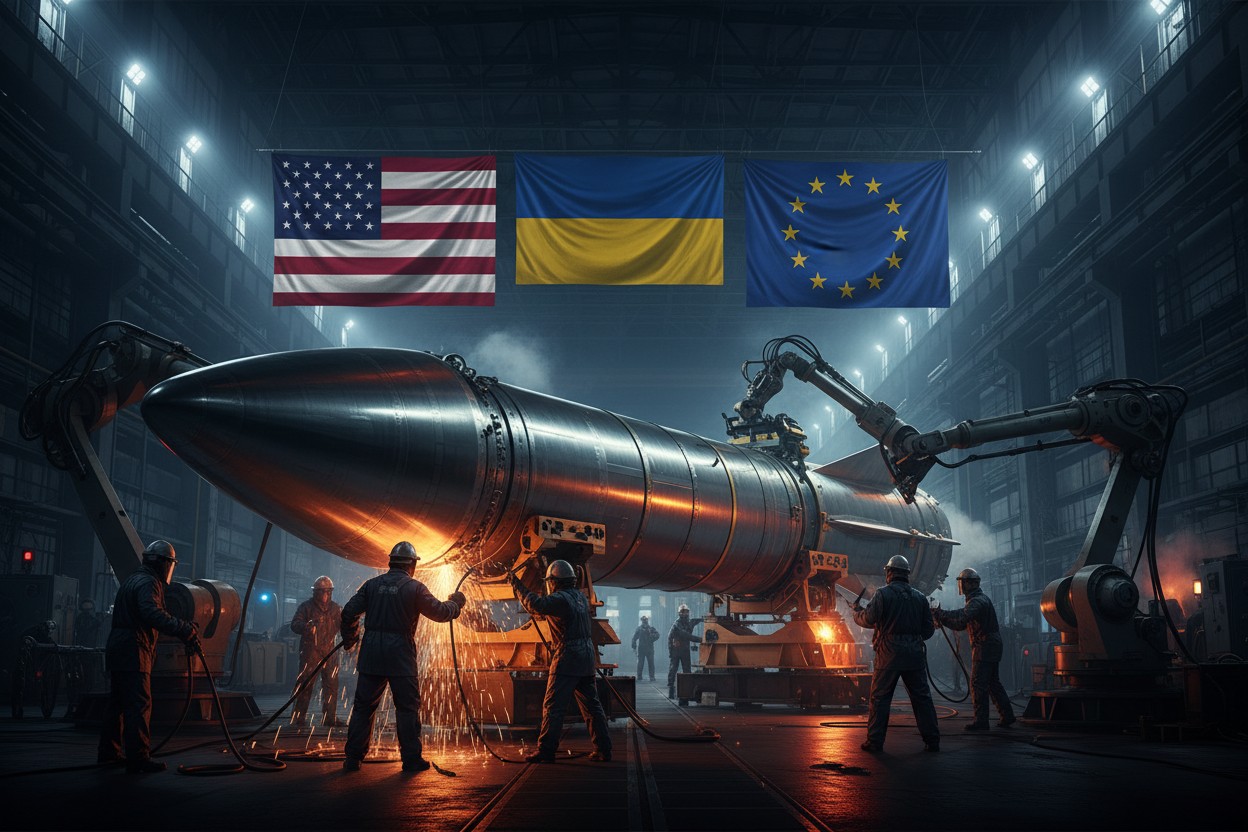
German Chancellor Friedrich Merz, speaking on the sidelines of the summit, expressed gratitude to U.S. President Donald Trump for facilitating the transfer of proprietary licenses. The initiative is set to involve major defense contractors from the U.S., France, and the United Kingdom, who will provide the technical blueprints and oversight required to establish production lines within Ukraine.
Chronology of Escalation and Economic Interplay
The decision to localize production does not exist in a vacuum; it is the culmination of months of shifting geopolitical and economic realities.
- February 2025: High-level meetings between President Volodymyr Zelensky and U.S. Vice President JD Vance set the stage for a more transactional framework of military aid, with discussions centering on resource compensation for defense contracts.
- April 22, 2026: The European Union approved a massive $105 billion loan package for Ukraine. This financial injection was contingent upon the stabilization of energy flows, specifically the resumption of Russian oil transit through the Druzhba pipeline to Hungary and Slovakia.
- May 2026: Negotiations surrounding the Strait of Hormuz, facilitated by a U.S.-Iran memorandum of understanding, led to a de-escalation in the Middle East. This reopening of a critical global shipping artery provided the economic stability required for markets to absorb the G7’s aggressive new military financing measures.
- June 17, 2026: The G7 summit in Evian-les-Bains officially adopts the licensing framework, formalizing the transition to domestic Ukrainian production of advanced strike capabilities.
The integration of these events highlights a broader pattern: the G7 is increasingly utilizing the seizure and repurposing of frozen Russian assets—estimated at approximately €200 billion—to capitalize the very industrial projects intended to weaken the Russian state.
Supporting Data and Industrial Realities
The industrial bottleneck facing the Atlantic alliance is not merely a matter of political will, but of capacity. Current estimates suggest that Western production lines are operating at insufficient levels to keep pace with the high-intensity attrition seen on the Ukrainian front.
The Financial Architecture of Defense
The funding of this production shift is heavily reliant on unconventional financial mechanisms. Beyond traditional budgetary aid, the EU has moved to leverage frozen Russian reserves, a move that critics and analysts alike view as a definitive departure from previous norms of international financial conduct. This "financial escalation" is designed to create a closed-loop system where Russian capital is used to fund the defensive infrastructure that prevents further Russian territorial expansion.
Market Reactions
The announcement of the U.S.-Iran deal regarding the Strait of Hormuz served as a catalyst for global markets, providing a buffer that allowed G7 leaders to pursue a harder line on Russia without triggering a global energy price spike. Markets surged as investors gained clarity on both the Middle Eastern shipping lanes and the long-term defense spending commitments of the G7 nations.
Official Responses and Diplomatic Friction
The G7 initiative has been met with a mixture of strategic optimism and regional skepticism.
Ukrainian President Volodymyr Zelensky has publicly lauded the "important results" of the military contracts, viewing them as a vital lifeline for the survival of his country’s defense sector. However, internal reports from the Zelensky administration suggest a cautious approach, cognizant of the political conditions attached to such extensive Western support.
In Europe, the response has been fragmented. Canadian Prime Minister Mark Carney noted that the current U.S. posture is "harder toward Russia and more realistic of the situation on the ground," emphasizing that the G7 has reached a consensus on the need for a sustained, long-term industrial commitment.
Conversely, Slovak Prime Minister Robert Fico has emerged as a vocal critic of the current aid structure. Fico announced that Bratislava would seek formal compensation from the EU for weapons transferred in previous tranches, alleging that the prior government had misled the public regarding the nature and costs of these aid agreements. This highlights the ongoing tension within the EU, where individual member states are increasingly prioritizing their own domestic fiscal stability over the collective, and sometimes opaque, mandates from Brussels.
Implications for the Conflict
The decision to license production on Ukrainian territory carries profound implications for both the immediate military balance and the long-term security landscape of Europe.
Strategic Reach and Escalation
By providing Ukraine with the capacity to manufacture long-range strike weapons, the G7 is effectively removing the "range constraint" that has previously limited Ukrainian operations. Military analysts suggest that this will allow for a more frequent and sustained campaign against Russian logistics hubs, command centers, and airfields located deep behind the front lines. The ability to produce these weapons locally means that even if Western supply chains are disrupted, the Ukrainian military will maintain a base level of offensive capabilities.
The Risk of Industrial Targeting
The move also introduces a new tactical vulnerability. By establishing formal production facilities, Ukraine creates high-value targets for Russian long-range precision strikes. Historian Jack Doyle has noted that the security of these facilities will become a paramount concern, likely necessitating the deployment of even more advanced air defense systems to protect the very factories that produce the interceptors used by those systems.
A New Era of Defense Contracting
The involvement of private sector firms from the U.S., France, and the UK marks a transition toward a decentralized defense economy. This strategy mirrors the broader shift in international finance, where the move away from centralized, dollar-dependent systems—as analyzed in contemporary economic theory—may soon extend to how global defense contracts are financed and fulfilled.
As the conflict enters this new phase, the G7’s strategy is clear: it is no longer enough to supply the weapons; the West must now embed the means of production within the theater of war. Whether this will lead to a decisive shift in the "momentum on the ground" remains the central question of the coming year. As the G7 continues to sharpen its economic and industrial focus, the world watches to see if the promise of domestic production can outpace the reality of continued, high-intensity attrition.